
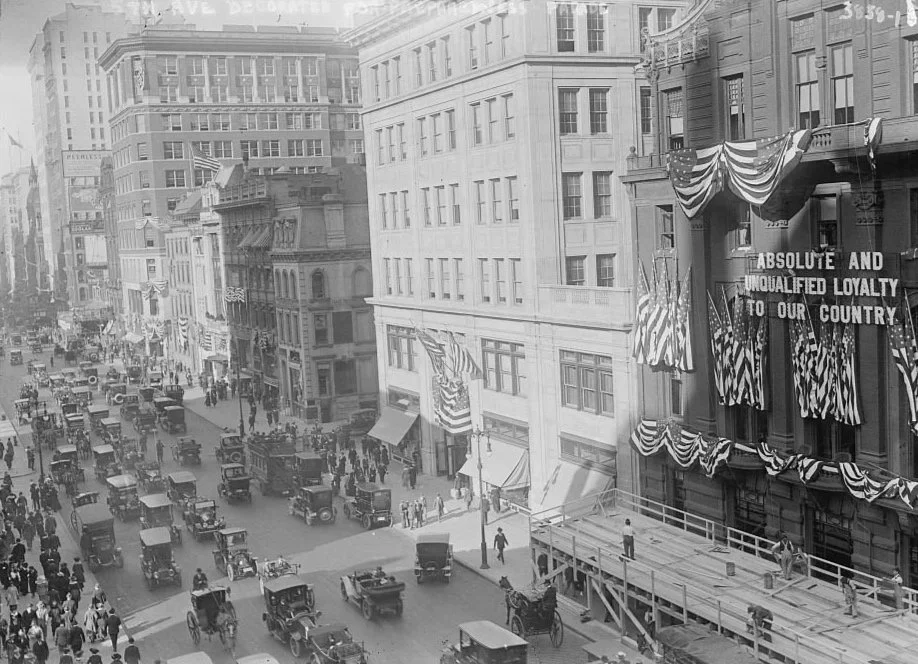
New York City’s Fifth Avenue is shown during the 1916 Preparedness Parade, as the nation weighed its role in the growing conflict overseas. Buildings are draped in flags and patriotic bunting, with a prominent sign declaring “Absolute and unqualified loyalty to our country,” reflecting rising public support for military readiness. Streets filled with early automobiles, carriages, and dense crowds capture a city in motion, where civic display and national sentiment converged in the years just before American entry into World War I.
Wichita Campaign Parade
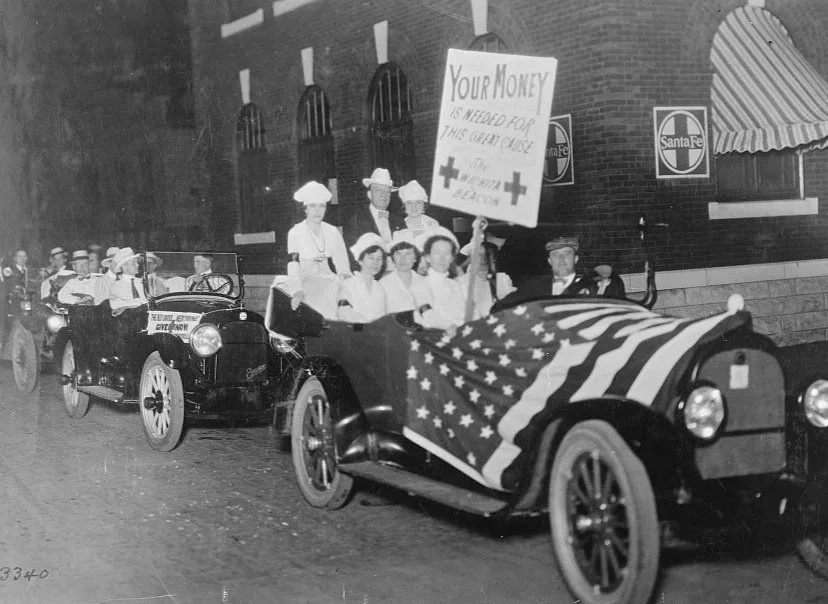
Automobiles decorated with American flags move through the streets of Wichita, Kansas during a fundraising parade organized by the American Red Cross between 1917 and 1919. Participants carry signs calling for public support as the nation mobilizes during World War I. Parades and public drives like this were held in cities and towns across the country to raise money for medical aid, supplies, and relief efforts supporting American troops overseas.
Dedication Ceremony for the District of Columbia War Memorial Showing Military Band on Armistice Day, 1931, Washington, D.C.
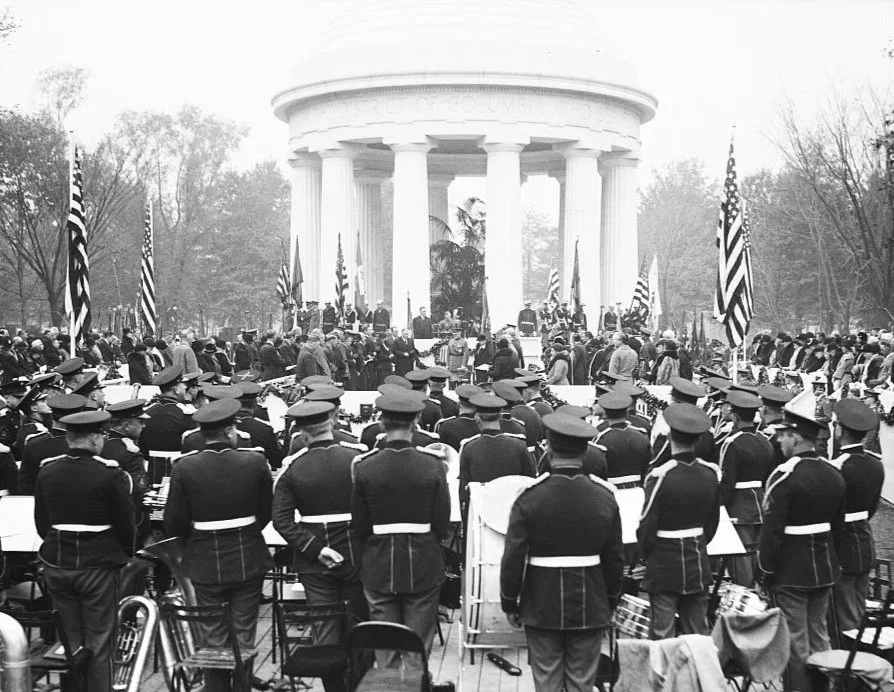
Crowds gather at the District of Columbia War Memorial in Washington, D.C. on Armistice Day in 1931 as a military band stands before the newly dedicated monument. The memorial honors residents of the capital who served during World War I. In the years after the war, communities across the United States built memorials to recognize the service of local soldiers and preserve the memory of their role in the conflict.
The Crowd Clustered like Bees on the German Guns in the Place de la Concorde, Paris, while Celebrating the Signing of the Armistice with Germany
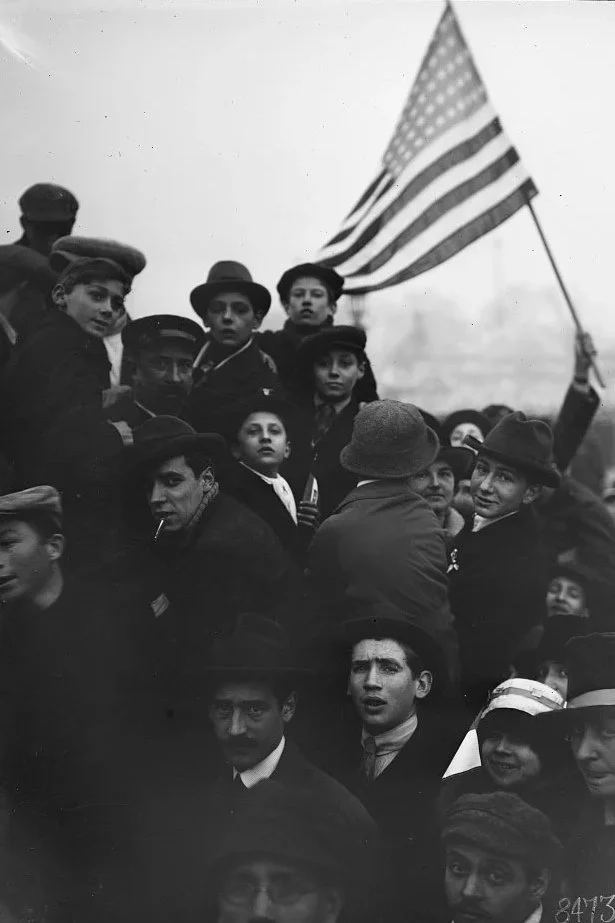
Crowds packed the Place de la Concorde in Paris as news spread that the Armistice with Germany had been signed, ending the fighting in World War I. Men and boys climbed atop captured German guns, pressing together for a view and lifting an American flag above the celebration. After four years of industrial warfare that drew in nations across the globe, the silence of the guns was met with relief and public jubilation.
Liberty Parade on Fifth Avenue WWI Era
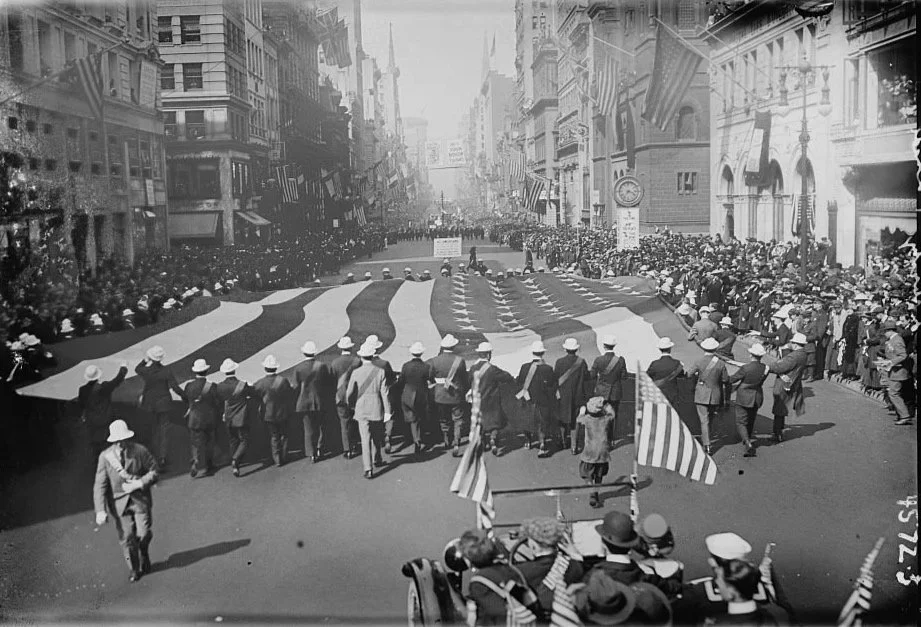
Crowds pack Fifth Avenue as a massive American flag is carried up the street during a World War I–era Liberty Bond parade in New York City. Marchers in uniform hats support the enormous banner while spectators line the sidewalks and hang from windows above, reflecting the national push to fund the war effort through public bond sales.
Historic American Flag Carried into Battle by American Soldiers During WWI
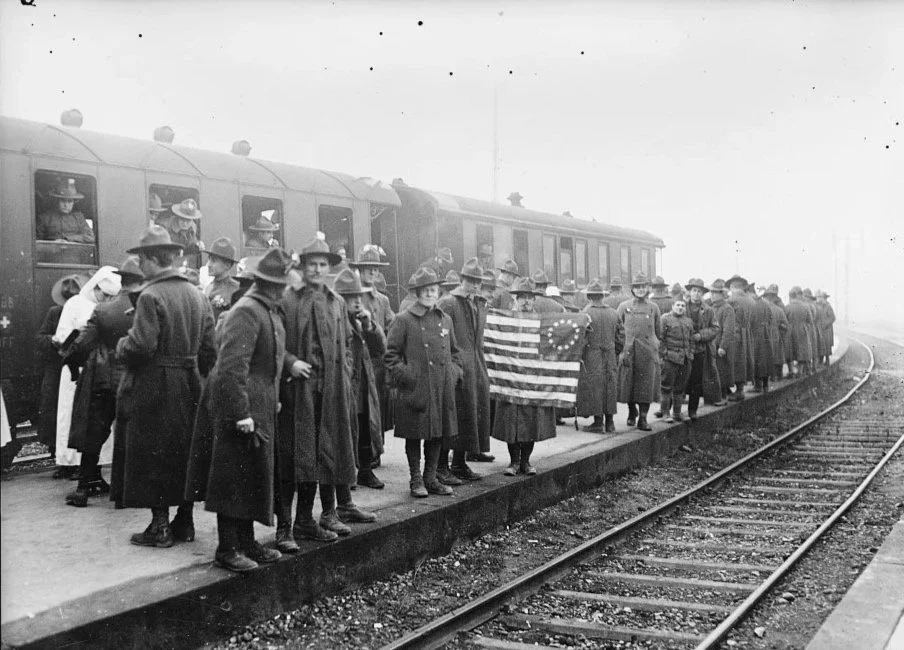
American servicemen gathered along a rail platform at the close of World War I, marking their release and return from captivity. The soldiers hold a U.S. flag that had been secretly hidden while they were held in German prison camps and later revealed in Basel, Switzerland, on December 7, during the release of the first train of American privates. The long line of men, bundled in heavy coats, reflects the scale of the war and the logistics of bringing troops home. This is a quiet but powerful moment, when a simple flag signaled survival, freedom, and the end of a long ordeal for those who served.