
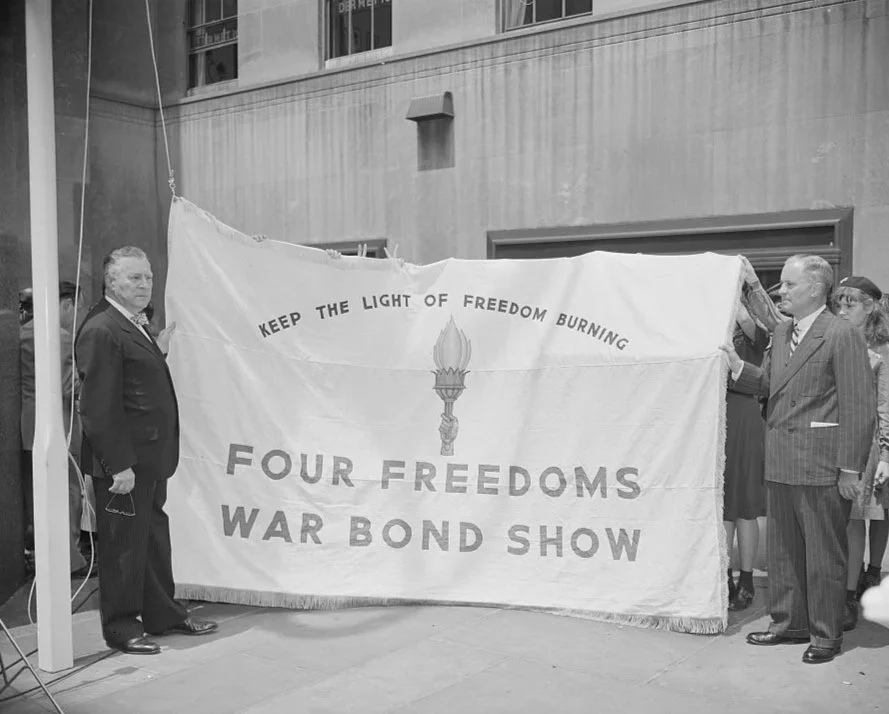
June 1943, Rockefeller Center, New York City. Two men hold a banner reading "Keep the Light of Freedom Burning: Four Freedoms War Bond Show" at a flag raising ceremony on the plaza of the International Building. The Four Freedoms referenced the goals President Franklin Roosevelt laid out in his January 1941 State of the Union address: freedom of speech, freedom of worship, freedom from want, and freedom from fear. Those four principles became central to Allied wartime messaging, most famously through Norman Rockwell's series of paintings published in the Saturday Evening Post in early 1943.
Oswego, New York. United Nations Heroes Marching in the Flag Day Parade During United Nations Week
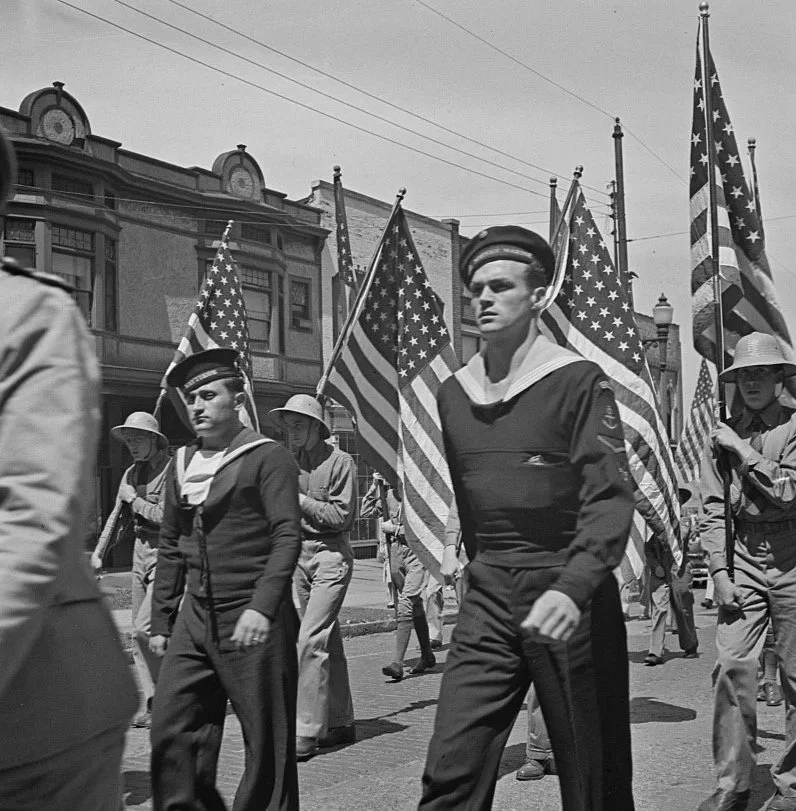
Flag Day, June 1943. U.S. Navy sailors and Army soldiers march through the streets of Oswego, New York, as American flags line the parade route during United Nations Week. With World War II in full swing, events like this served a dual purpose: honoring the flag and reinforcing public support for the Allied war effort. The "United Nations" reference was the wartime term for the Allied coalition, formalized in January 1942 when 26 nations signed the Declaration by United Nations pledging to fight the Axis powers together.
Southington, Connecticut. School Children Pledging Their Allegiance to the Flag
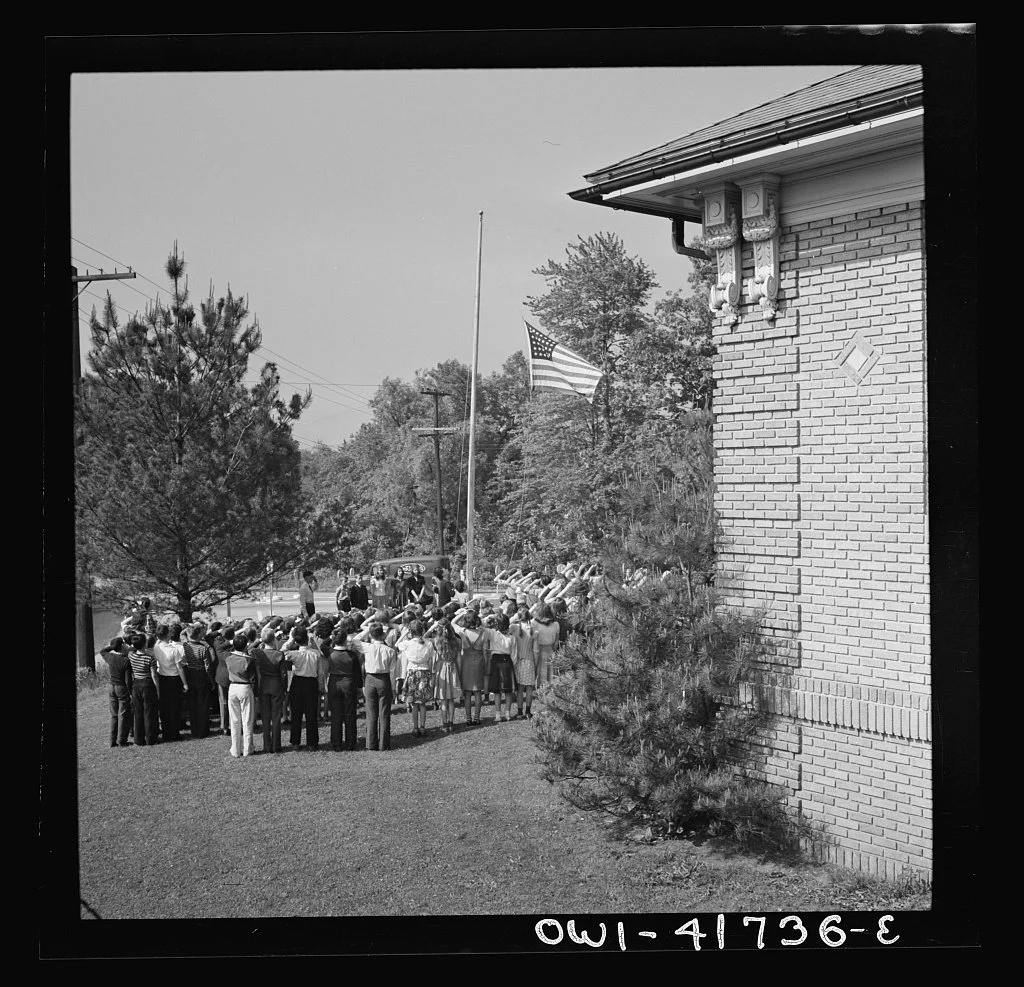
Schoolchildren gather outside a school in Southington, Connecticut, in May 1942 to recite the Pledge of Allegiance during the early months of America’s involvement in World War II. Across the country, patriotic ceremonies became a regular part of daily life as communities emphasized unity, civic duty, and support for the war effort.
Lititz, Pennsylvania. Part of the Lititz Fire Department Called out During an Air Raid Drill
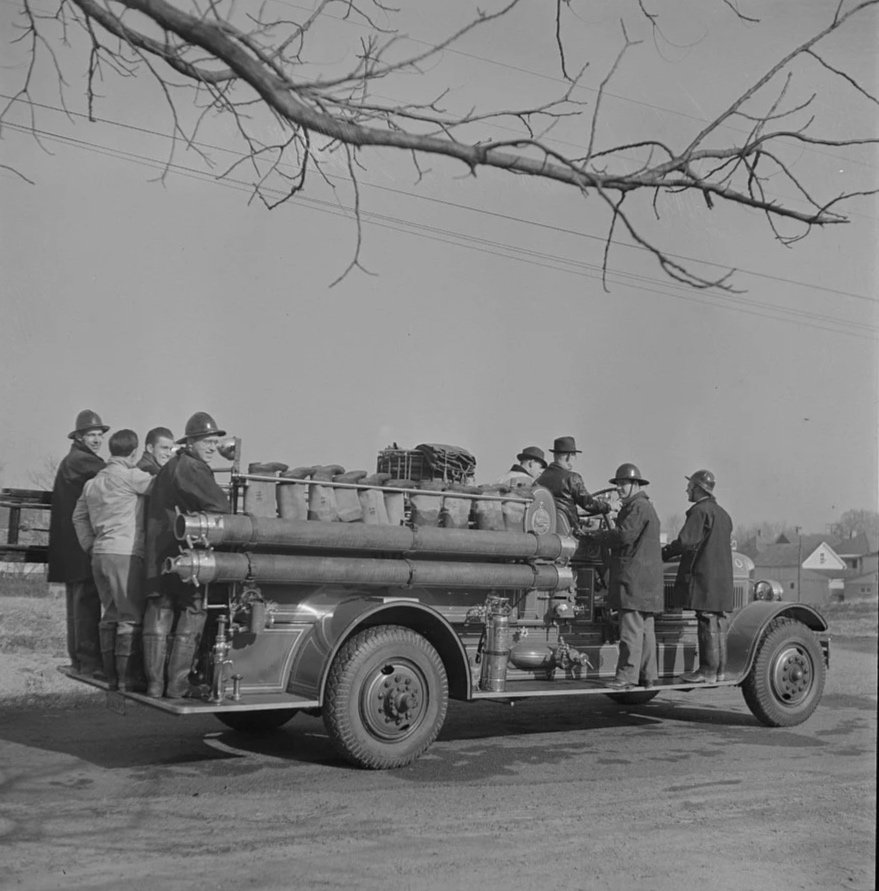
In November 1942, members of the Lititz, Pennsylvania fire department ride atop a fire engine during a World War II air raid drill, preparing for potential attacks on the home front. Civil defense exercises like this were organized across the country to train local responders and civilians in emergency procedures, including blackouts and fire response. Volunteer fire companies played a key role in these efforts, adapting their equipment and routines to meet wartime needs.
First Quarter of 1943 Kentucky Derby from Infield
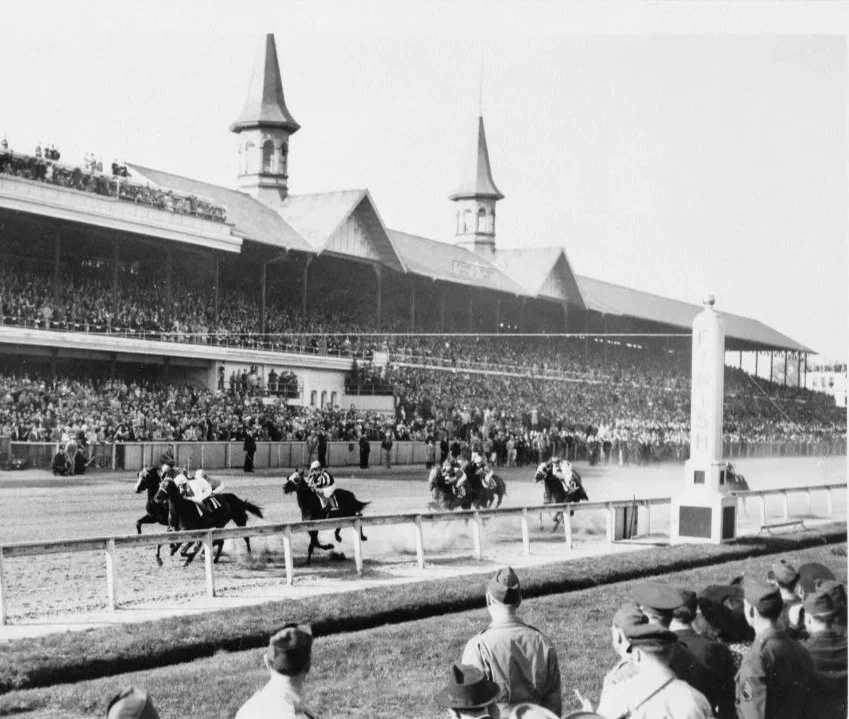
During the 1943 Kentucky Derby in Louisville, horses race past the grandstand as a packed crowd watches from multiple tiers. The event took place during World War II, when major sporting traditions continued despite wartime restrictions on travel and resources. Known as one of the country’s leading horse races since the late nineteenth century, the Derby remained a major public gathering, drawing attention from across the nation.