
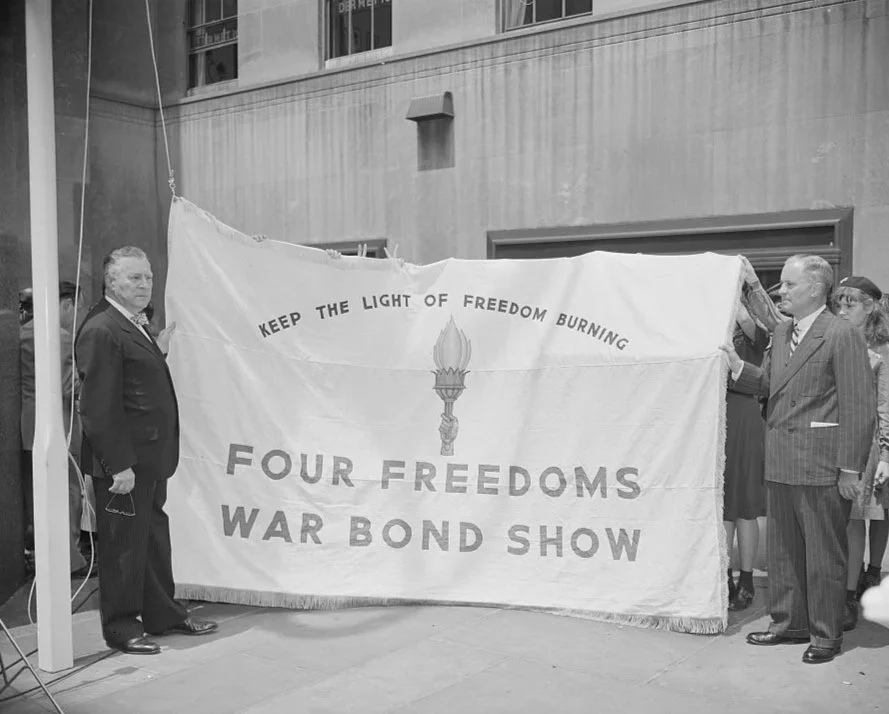
June 1943, Rockefeller Center, New York City. Two men hold a banner reading "Keep the Light of Freedom Burning: Four Freedoms War Bond Show" at a flag raising ceremony on the plaza of the International Building. The Four Freedoms referenced the goals President Franklin Roosevelt laid out in his January 1941 State of the Union address: freedom of speech, freedom of worship, freedom from want, and freedom from fear. Those four principles became central to Allied wartime messaging, most famously through Norman Rockwell's series of paintings published in the Saturday Evening Post in early 1943.
Oswego, New York. United Nations Heroes Marching in the Flag Day Parade During United Nations Week
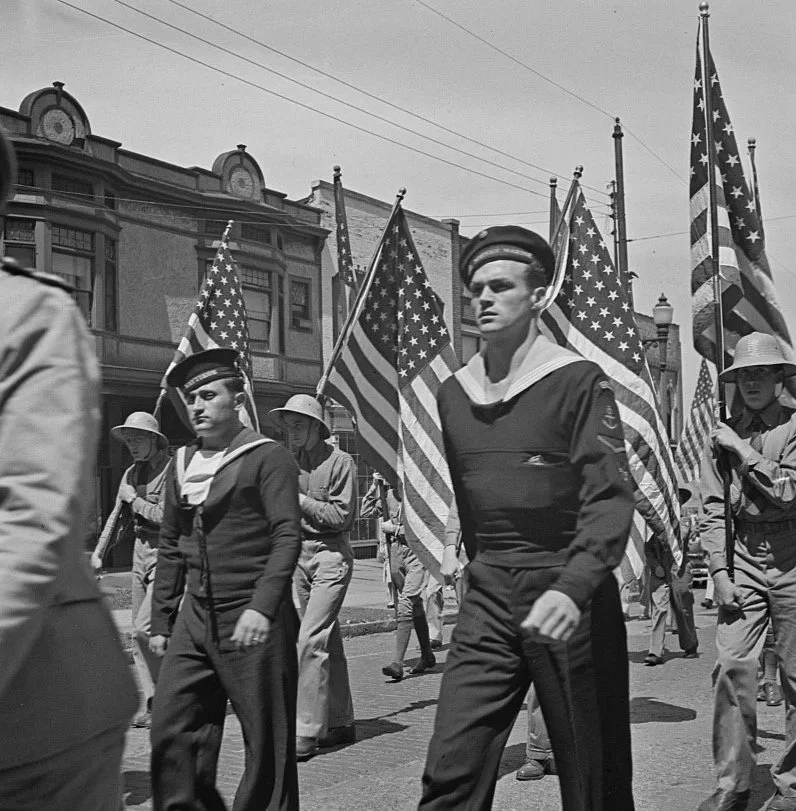
Flag Day, June 1943. U.S. Navy sailors and Army soldiers march through the streets of Oswego, New York, as American flags line the parade route during United Nations Week. With World War II in full swing, events like this served a dual purpose: honoring the flag and reinforcing public support for the Allied war effort. The "United Nations" reference was the wartime term for the Allied coalition, formalized in January 1942 when 26 nations signed the Declaration by United Nations pledging to fight the Axis powers together.
Southington, Connecticut. School Children Pledging Their Allegiance to the Flag
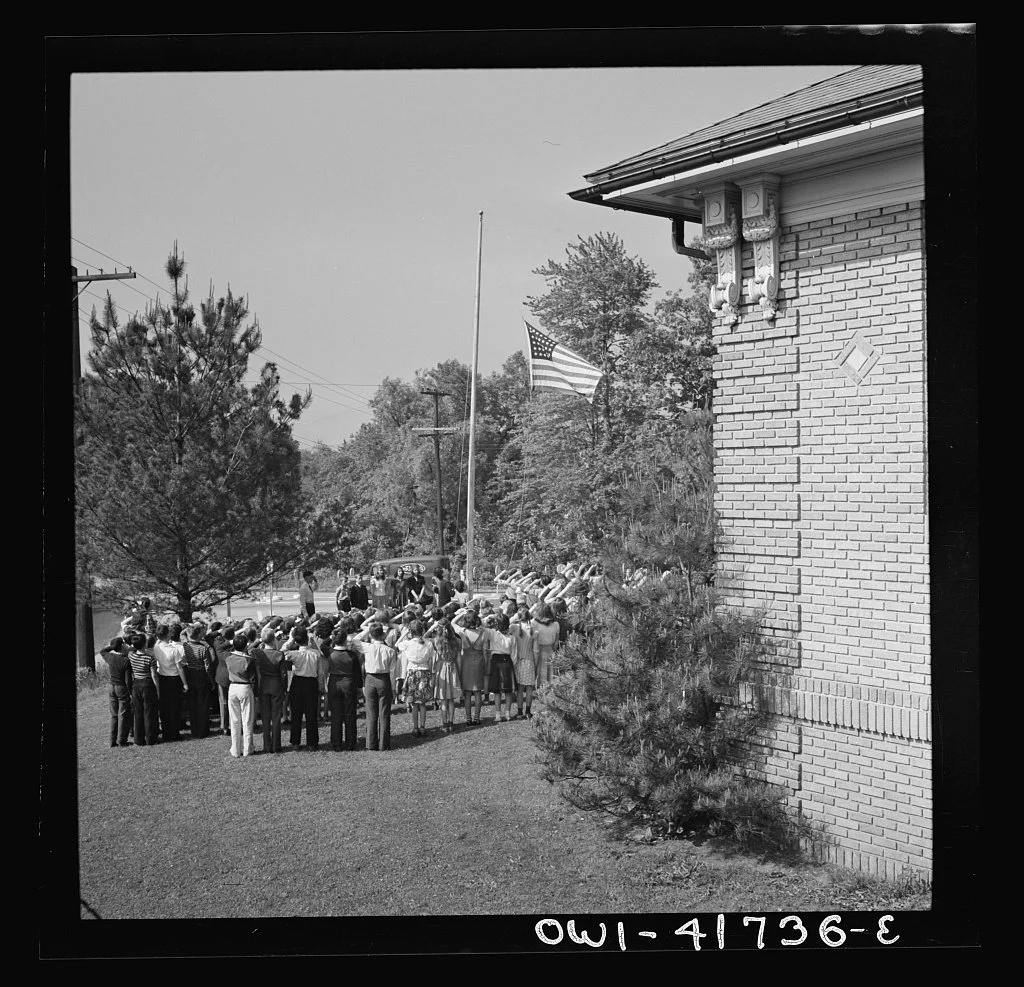
Schoolchildren gather outside a school in Southington, Connecticut, in May 1942 to recite the Pledge of Allegiance during the early months of America’s involvement in World War II. Across the country, patriotic ceremonies became a regular part of daily life as communities emphasized unity, civic duty, and support for the war effort.
Lititz, Pennsylvania. Part of the Lititz Fire Department Called out During an Air Raid Drill
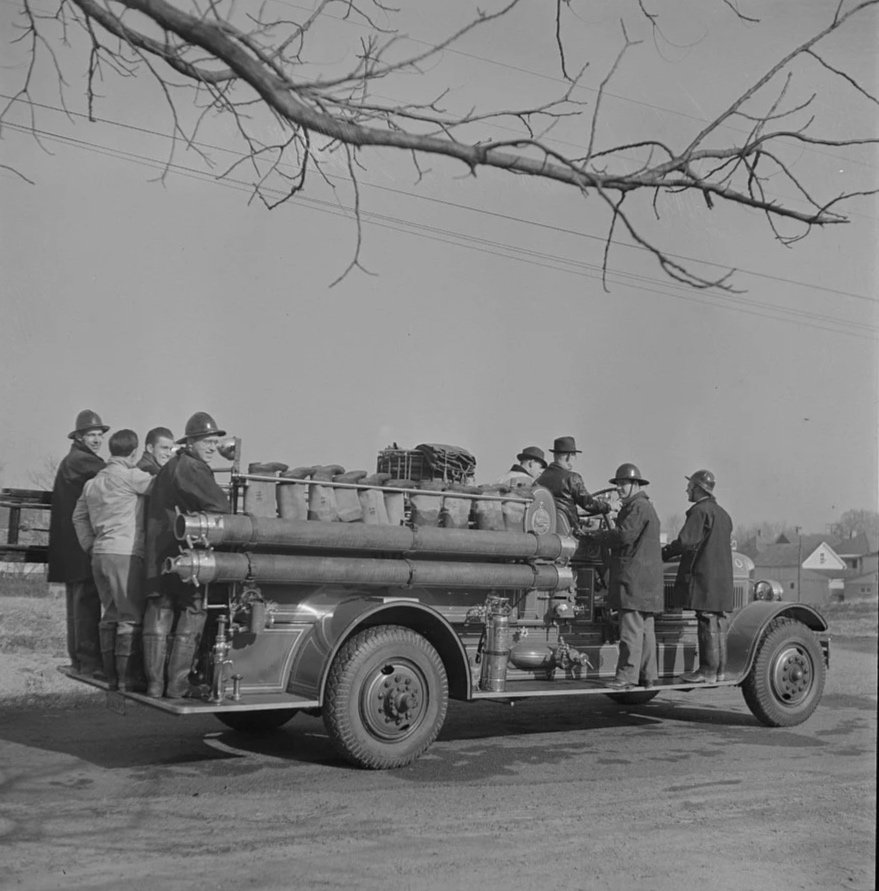
In November 1942, members of the Lititz, Pennsylvania fire department ride atop a fire engine during a World War II air raid drill, preparing for potential attacks on the home front. Civil defense exercises like this were organized across the country to train local responders and civilians in emergency procedures, including blackouts and fire response. Volunteer fire companies played a key role in these efforts, adapting their equipment and routines to meet wartime needs.
First Quarter of 1943 Kentucky Derby from Infield
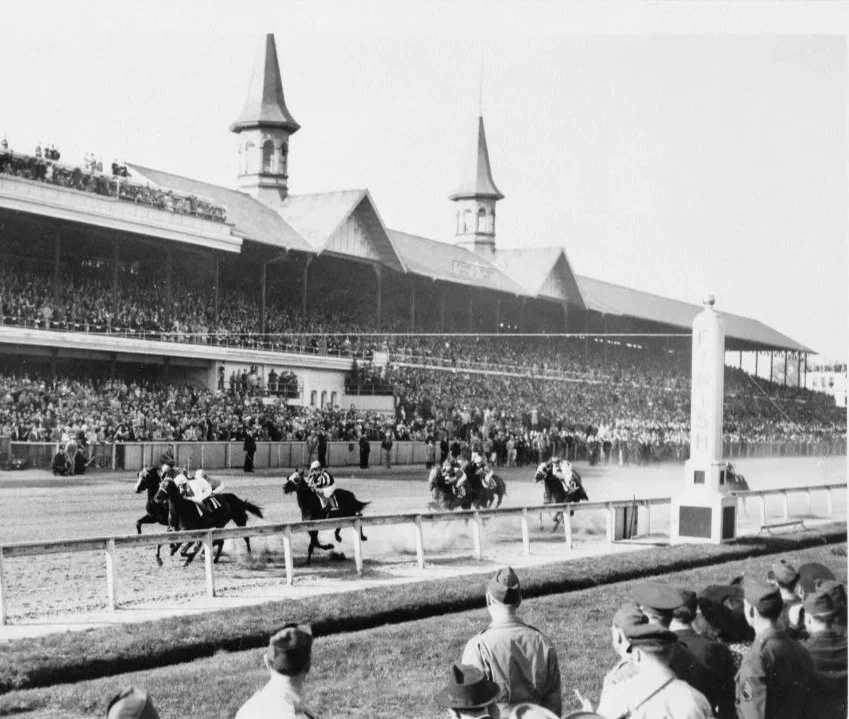
During the 1943 Kentucky Derby in Louisville, horses race past the grandstand as a packed crowd watches from multiple tiers. The event took place during World War II, when major sporting traditions continued despite wartime restrictions on travel and resources. Known as one of the country’s leading horse races since the late nineteenth century, the Derby remained a major public gathering, drawing attention from across the nation.
Apple Picking in Berkely County, West Virginia
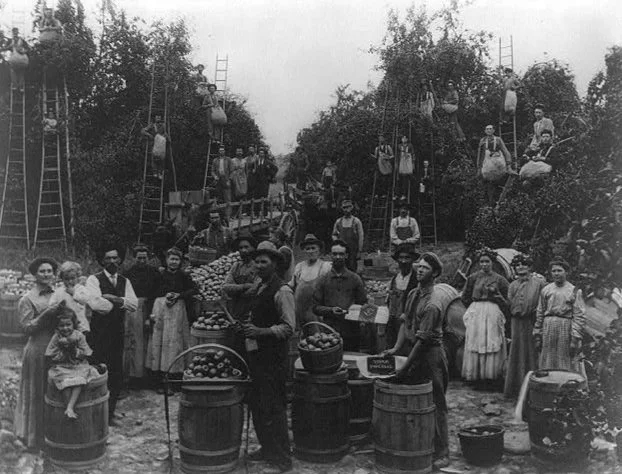
Around 1910 in Berkeley County, West Virginia, apple harvesting brought together entire families and crews to gather and sort fruit in busy orchard rows. Workers stand on ladders reaching into the trees while others fill barrels and baskets on the ground, showing the labor-intensive process behind a major regional crop. Orchards like these were central to the local economy, supplying fresh fruit and cider to nearby markets and beyond.
"Lemonade Stand" Mr. Hersey, Prop. and Mr. O'Reilly
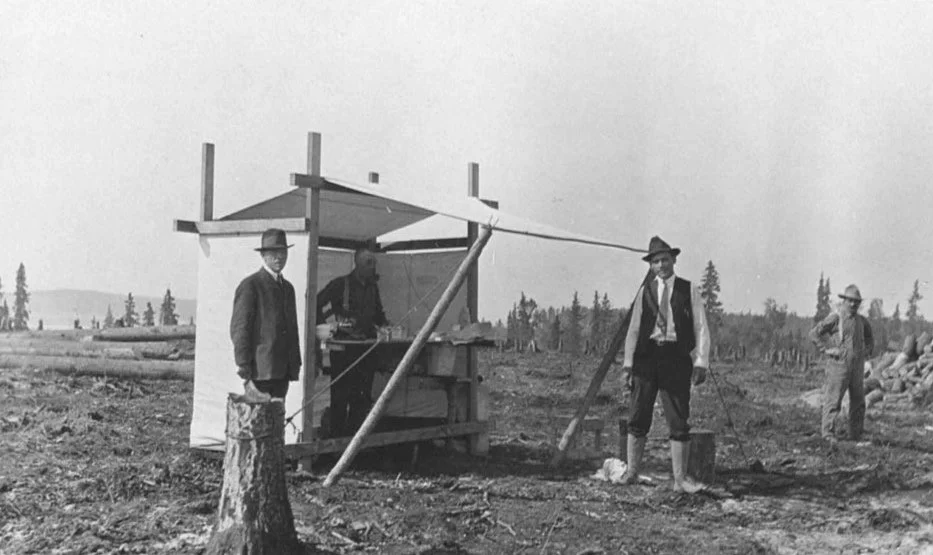
In 1916, two men operate a makeshift “lemonade stand” in a cleared field, likely serving workers in a logging or land-clearing area. A simple wooden structure with a canvas cover provides shade for basic supplies, while cut stumps and felled timber stretch across the background, marking an active work site. Such small, informal setups were common in remote areas, offering food and drink to laborers far from towns and established businesses.
Horse Shows. Horse And Wagon
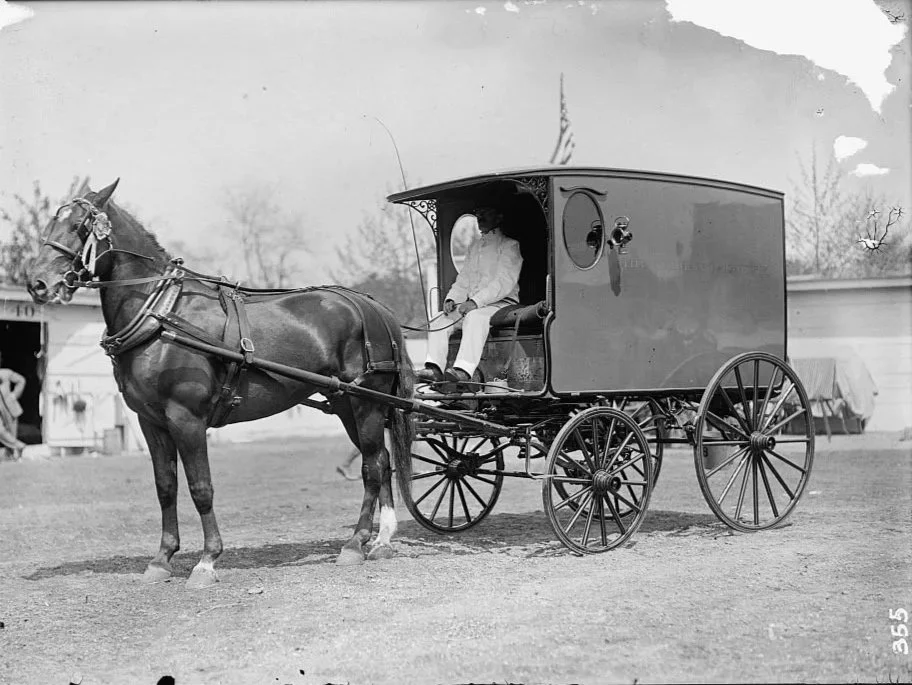
At the 1911 National Capital Horse Show in Washington, D.C., a driver sits in an enclosed wagon pulled by a harnessed horse on display for judges and spectators. Horse shows at the time focused on breeding, training, and the quality of equipment, reflecting how important horses still were for transportation and work.
Farmers on Main Street, Saturday Night. Iowa Falls, Iowa
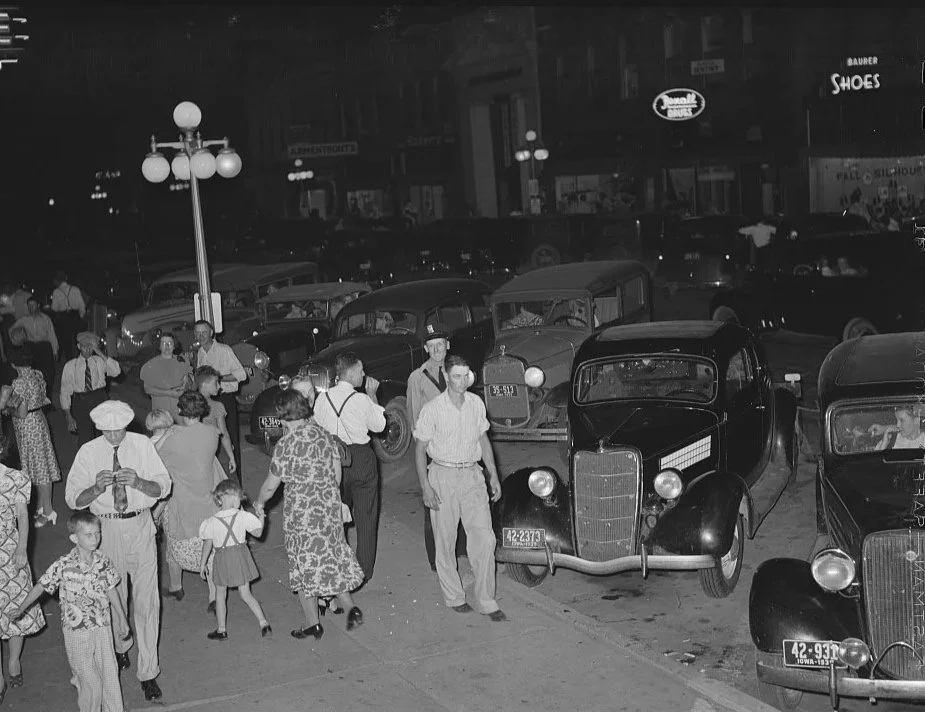
Farm families and townspeople fill the sidewalks and streets of Iowa Falls, Iowa, on a Saturday night in 1939, as automobiles line the curb under the glow of streetlights. The gathering reflects a weekly ritual in rural communities, when residents came to town to shop, socialize, and take part in public life after a week of work. Men, women, and children move easily between parked cars and storefronts, illustrating the central role of Main Street as both marketplace and meeting place.
Times Boy on Bicycle
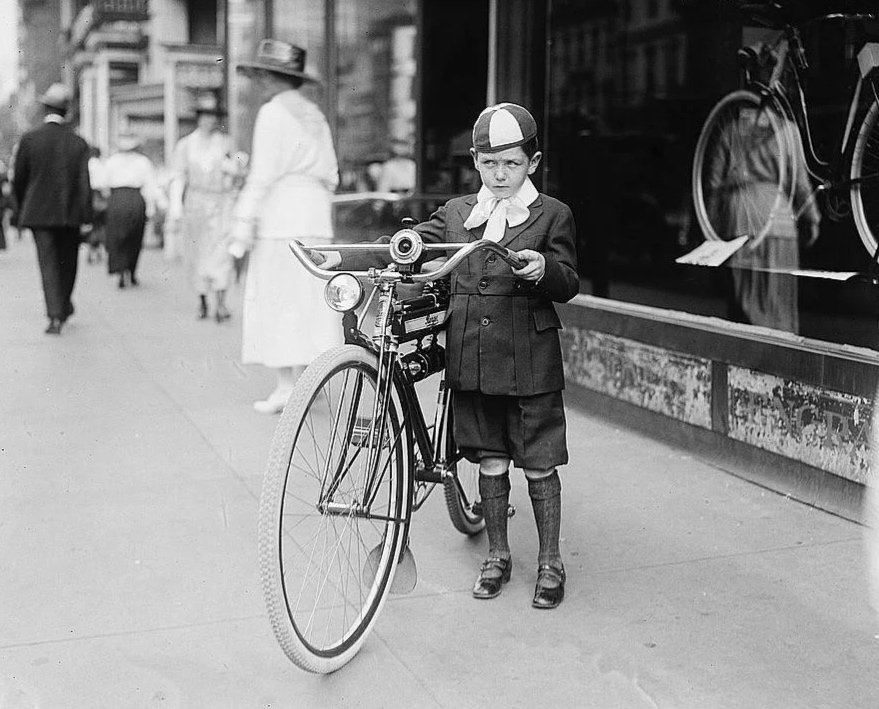
A young newspaper carrier stands with his bicycle in 1921, representing the vital role of youth labor in the distribution of daily news during the early twentieth century. Identified as an employee of the Washington Times, he was part of a nationwide network of “newsboys” who ensured that papers reached city streets and doorsteps each day. Dressed in period attire and equipped with a sturdy bicycle. At a time when newspapers were a primary source of information, boys like him formed the backbone of a fast-moving industry that connected communities to national and world events.
Filling Cartons with Ice Cream Mix. Creamery, San Angelo, Texas
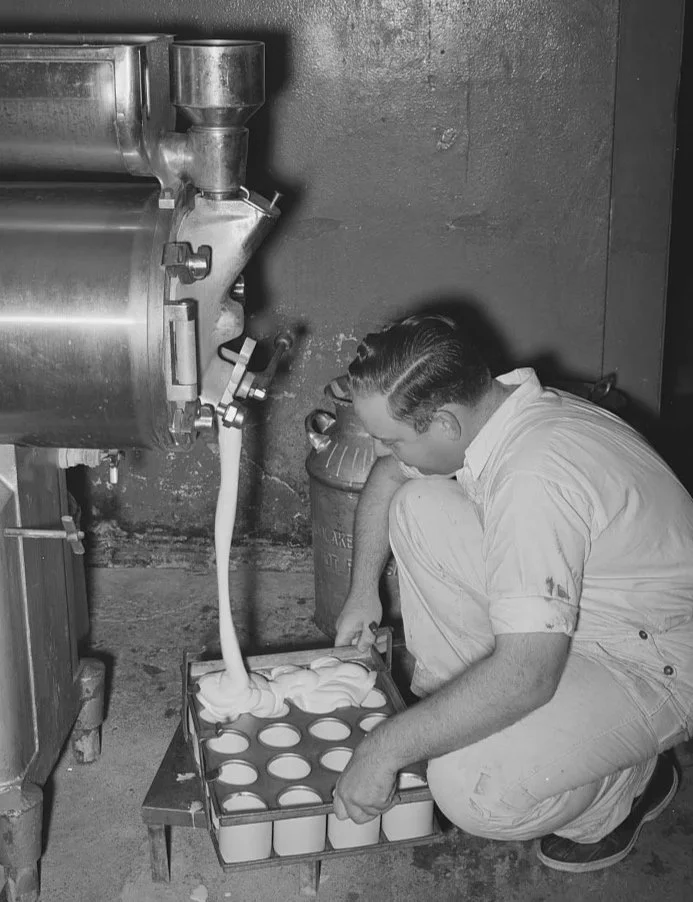
A creamery worker in San Angelo, Texas, fills cartons with fresh ice cream mix in 1939, capturing the industrial side of everyday food production in small-town America. The mechanized dispenser and uniform containers illustrate the growing efficiency of local dairies during the late Depression era, as advances in equipment helped meet rising consumer demand. Such operations connected rural agricultural output to broader markets, turning raw milk into standardized products ready for distribution.
Farmer Crossing the Main Street of Town, Eufaula, Oklahoma
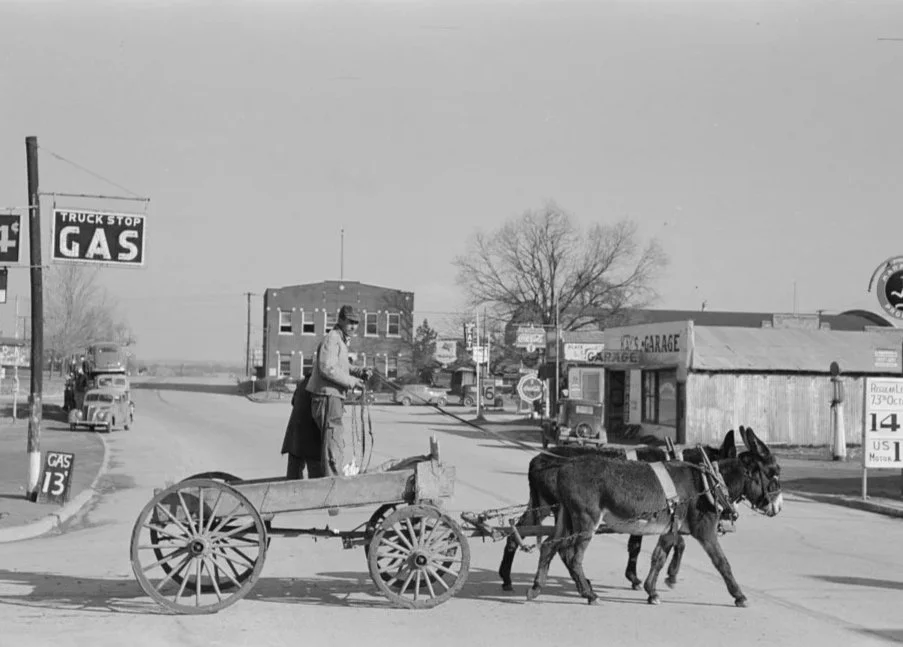
A farmer guides a mule-drawn wagon across the main street of Eufaula, Oklahoma, in 1940, passing through a town where older agricultural traditions meet the growing presence of automobiles, gas stations, and roadside businesses. Hand-painted signs advertising fuel prices and garages line the street, underscoring the expanding influence of the automobile, while the wagon and its driver represent enduring self-reliance and the rhythms of farm work. Captured during the late Depression era.