
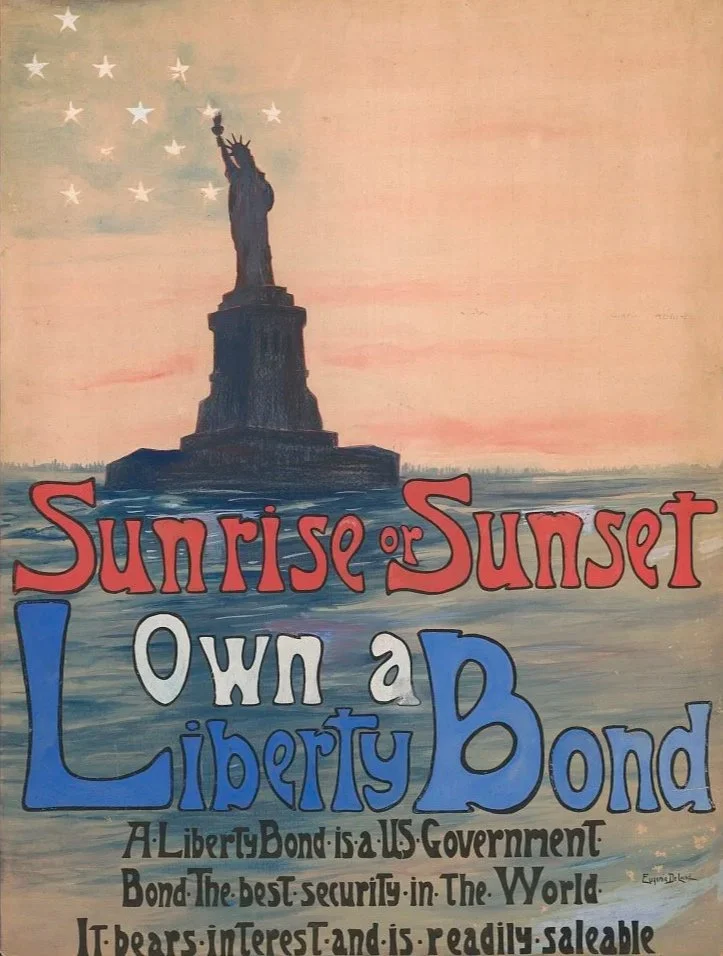
A World War I Liberty Bond poster designed by artist Eugenie DeLand in 1917, featuring the Statue of Liberty silhouetted against a sky painted in the colors of the American flag. The text reads "Sunrise or Sunset, Own a Liberty Bond," with smaller print identifying Liberty Bonds as U.S. Government bonds described as "the best security in the world" that "bear interest and are readily saleable." Liberty Bonds were a cornerstone of the U.S. war financing strategy, with the government ultimately running four Liberty Loan drives between 1917 and 1918 that raised approximately $17 billion to fund American participation in the war.
Southington, Connecticut. School Children Pledging Their Allegiance to the Flag
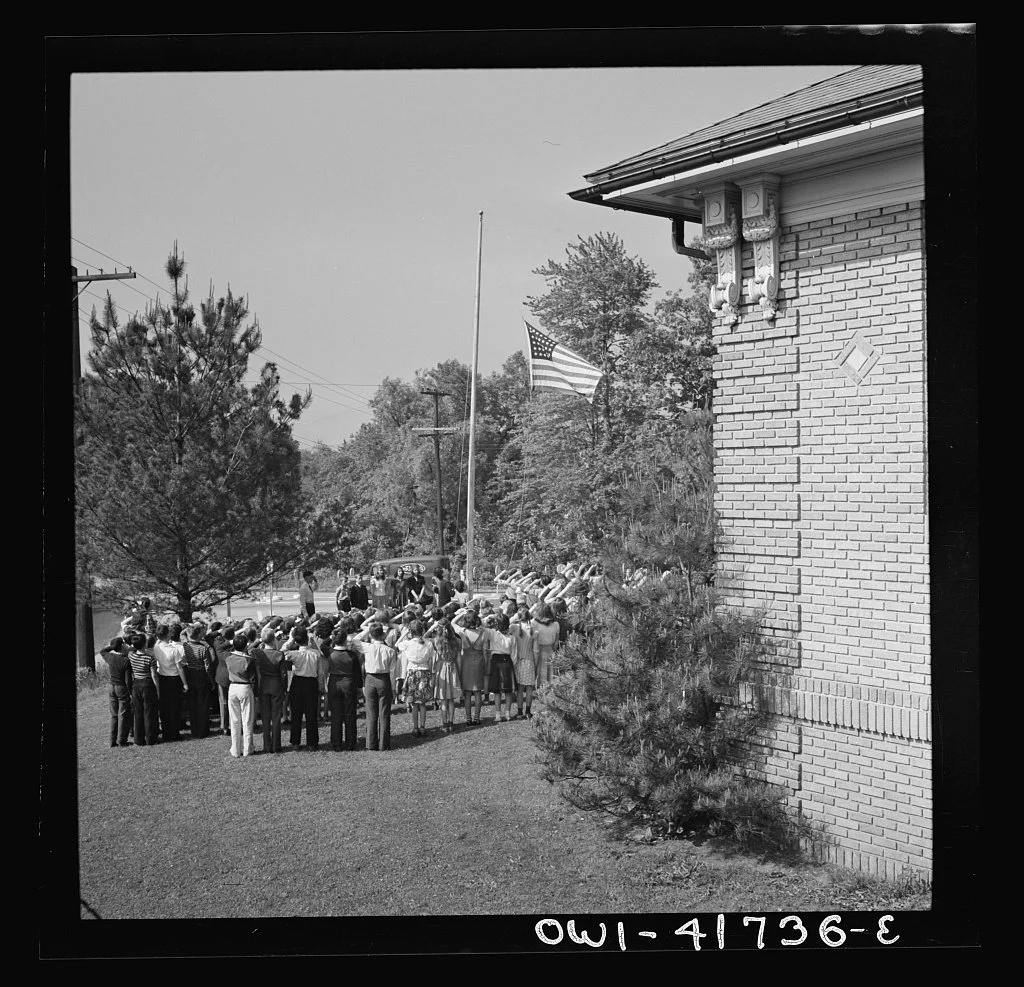
Schoolchildren gather outside a school in Southington, Connecticut, in May 1942 to recite the Pledge of Allegiance during the early months of America’s involvement in World War II. Across the country, patriotic ceremonies became a regular part of daily life as communities emphasized unity, civic duty, and support for the war effort.
Civil War Veteran Adjutant Edwin Francis Wyer of Cos. I, E and G, 5th Massachusetts Infantry Regiment with World War I veteran Terry McCloskey of 101st Infantry, 26th Division in Uniform
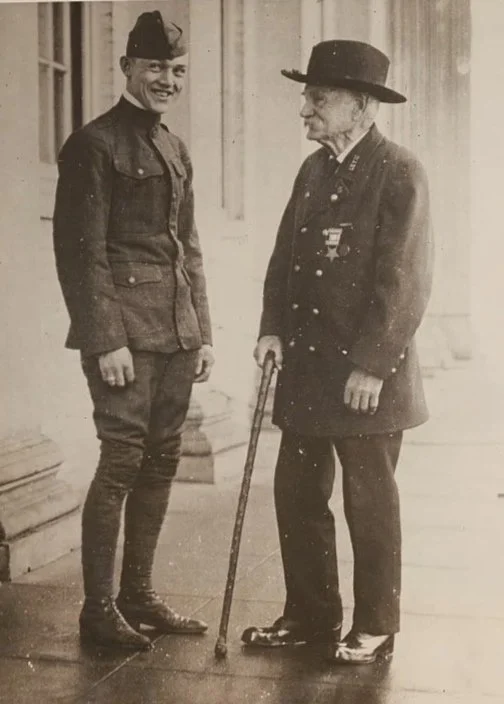
In March 1922, a Civil War veteran and a World War I soldier stand together outside the Massachusetts State House in Boston, representing two generations of American military service. Edwin Francis Wyer, who served in the Union Army, appears alongside Terry McCloskey of the 101st Infantry, 26th Division, highlighting the passage of time between the nation’s major conflicts. Public interest in such meetings reflected a continued respect for veterans and a desire to connect past and present service.
The New President Takes The Oath of Office. The Wilcox Home in Which President Roosevelt was Sworn In
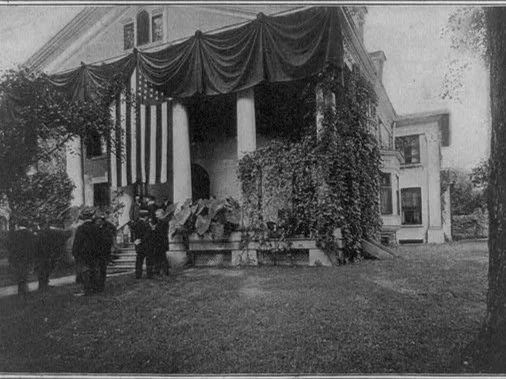
In September 1901, a small gathering assembled on the porch of the Wilcox home in Buffalo, New York, where Theodore Roosevelt took the oath of office following the assassination of William McKinley. The house, draped in American flags, became an unexpected setting for a pivotal moment in national history as Roosevelt assumed the presidency amid uncertainty and mourning.
Participants, Some Carrying American flags, Marching in the Civil Rights March from Selma to Montgomery, Alabama in 1965
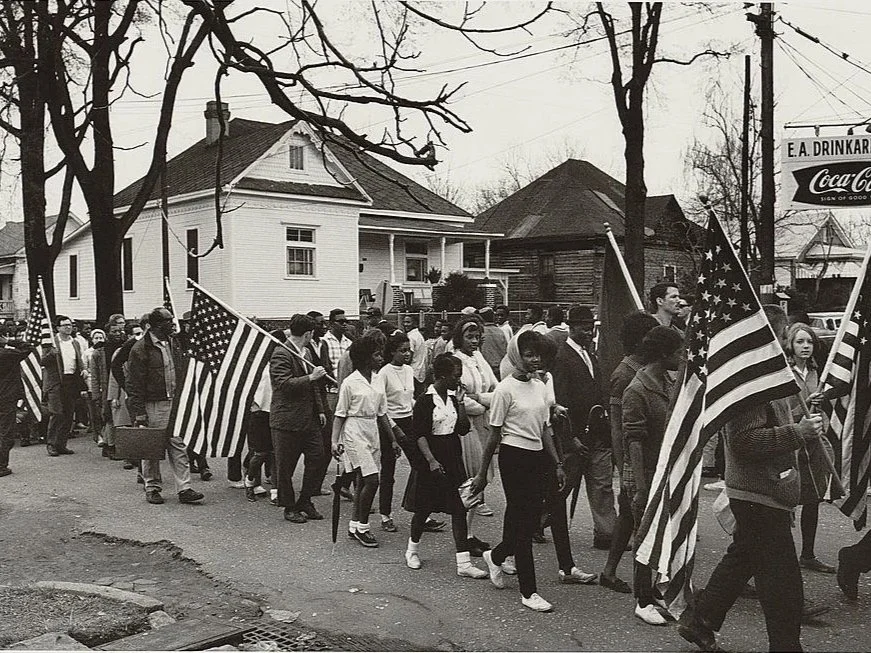
Marchers move along a residential street during the 1965 Selma to Montgomery campaign, many carrying American flags as they press forward in support of voting rights for African Americans. Organized after years of disenfranchisement and intimidation, the demonstrations drew national attention to the barriers faced in the South. The presence of ordinary men, women, and young people underscored the broad base of the movement and its commitment to nonviolent protest.
Women on Stage at Daughters of the American Revolution Convention, Washington, D.C.
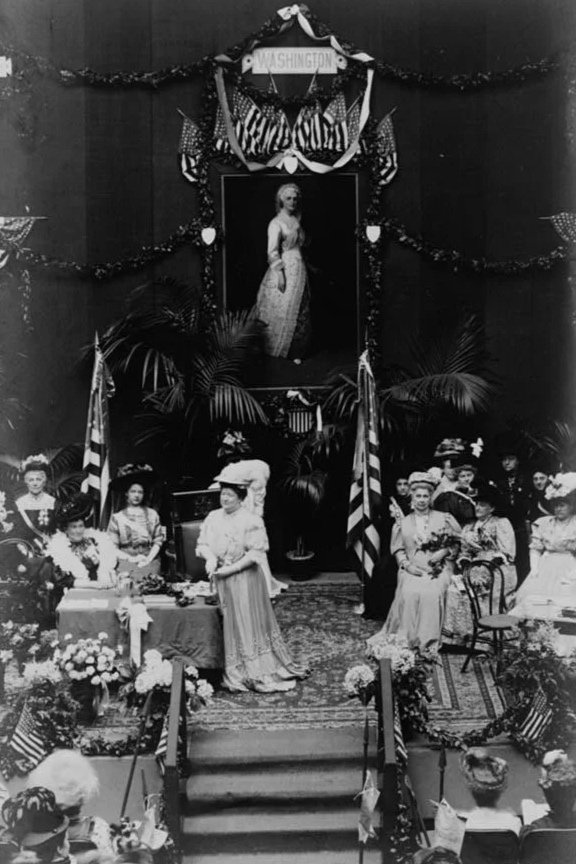
Members of the Daughters of the American Revolution gather on stage during a 1908 convention in Washington, D.C., surrounded by flags, floral arrangements, and patriotic decorations centered on a portrait of George Washington. Founded in the late 19th century, the organization promoted historic preservation, education, and national identity through civic events like this one. Such gatherings reflected the growing public role of women in shaping cultural memory and patriotic tradition during the early 20th century.
Parade of Civil War Veterans and Children Carrying American and Alaska Flags on Urban Downtown Street
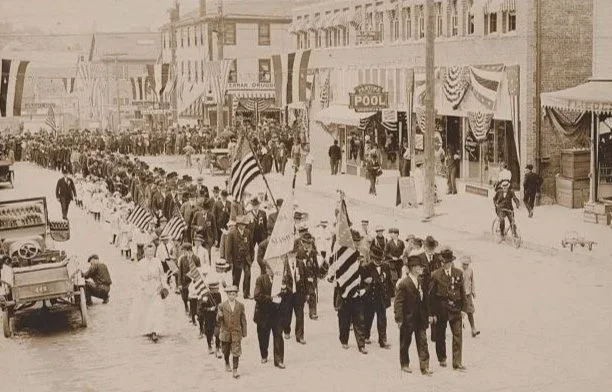
A parade of Civil War veterans marches through a busy downtown street in the early 20th century, accompanied by children carrying American and Alaska flags. Organized at a time when surviving veterans were aging, such public displays honored their service and reinforced national unity decades after the war. The presence of younger generations alongside the veterans reflects an effort to pass down memory and patriotism, while the decorated storefronts and gathered crowds show how communities marked these occasions as civic events tied to identity and remembrance.
Lincoln's Second Inaugural
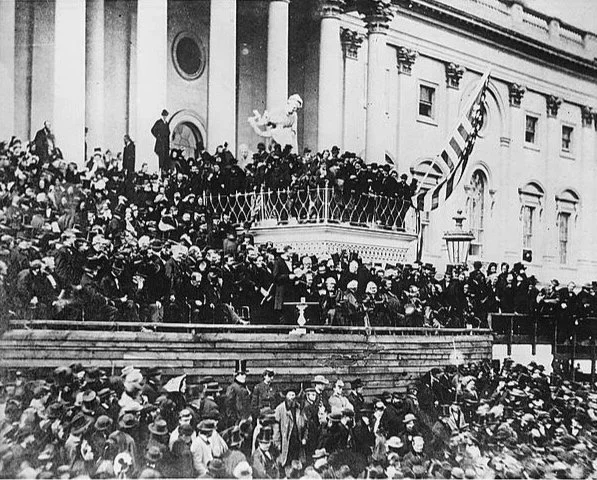
President Abraham Lincoln delivering his second inaugural address from the east portico of the U.S. Capitol on March 4, 1865. The Civil War was nearing its end, and the large crowd gathered reflects the weight of the moment for a divided nation. People filled the steps and grounds to witness the start of Lincoln’s final term. Capturing a turning point in American history, as the country stood on the edge of peace and reconstruction.
Historic American Flag Carried into Battle by American Soldiers During WWI
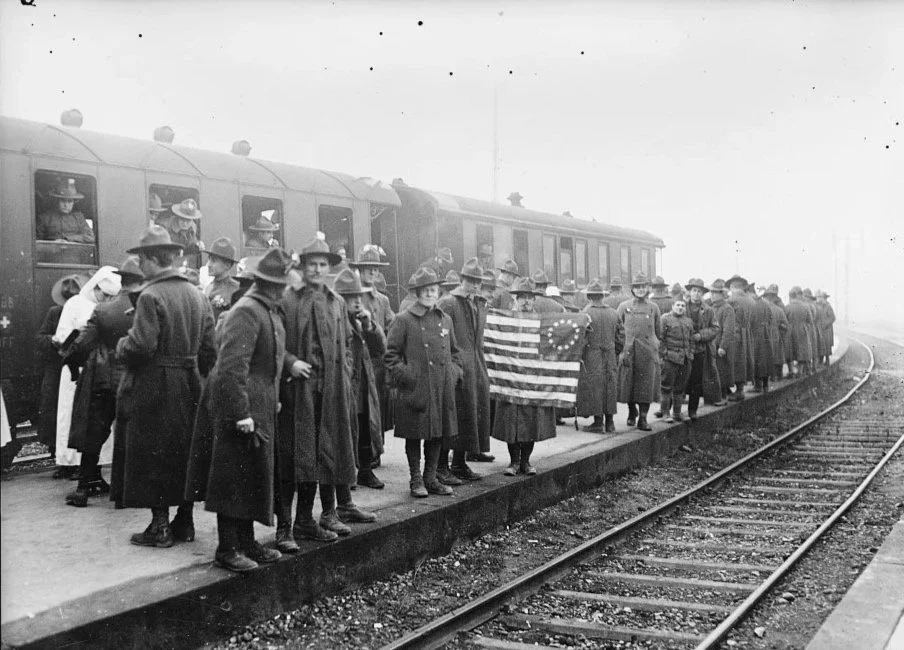
American servicemen gathered along a rail platform at the close of World War I, marking their release and return from captivity. The soldiers hold a U.S. flag that had been secretly hidden while they were held in German prison camps and later revealed in Basel, Switzerland, on December 7, during the release of the first train of American privates. The long line of men, bundled in heavy coats, reflects the scale of the war and the logistics of bringing troops home. This is a quiet but powerful moment, when a simple flag signaled survival, freedom, and the end of a long ordeal for those who served.