
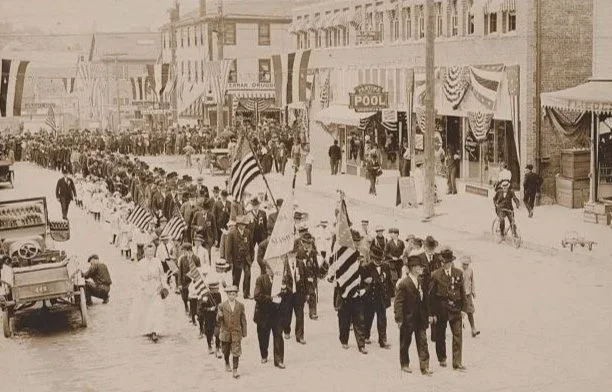
A parade of Civil War veterans marches through a busy downtown street in the early 20th century, accompanied by children carrying American and Alaska flags. Organized at a time when surviving veterans were aging, such public displays honored their service and reinforced national unity decades after the war. The presence of younger generations alongside the veterans reflects an effort to pass down memory and patriotism, while the decorated storefronts and gathered crowds show how communities marked these occasions as civic events tied to identity and remembrance.
Many peoples - one nation Let us unite to Americanize America
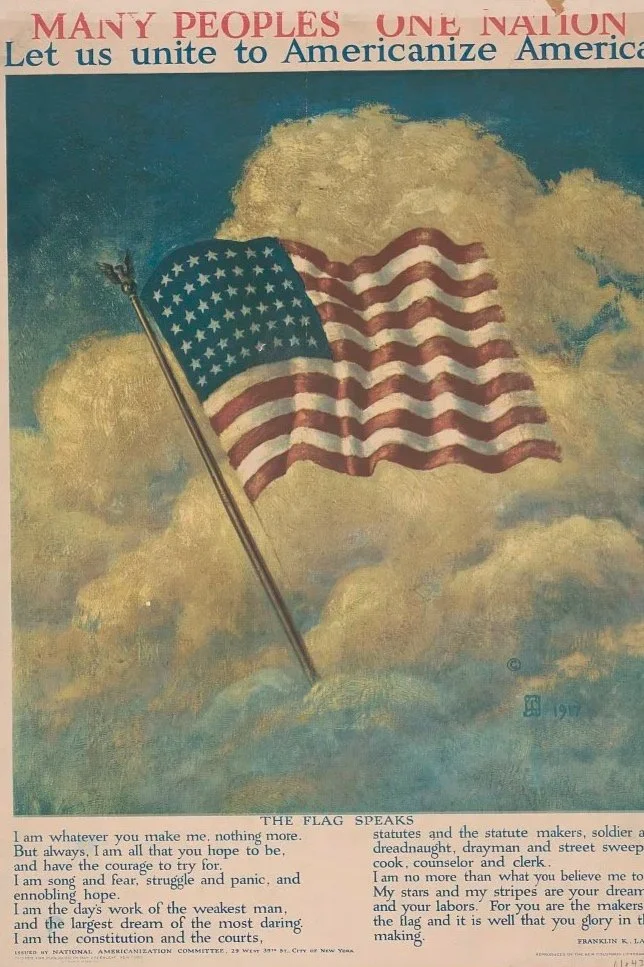
1917 poster showing how Americans were being asked to think about unity as the country entered World War I. With the flag rising above the clouds, it sends a clear message that national identity came first, especially in a time of war. Campaigns like this were aimed at bringing together a population shaped by recent immigration and rapid change, tying patriotism, loyalty, and shared responsibility to the image of the American flag.
Massachusetts Nautical School 1923
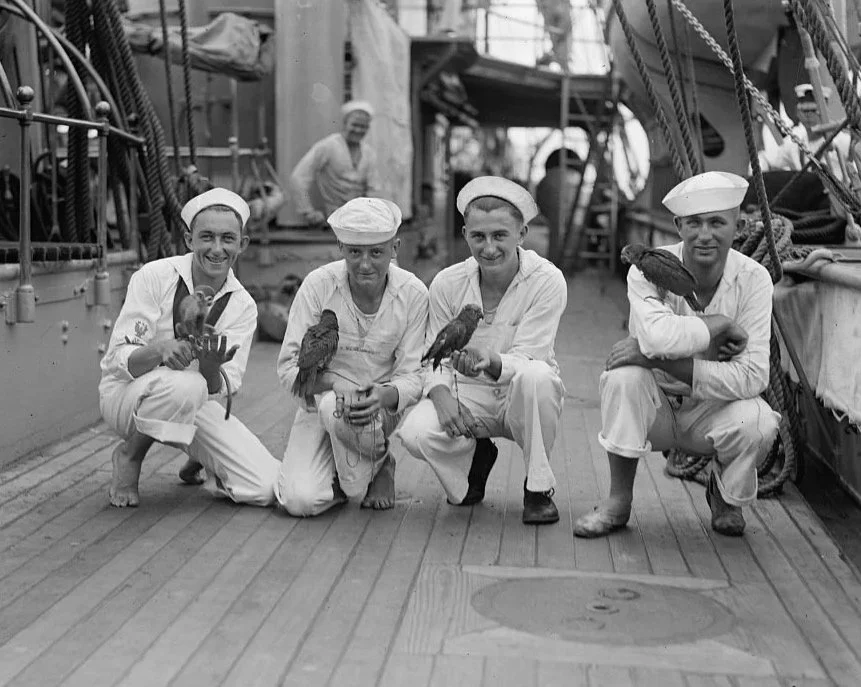
Cadets from the Massachusetts Nautical School aboard a training ship in September 1923, during a period when maritime education played a key role in preparing young men for service in the merchant marine and U.S. Navy. Dressed in standard issue uniforms, schools like this helped supply skilled officers and sailors at a time when sea power and commercial shipping were central to American industry and national defense.
Huge flag being carried by a large group of men in a G.A.R. parade in Washington, D.C.
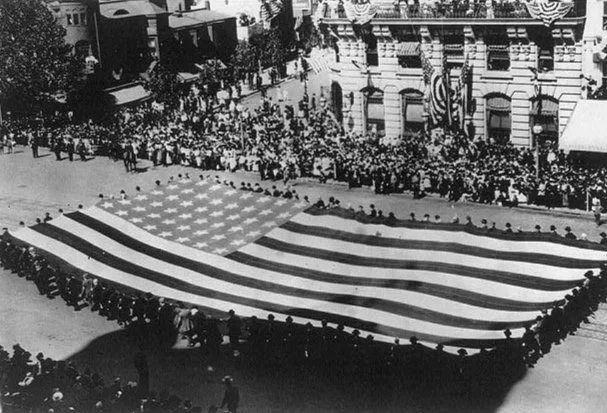
1915 photograph shows a huge American flag being carried through the streets of Washington, D.C., during a Grand Army of the Republic parade made up of Civil War veterans. Dozens of men are needed just to support the flag, underscoring how large and symbolic these public displays had become.
Deaf children of St. Rita's School, Cincinnati, OH, singing the Star Spangled Banner in sign language

1918 photograph shows deaf students from St. Rita’s School in Cincinnati signing the Star-Spangled Banner in front of a large American flag. Taken during the final year of World War I, the children’s use of sign language shows how national traditions were adapted so everyone could take part. A quiet look at inclusion and shared identity during a time when public unity mattered deeply.
The Great Parade, Pennsylvania Avenue, Washington, D.C., U.S.A.
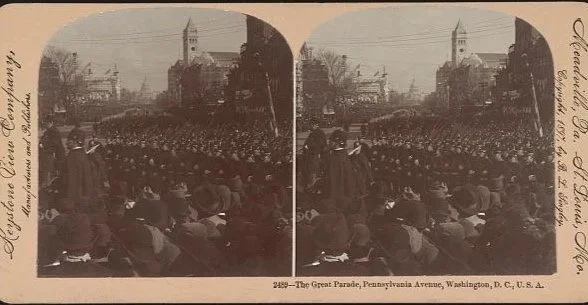
1897 stereograph shows the Great Parade along Pennsylvania Avenue in Washington, D.C., with massive crowds packed along the street and sidewalks. Events like this were central to public life in the nation’s capital, turning major avenues into gathering places for civic celebration and national display. Americans came together in person to mark important moments, long before radio or television, also reflecting the popularity of stereographs, which brought scenes from Washington to viewers across the country.
Parade of Civil War veterans and children carrying American and Alaska flags
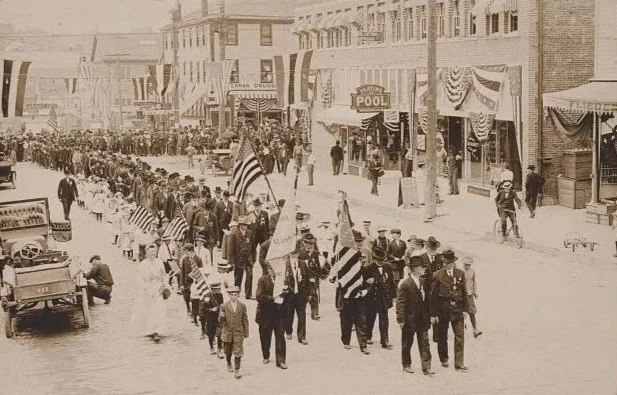
A patriotic parade moving down a busy main street, with marchers carrying American flags past stores and restaurants. Signs for a U.S. Navy Yard and a Great Northern Railway office highlight how military activity and rail transportation shaped local life and commerce. Spectators line the sidewalks while cars and bicycles share the road, capturing a moment when older traditions and modern life overlapped.
Votes for women : suffrage rallying song
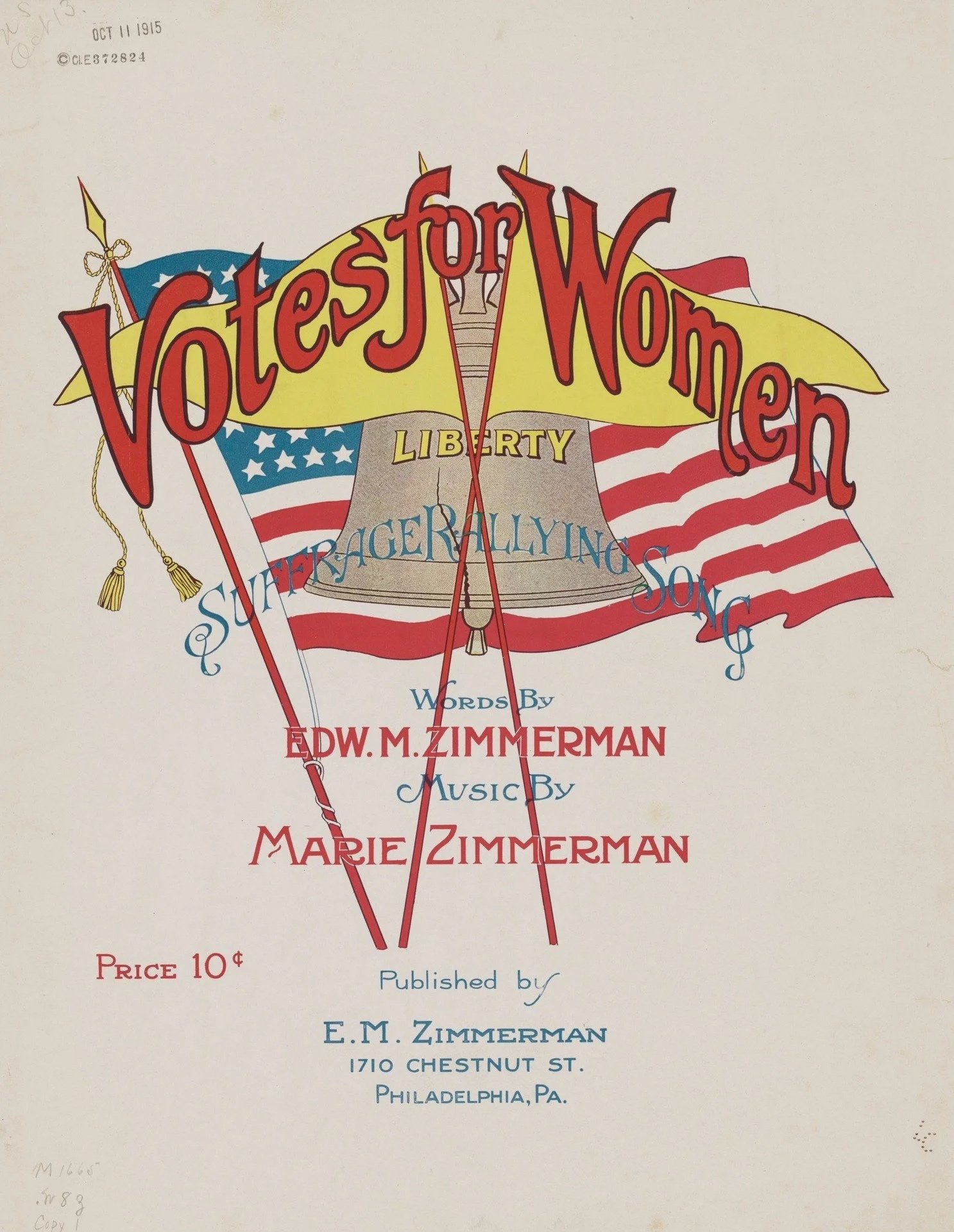
During the early women's suffrage movement, rallying songs like Votes for Women were sung at marches and meetings to build unity and keep the message simple and memorable. Printed sheet music helped spread these songs far beyond major cities, allowing supporters across the country to take part. Items like this show how the fight for voting rights was carried not just through speeches and demonstrations, but through everyday culture and shared voices.
Liberty Parade on Fifth Avenue WWI Era
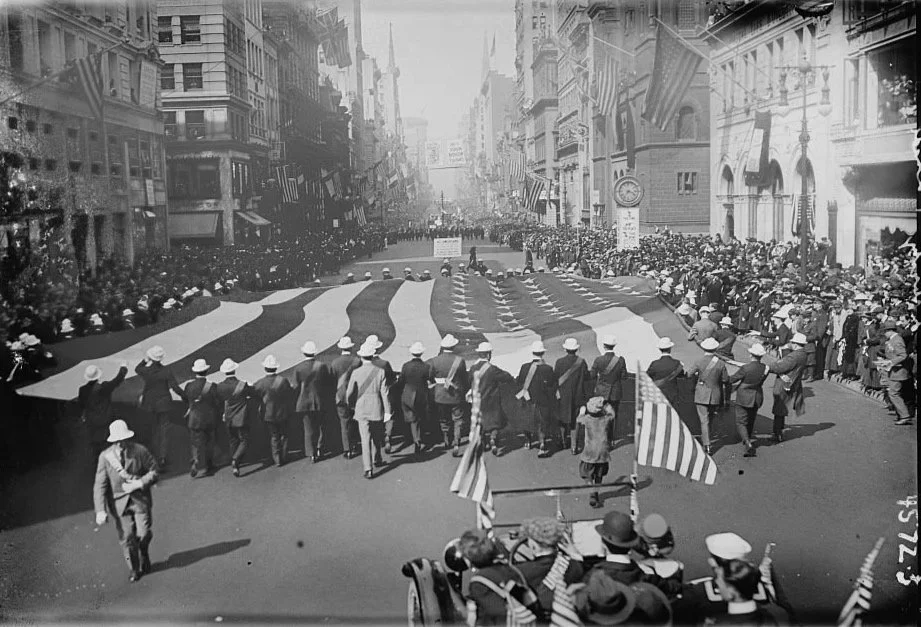
Crowds pack Fifth Avenue as a massive American flag is carried up the street during a World War I–era Liberty Bond parade in New York City. Marchers in uniform hats support the enormous banner while spectators line the sidewalks and hang from windows above, reflecting the national push to fund the war effort through public bond sales.