
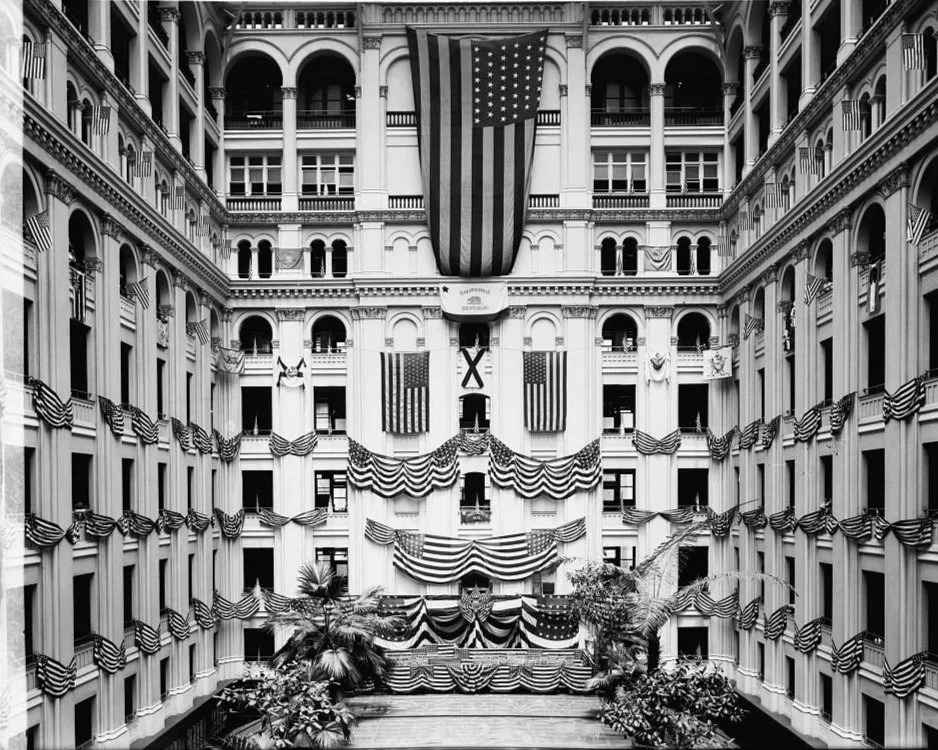
The Post Office building on Pennsylvania Avenue in Washington, D.C., decorated with flags and bunting for Flag Day in 1913. Large American flags hang through the open courtyard while smaller ones line the balconies, turning the building itself into a patriotic display. At the time, Flag Day was gaining wider recognition, especially in federal buildings tied to government and public service. Scenes like this show how national symbols were used in everyday civic spaces to reinforce a shared sense of identity.
Parade of Civil War veterans and children carrying American and Alaska flags
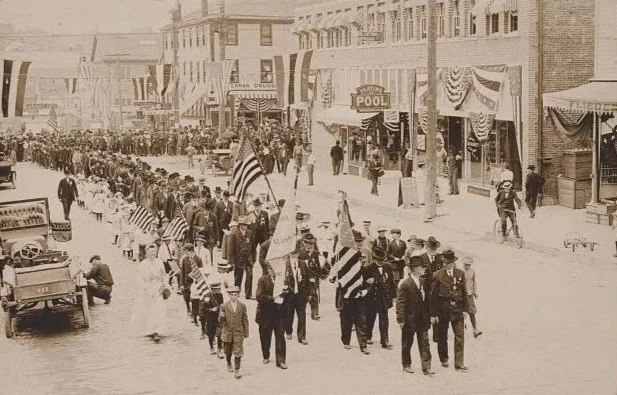
A patriotic parade moving down a busy main street, with marchers carrying American flags past stores and restaurants. Signs for a U.S. Navy Yard and a Great Northern Railway office highlight how military activity and rail transportation shaped local life and commerce. Spectators line the sidewalks while cars and bicycles share the road, capturing a moment when older traditions and modern life overlapped.
Liberty Parade on Fifth Avenue WWI Era
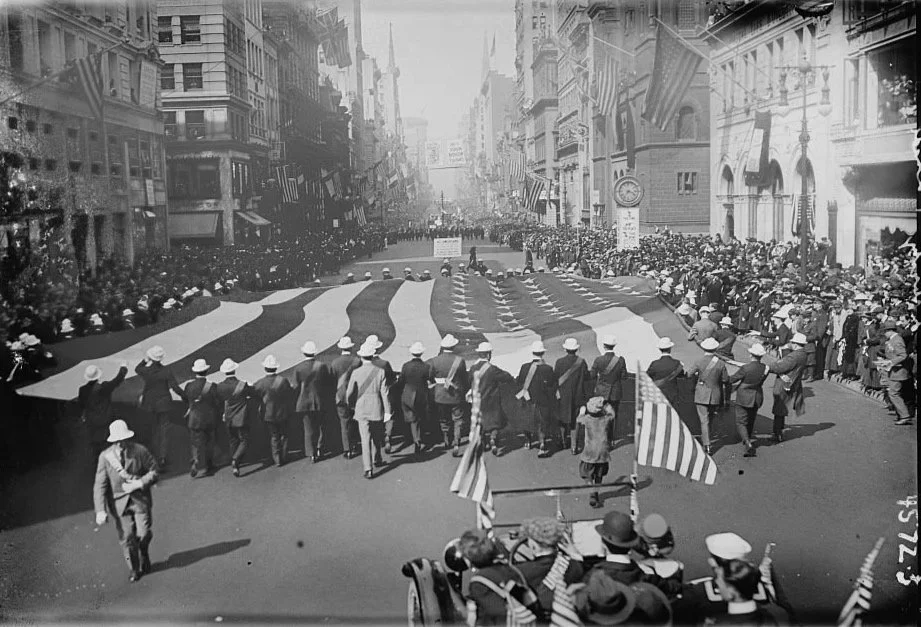
Crowds pack Fifth Avenue as a massive American flag is carried up the street during a World War I–era Liberty Bond parade in New York City. Marchers in uniform hats support the enormous banner while spectators line the sidewalks and hang from windows above, reflecting the national push to fund the war effort through public bond sales.
Historic American Flag Carried into Battle by American Soldiers During WWI
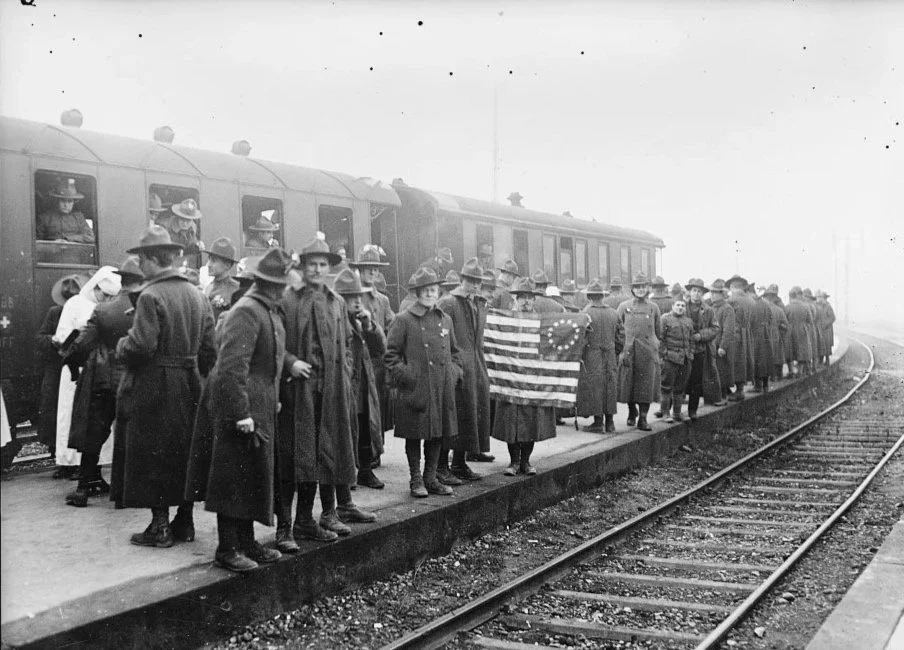
American servicemen gathered along a rail platform at the close of World War I, marking their release and return from captivity. The soldiers hold a U.S. flag that had been secretly hidden while they were held in German prison camps and later revealed in Basel, Switzerland, on December 7, during the release of the first train of American privates. The long line of men, bundled in heavy coats, reflects the scale of the war and the logistics of bringing troops home. This is a quiet but powerful moment, when a simple flag signaled survival, freedom, and the end of a long ordeal for those who served.