
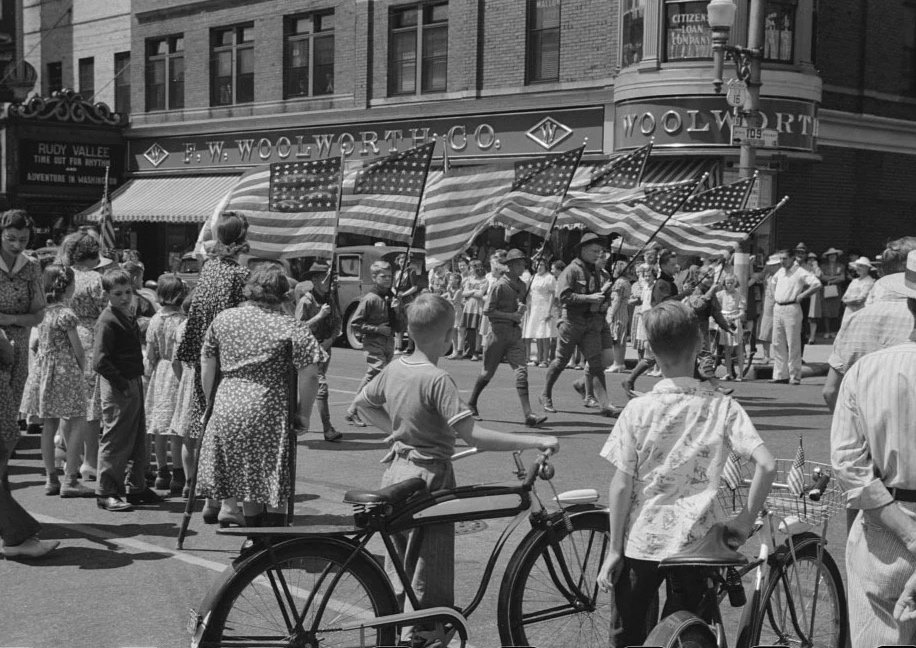
A Fourth of July parade moves through downtown Watertown, Wisconsin in 1941, with marchers carrying American flags past storefronts and gathered spectators. Children stand at the curb with bicycles, watching as the procession passes, reflecting the strong community participation typical of small-town celebrations. Taking place just months before the United States entered World War II, such events carried added meaning as public expressions of unity and patriotism.
Parade of Civil War Veterans and Children Carrying American and Alaska Flags on Urban Downtown Street
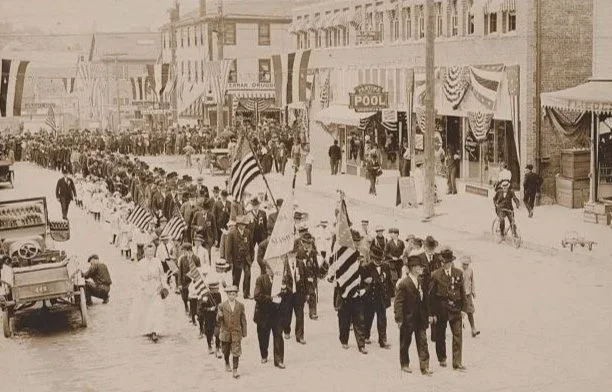
A parade of Civil War veterans marches through a busy downtown street in the early 20th century, accompanied by children carrying American and Alaska flags. Organized at a time when surviving veterans were aging, such public displays honored their service and reinforced national unity decades after the war. The presence of younger generations alongside the veterans reflects an effort to pass down memory and patriotism, while the decorated storefronts and gathered crowds show how communities marked these occasions as civic events tied to identity and remembrance.
Parade of Civil War veterans and children carrying American and Alaska flags
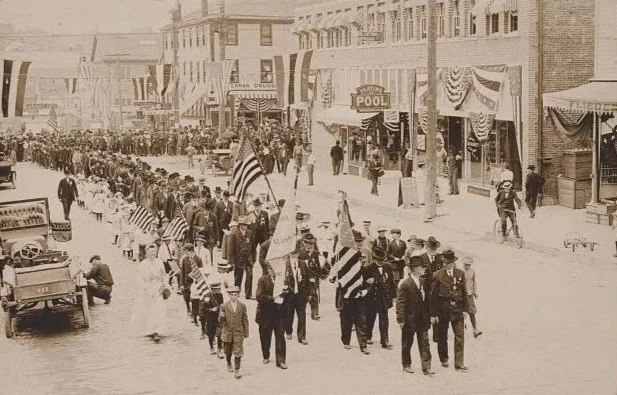
A patriotic parade moving down a busy main street, with marchers carrying American flags past stores and restaurants. Signs for a U.S. Navy Yard and a Great Northern Railway office highlight how military activity and rail transportation shaped local life and commerce. Spectators line the sidewalks while cars and bicycles share the road, capturing a moment when older traditions and modern life overlapped.