
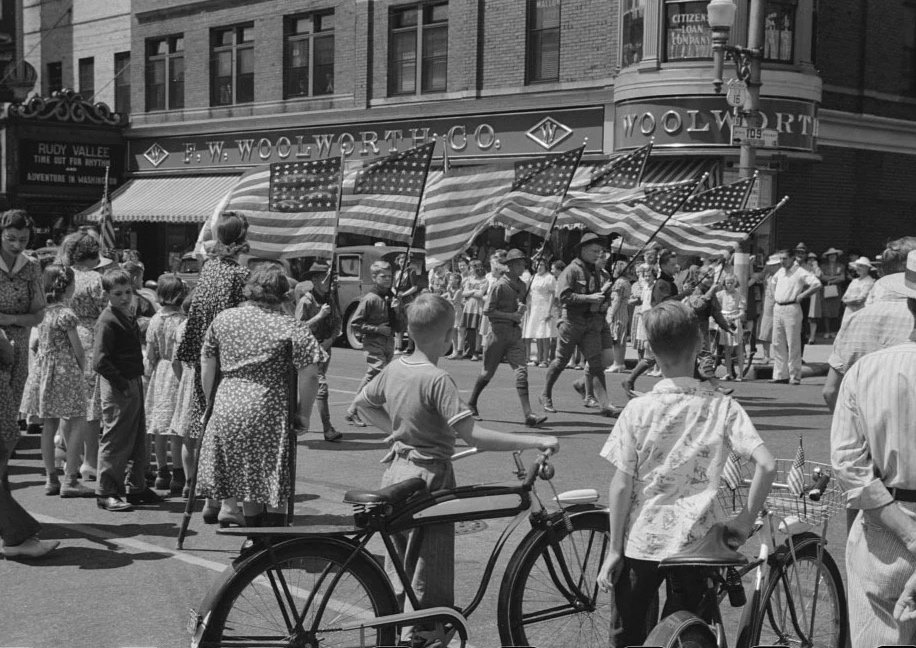
A Fourth of July parade moves through downtown Watertown, Wisconsin in 1941, with marchers carrying American flags past storefronts and gathered spectators. Children stand at the curb with bicycles, watching as the procession passes, reflecting the strong community participation typical of small-town celebrations. Taking place just months before the United States entered World War II, such events carried added meaning as public expressions of unity and patriotism.
Entrance to Champaign County Fair, Ohio
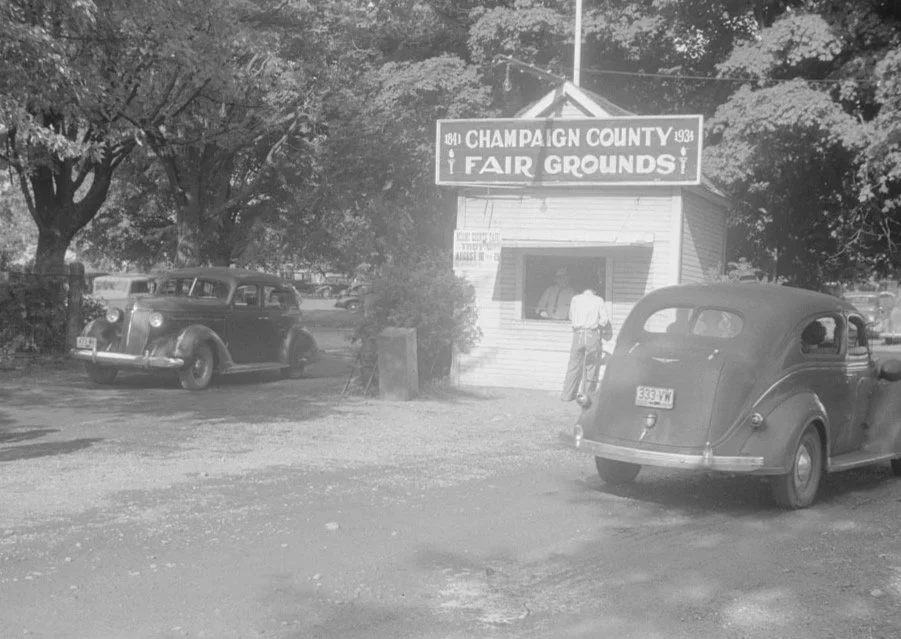
An entrance booth at the Champaign County Fair in Ohio in 1938 reflects the enduring role of county fairs as centers of community life in rural America. Automobiles line the grounds as visitors arrive, signaling the growing mobility of the era even during the final years of the Great Depression. County fairs brought together agriculture, entertainment, and local commerce, offering a place for families to gather, farmers to showcase their work, and small towns to maintain social ties.
Trinity Church, Boston
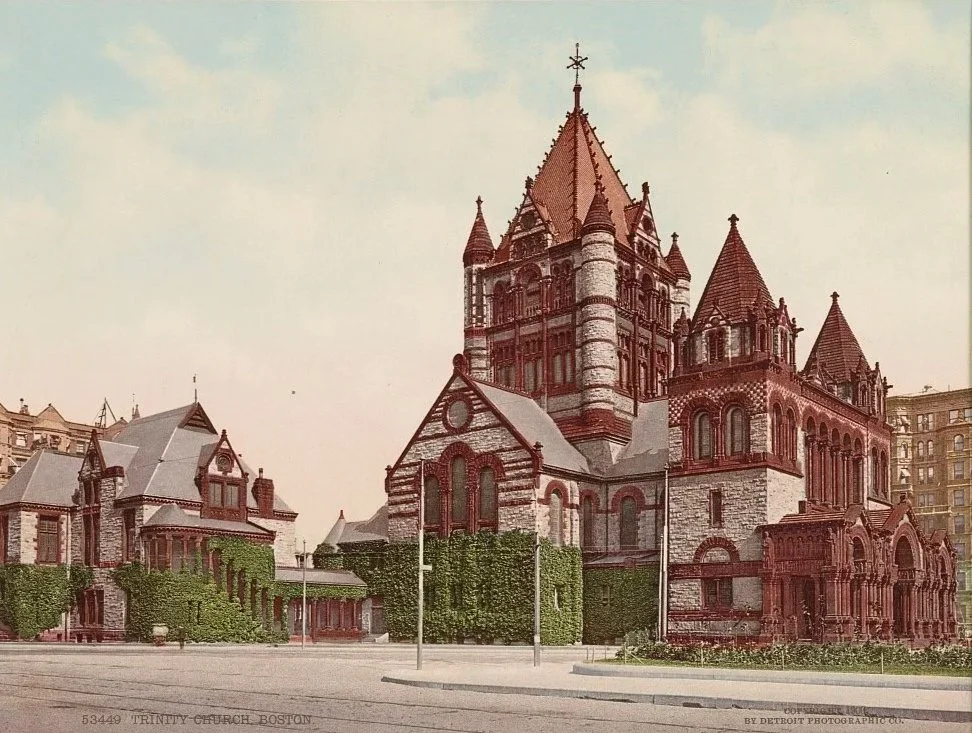
Trinity Church in Boston, seen here around 1900, was already a city landmark by the turn of the century. Completed in 1877 and designed by architect Henry Hobson Richardson, the church broke from traditional European church designs and helped shape what became known as the Romanesque Revival in America. Its massive stonework, broad arches, and prominent tower reflected the confidence of a growing Boston after the Back Bay was filled in.
General Peyton March and Family ... at the Georgetown, Washington and Lee Football Game
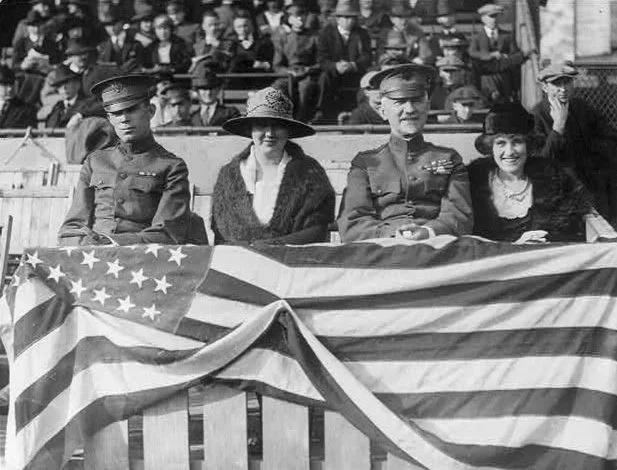
General Peyton March, who served as U.S. Army Chief of Staff during World War I, sits with family and guests at a Georgetown–Washington and Lee football game in Washington, D.C. The American flag draped across the front places the scene firmly in its time, when military leaders were well-known public figures and often appeared at major social events. College football was becoming a popular national pastime, drawing crowds that mixed military officers, civic leaders, and civilians.
Massachusetts Nautical School 1923
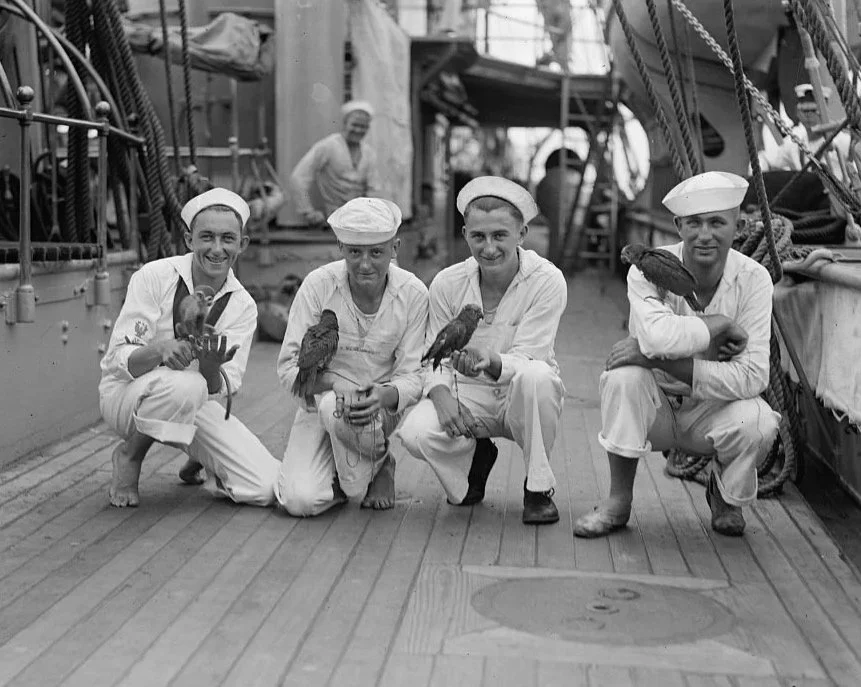
Cadets from the Massachusetts Nautical School aboard a training ship in September 1923, during a period when maritime education played a key role in preparing young men for service in the merchant marine and U.S. Navy. Dressed in standard issue uniforms, schools like this helped supply skilled officers and sailors at a time when sea power and commercial shipping were central to American industry and national defense.
The Eagle Map of the United States
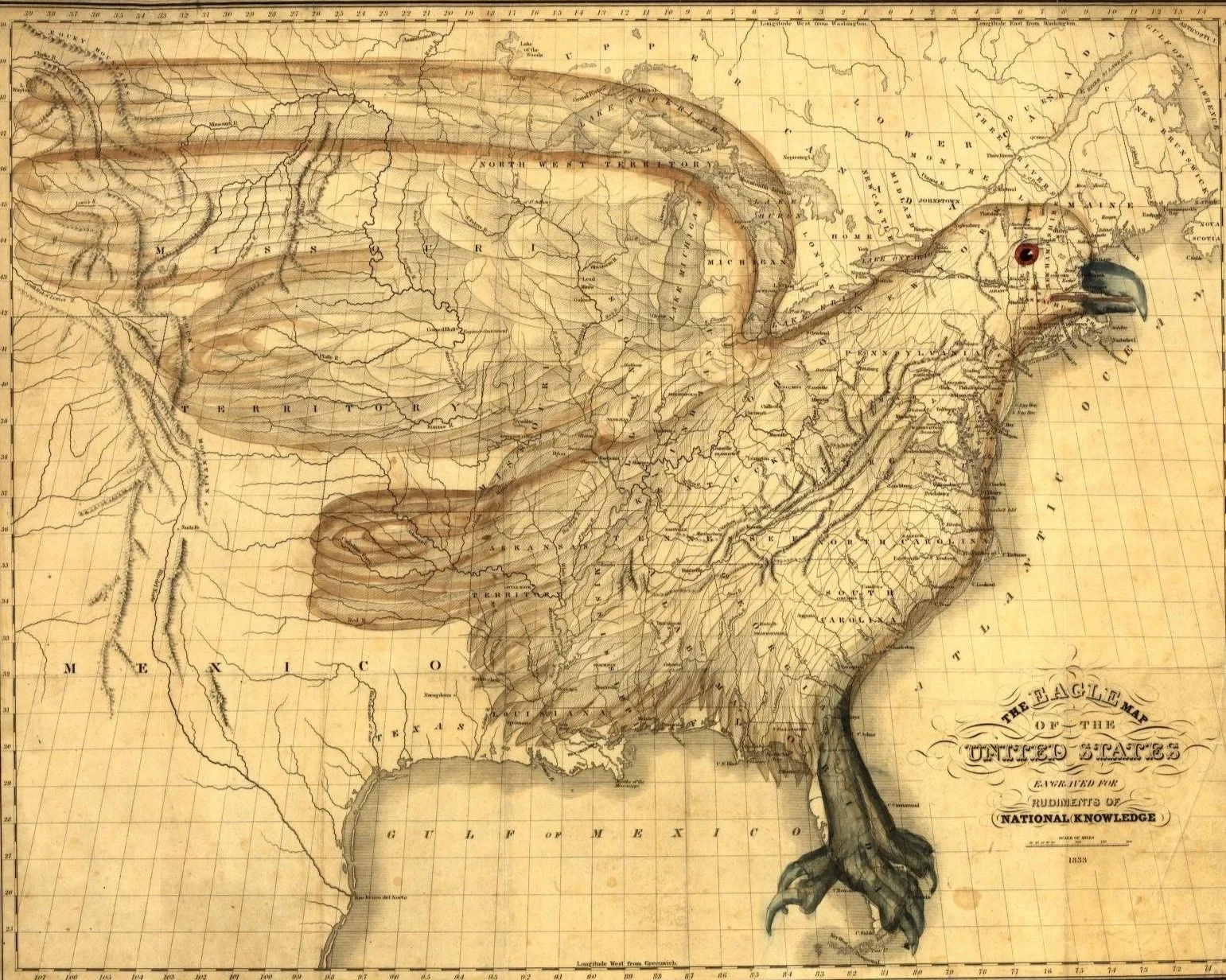
1833 map shows the United States arranged in the shape of a bald eagle. Made at a time when the country was still expanding west. States, territories, and natural features are carefully drawn inside the eagle’s form, turning a practical map into a statement about national purpose.
Lincoln's Second Inaugural
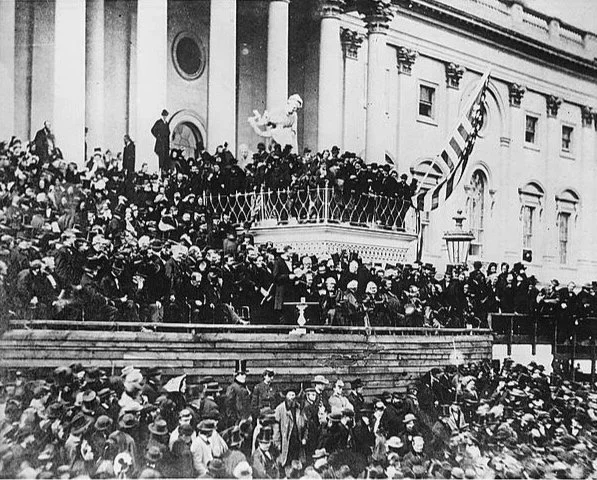
President Abraham Lincoln delivering his second inaugural address from the east portico of the U.S. Capitol on March 4, 1865. The Civil War was nearing its end, and the large crowd gathered reflects the weight of the moment for a divided nation. People filled the steps and grounds to witness the start of Lincoln’s final term. Capturing a turning point in American history, as the country stood on the edge of peace and reconstruction.
Huge flag being carried by a large group of men in a G.A.R. parade in Washington, D.C.
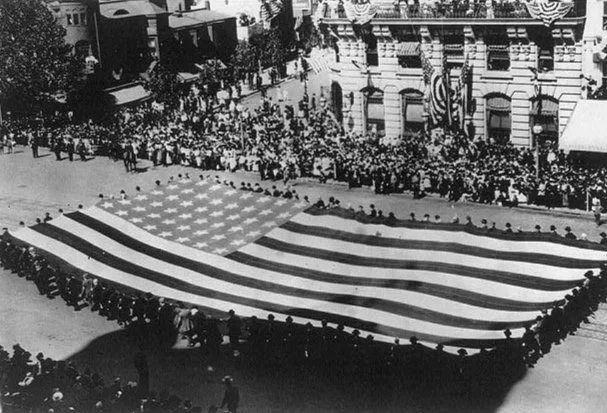
1915 photograph shows a huge American flag being carried through the streets of Washington, D.C., during a Grand Army of the Republic parade made up of Civil War veterans. Dozens of men are needed just to support the flag, underscoring how large and symbolic these public displays had become.
Deaf children of St. Rita's School, Cincinnati, OH, singing the Star Spangled Banner in sign language

1918 photograph shows deaf students from St. Rita’s School in Cincinnati signing the Star-Spangled Banner in front of a large American flag. Taken during the final year of World War I, the children’s use of sign language shows how national traditions were adapted so everyone could take part. A quiet look at inclusion and shared identity during a time when public unity mattered deeply.
Post Office Flag day
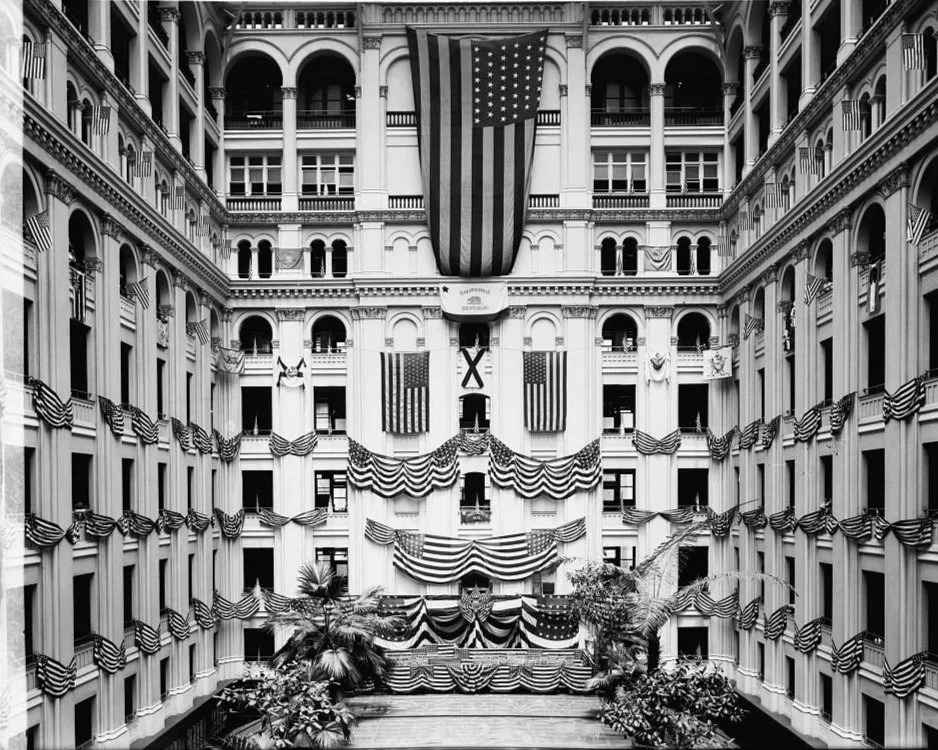
The Post Office building on Pennsylvania Avenue in Washington, D.C., decorated with flags and bunting for Flag Day in 1913. Large American flags hang through the open courtyard while smaller ones line the balconies, turning the building itself into a patriotic display. At the time, Flag Day was gaining wider recognition, especially in federal buildings tied to government and public service. Scenes like this show how national symbols were used in everyday civic spaces to reinforce a shared sense of identity.
The Great Parade, Pennsylvania Avenue, Washington, D.C., U.S.A.
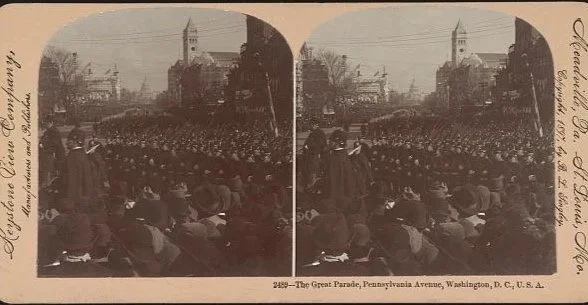
1897 stereograph shows the Great Parade along Pennsylvania Avenue in Washington, D.C., with massive crowds packed along the street and sidewalks. Events like this were central to public life in the nation’s capital, turning major avenues into gathering places for civic celebration and national display. Americans came together in person to mark important moments, long before radio or television, also reflecting the popularity of stereographs, which brought scenes from Washington to viewers across the country.
Parade of Civil War veterans and children carrying American and Alaska flags
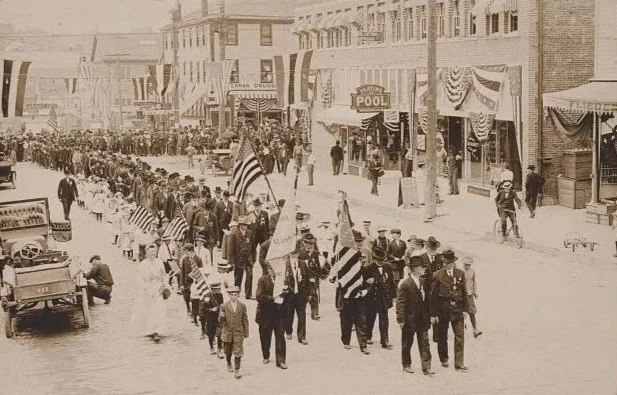
A patriotic parade moving down a busy main street, with marchers carrying American flags past stores and restaurants. Signs for a U.S. Navy Yard and a Great Northern Railway office highlight how military activity and rail transportation shaped local life and commerce. Spectators line the sidewalks while cars and bicycles share the road, capturing a moment when older traditions and modern life overlapped.
Votes for women : suffrage rallying song
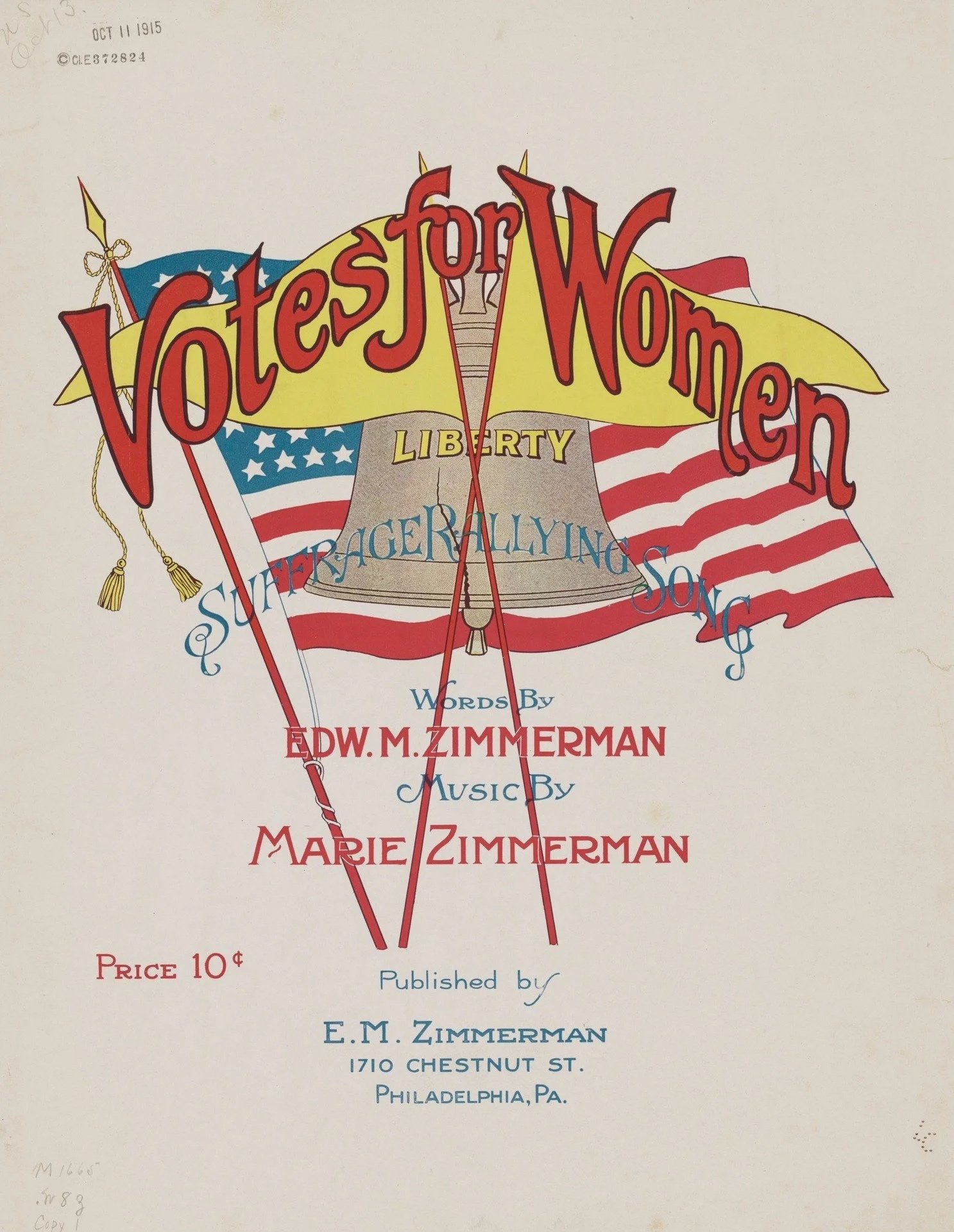
During the early women's suffrage movement, rallying songs like Votes for Women were sung at marches and meetings to build unity and keep the message simple and memorable. Printed sheet music helped spread these songs far beyond major cities, allowing supporters across the country to take part. Items like this show how the fight for voting rights was carried not just through speeches and demonstrations, but through everyday culture and shared voices.
Together we win / James Montgomery Flag
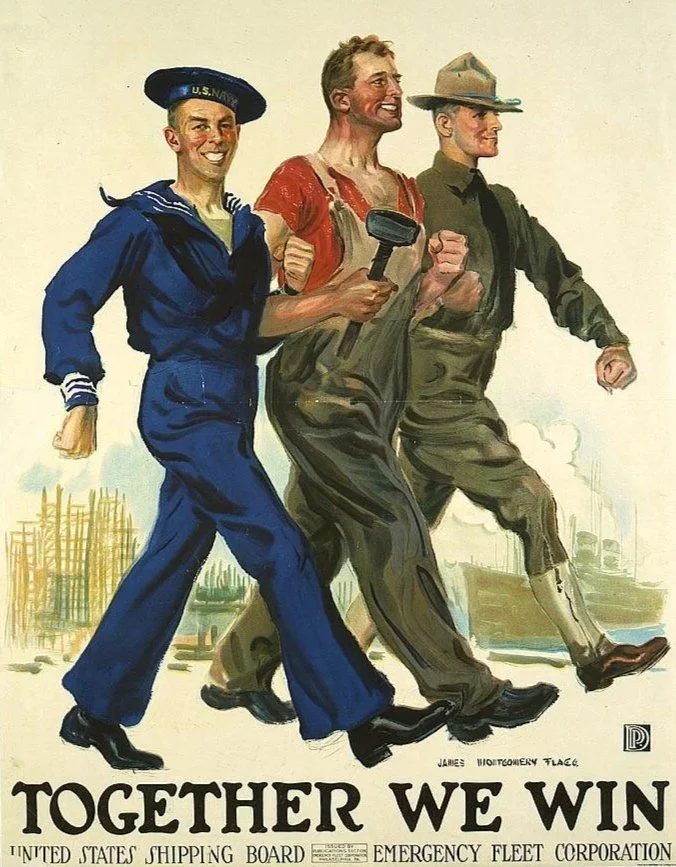
World War I–era poster shows a shipyard worker marching in step with a sailor and a soldier, driving home the message that the war effort depended on everyone. Created for the United States Shipping Board’s Emergency Fleet Corporation, also showing that industrial labor supported troops overseas by building and supplying ships. The hammer and dockside setting connect factory work directly to national defense. Helping Americans see shipyards and workshops as front-line contributions, not just support roles.
High bridge near Buena Vista
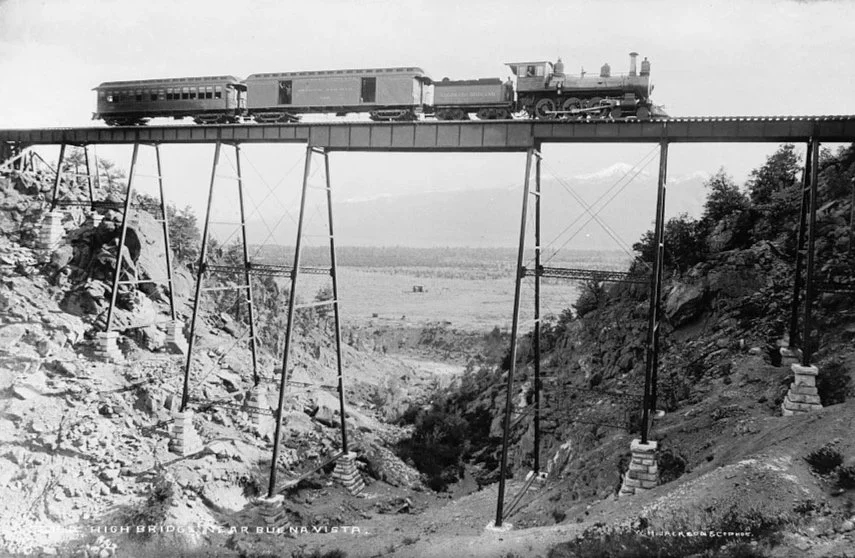
Steam locomotive crossing a tall trestle bridge near Buena Vista, a reminder of how railroads pushed through difficult terrain as the country expanded. The narrow bridge and steep drop below show the kind of engineering required to carry rail lines across canyons and ravines. Structures like this made it possible to move people, supplies, and resources into remote areas, supporting settlement and local industry. Scenes like this capture how railroads physically reshaped the landscape and helped link growing communities across the West.
Map of Lewis and Clark's Track Across the Western Portion of North America
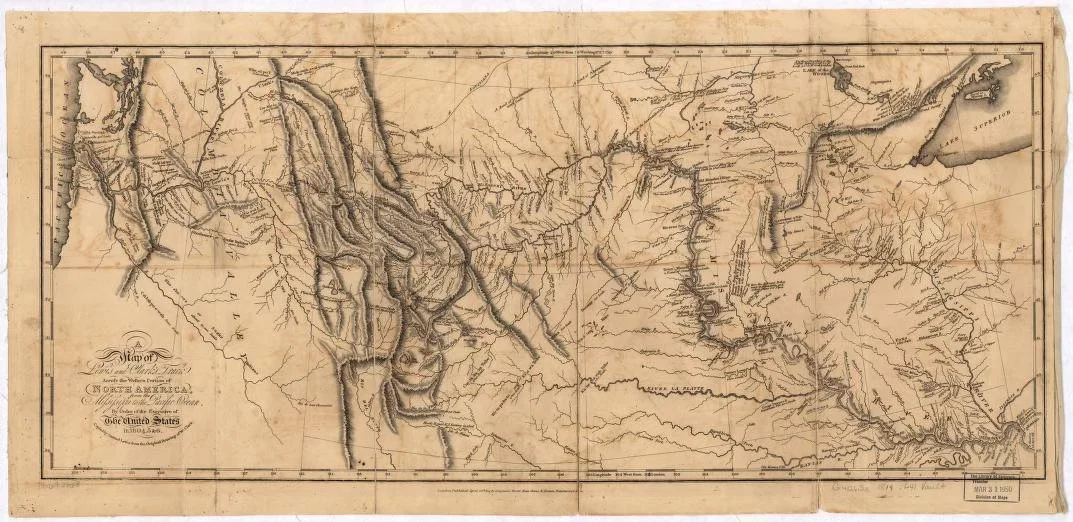
19th-century map traces the full route of the Lewis and Clark Expedition as it pushed west from the Mississippi River to the Pacific Ocean between 1804 and 1806. Drawn from the explorers’ own observations, it shows the Missouri River’s winding path, the rugged Rocky Mountains, and the network of tribal lands and waterways they encountered along the way.
Liberty Parade on Fifth Avenue WWI Era
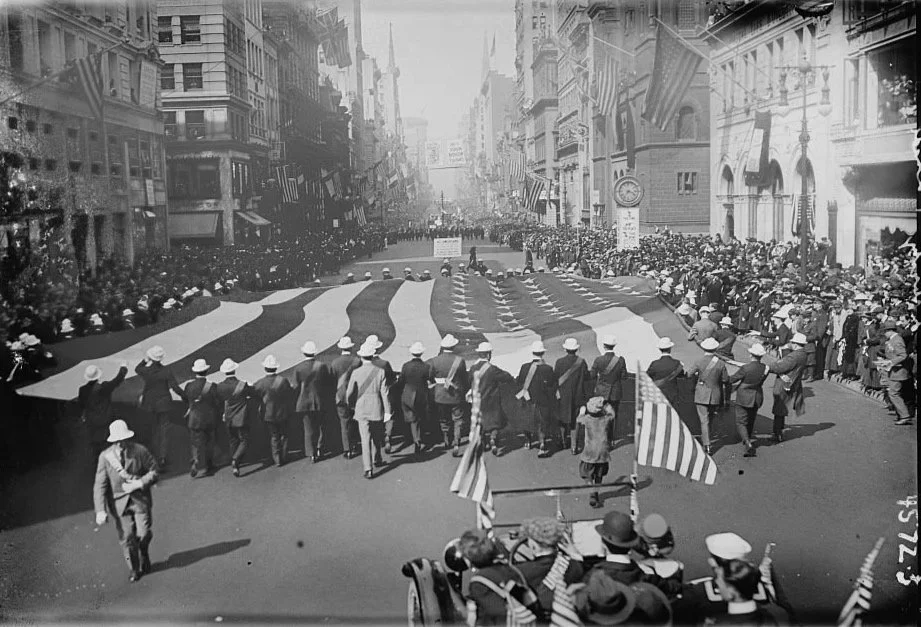
Crowds pack Fifth Avenue as a massive American flag is carried up the street during a World War I–era Liberty Bond parade in New York City. Marchers in uniform hats support the enormous banner while spectators line the sidewalks and hang from windows above, reflecting the national push to fund the war effort through public bond sales.
Historic American Flag Carried into Battle by American Soldiers During WWI
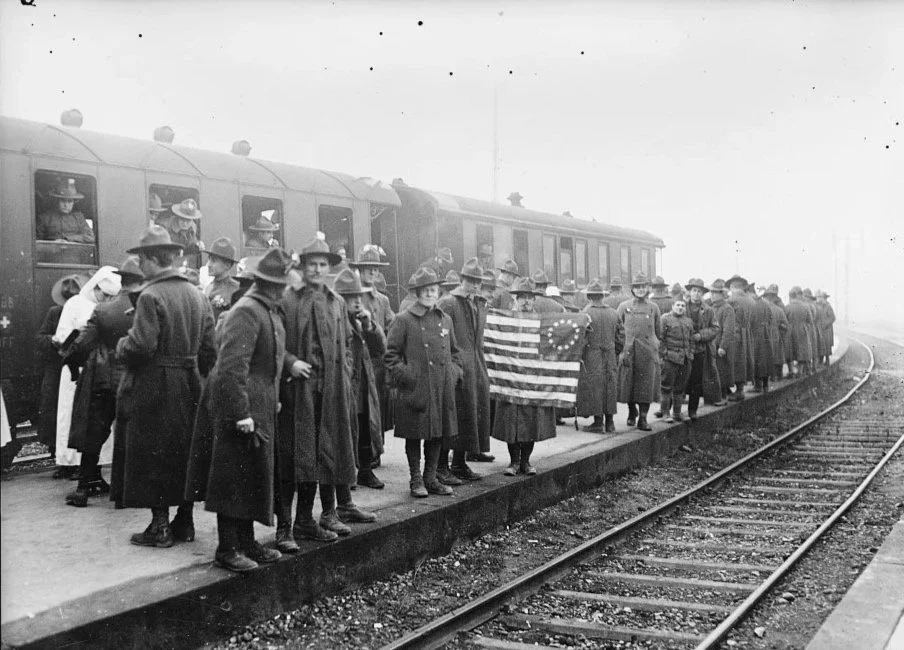
American servicemen gathered along a rail platform at the close of World War I, marking their release and return from captivity. The soldiers hold a U.S. flag that had been secretly hidden while they were held in German prison camps and later revealed in Basel, Switzerland, on December 7, during the release of the first train of American privates. The long line of men, bundled in heavy coats, reflects the scale of the war and the logistics of bringing troops home. This is a quiet but powerful moment, when a simple flag signaled survival, freedom, and the end of a long ordeal for those who served.