
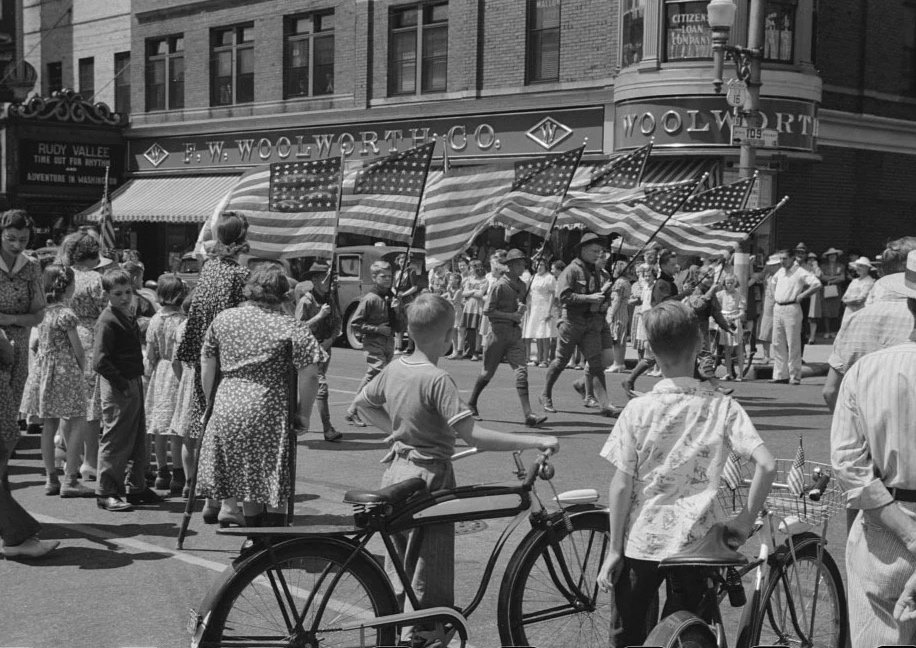
A Fourth of July parade moves through downtown Watertown, Wisconsin in 1941, with marchers carrying American flags past storefronts and gathered spectators. Children stand at the curb with bicycles, watching as the procession passes, reflecting the strong community participation typical of small-town celebrations. Taking place just months before the United States entered World War II, such events carried added meaning as public expressions of unity and patriotism.
713th M. P. Band, Druid Hill Park, Baltimore, MD 1943
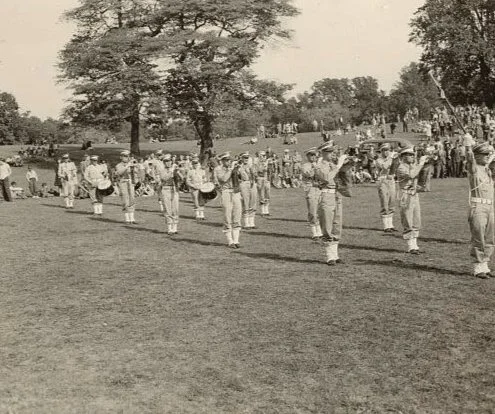
Members of the 713th Military Police Band perform in Druid Hill Park in Baltimore in 1943, marching in formation as civilians gather to watch during World War II. Military bands played a key role in boosting morale on the home front, providing public entertainment while reinforcing patriotic spirit. Performances in parks and public spaces connected local communities to the broader war effort, blending music, service, and civic life during a time of national mobilization.
Bethlehem-Fairfield Shipyards, Baltimore, Maryland. Bow of a Liberty Ship Just Before a Launching Ceremony
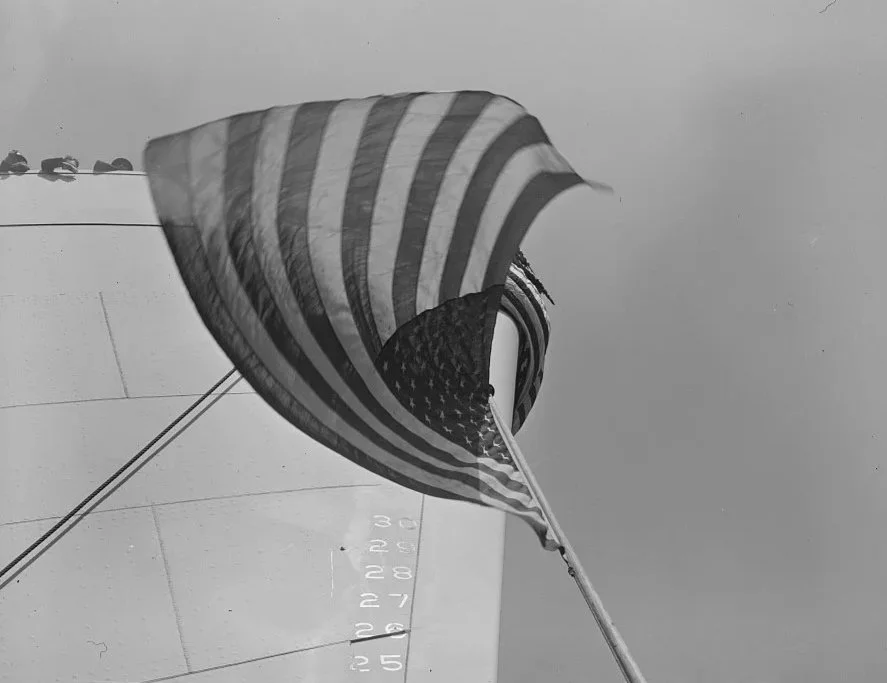
An American flag hangs over the bow of a newly built Liberty ship at the Bethlehem-Fairfield shipyards in Baltimore in 1943, just before its launch. These vessels were produced in large numbers during World War II to carry troops, supplies, and equipment across the Atlantic, forming a critical link in the Allied war effort. Shipyard workers and assembly-line methods allowed for rapid construction, symbolizing the industrial scale and urgency of wartime production on the home front.
Chicago, Illinois. Union Station Concourse
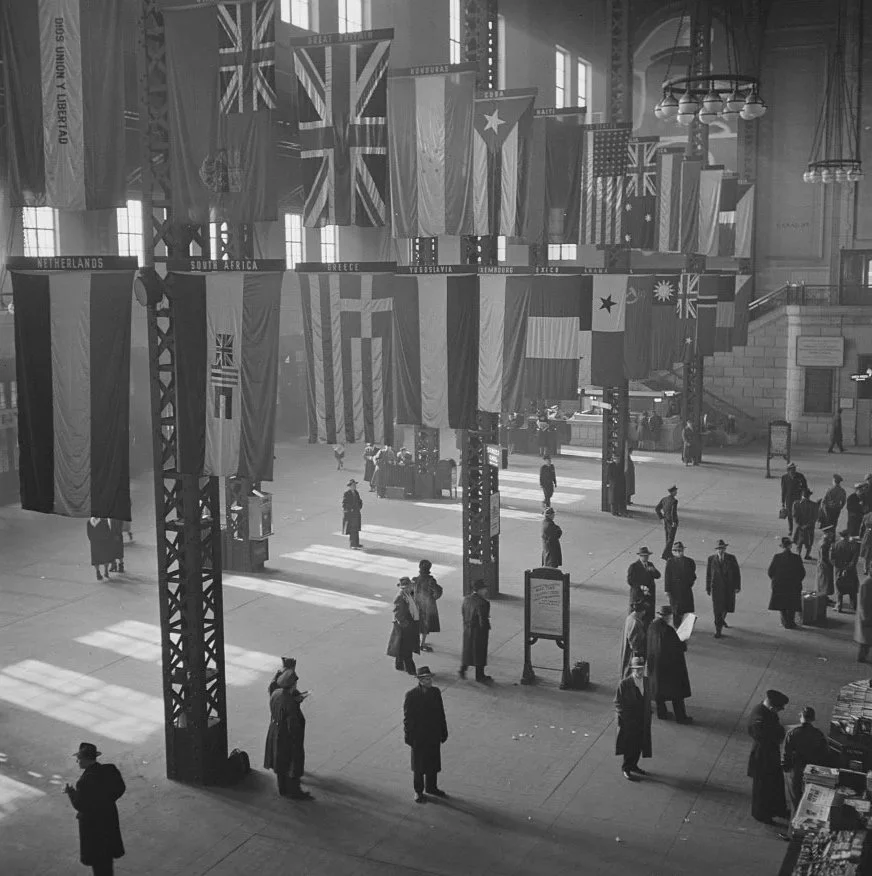
Travelers move through Chicago’s Union Station beneath a display of Allied flags during the height of World War II. The concourse, filled with civilians and servicemen, served as a critical hub for troop movements, wartime industry travel, and daily life on the home front. The presence of international flags underscores the alliance of nations fighting against Axis powers, while the steady flow of passengers highlights how railroads remained essential to mobilization and coordination across the country.
Women in War. Supercharger Plant Workers.
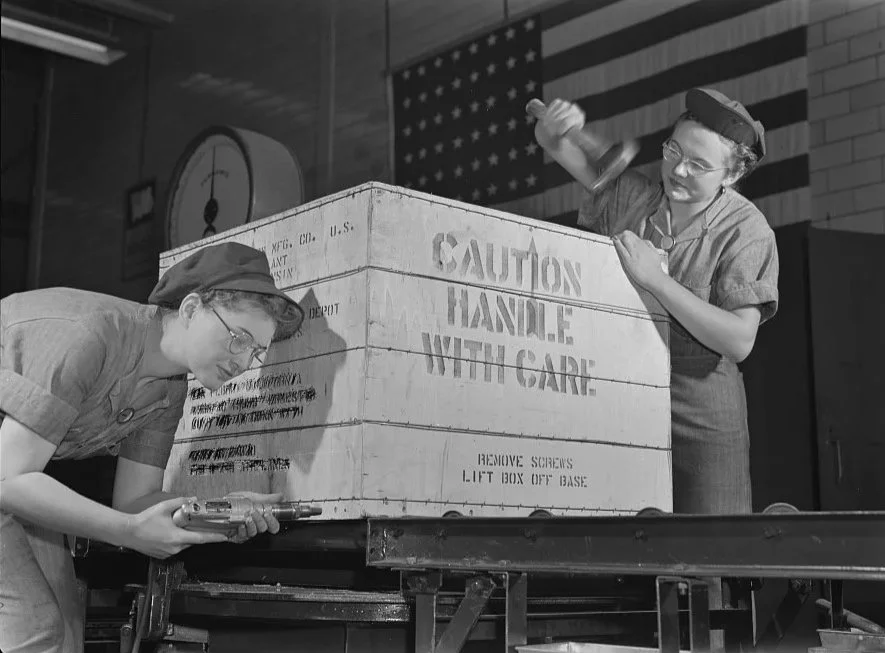
Women working in a Midwest aircraft parts plant in 1942 reflect the shift in the American workforce during World War II, as millions stepped into industrial jobs to support the war effort. With many men serving overseas, women took on skilled roles in factories, including the production and shipment of critical equipment like superchargers for military aircraft. Efforts like these helped sustain wartime production and marked a lasting change in opportunities for women in American industry.