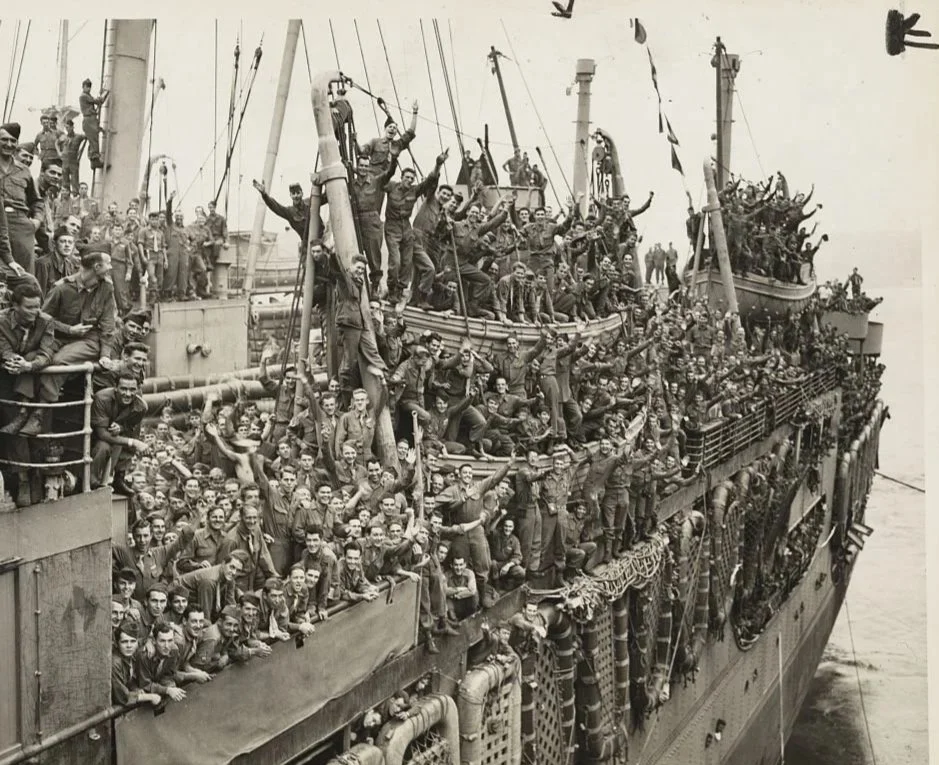
August 6, 1945. Troops of the 20th Armored Division and units of the 9th Army pack every inch of the SS John Ericsson as it pulls into Pier 84 on the North River in New York City. The men are cheering, waving, and climbing the rigging as the ship approaches the dock. The date is notable: August 6, 1945 was the same day the United States dropped the atomic bomb on Hiroshima, a moment that would bring the Pacific war to a close within days. These soldiers were part of the massive postwar repatriation effort known as Operation Magic Carpet, which ultimately returned more than eight million American servicemen and women home from Europe and the Pacific.
Washington, D.C. Two Soldiers Await The Arrival of a Troop Train at The Union Station
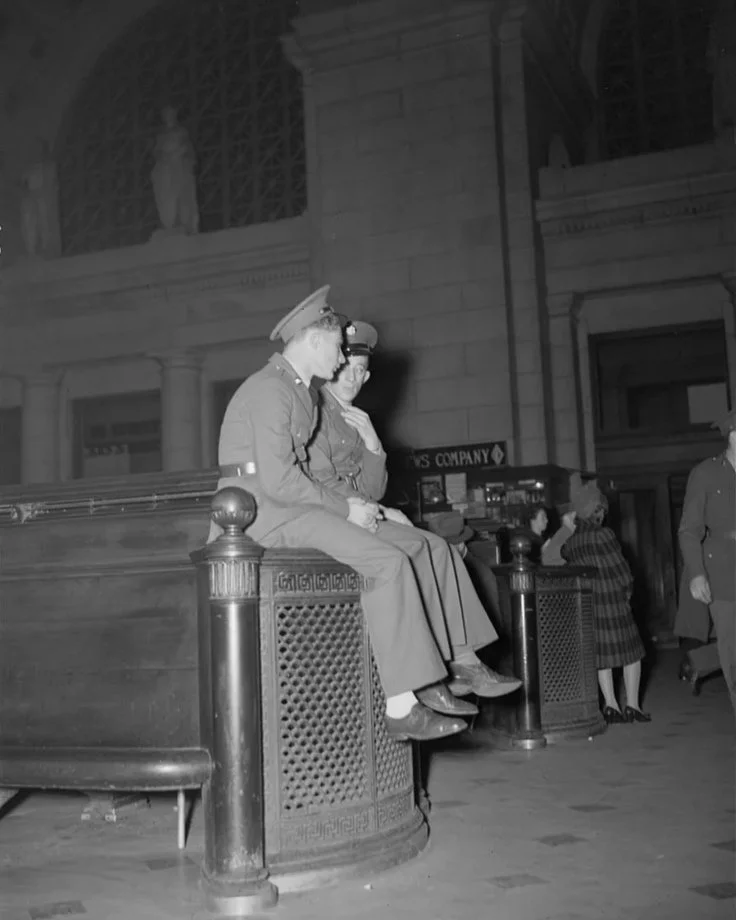
Two U.S. soldiers sit quietly inside Washington, D.C.’s Union Station in November 1942, waiting for a troop train during the height of World War II. Their pause reflects a common moment in wartime travel, when service members moved through major rail hubs on their way to training or deployment. Union Station served as a critical transit point, connecting the capital to military installations across the country, as the nation mobilized millions for service at home and overseas.
713th M. P. Band, Druid Hill Park, Baltimore, MD 1943
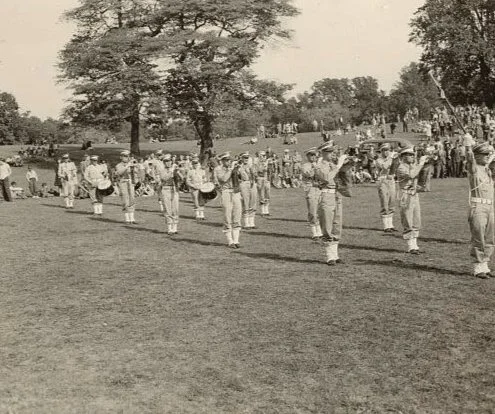
Members of the 713th Military Police Band perform in Druid Hill Park in Baltimore in 1943, marching in formation as civilians gather to watch during World War II. Military bands played a key role in boosting morale on the home front, providing public entertainment while reinforcing patriotic spirit. Performances in parks and public spaces connected local communities to the broader war effort, blending music, service, and civic life during a time of national mobilization.
Bethlehem-Fairfield Shipyards, Baltimore, Maryland. Bow of a Liberty Ship Just Before a Launching Ceremony
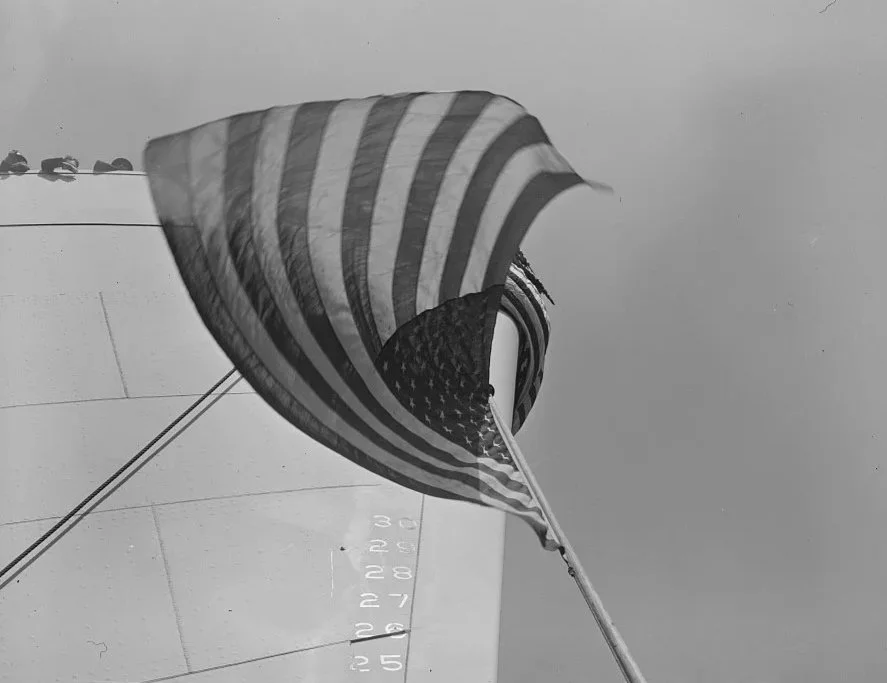
An American flag hangs over the bow of a newly built Liberty ship at the Bethlehem-Fairfield shipyards in Baltimore in 1943, just before its launch. These vessels were produced in large numbers during World War II to carry troops, supplies, and equipment across the Atlantic, forming a critical link in the Allied war effort. Shipyard workers and assembly-line methods allowed for rapid construction, symbolizing the industrial scale and urgency of wartime production on the home front.
Chicago, Illinois. Union Station Concourse
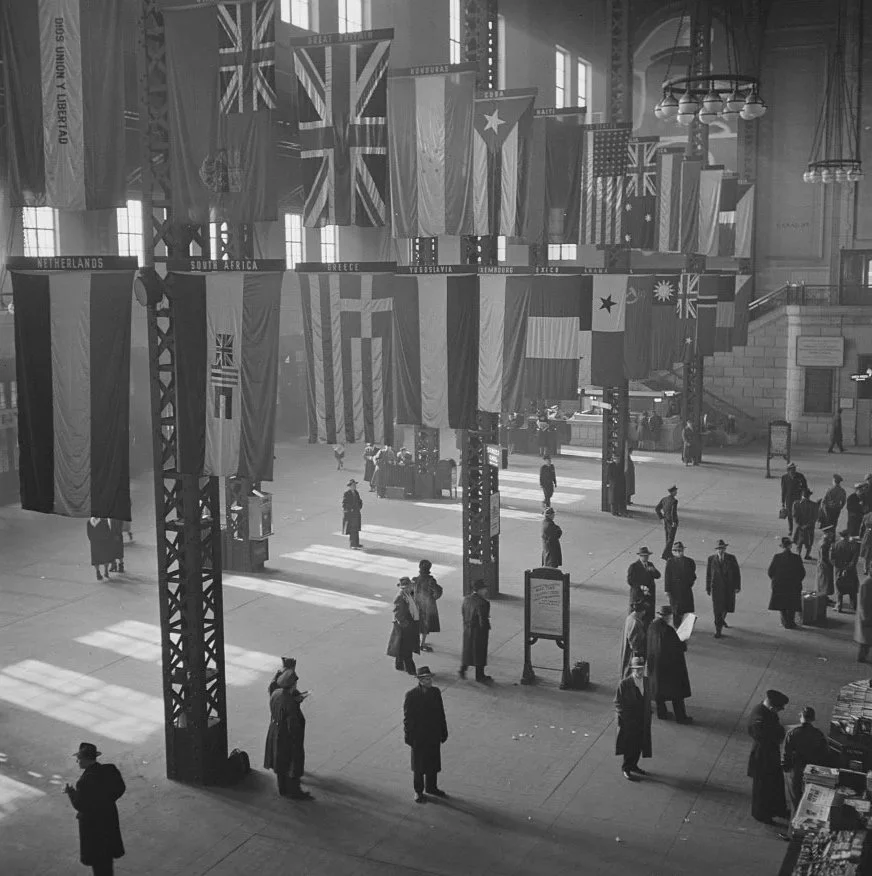
Travelers move through Chicago’s Union Station beneath a display of Allied flags during the height of World War II. The concourse, filled with civilians and servicemen, served as a critical hub for troop movements, wartime industry travel, and daily life on the home front. The presence of international flags underscores the alliance of nations fighting against Axis powers, while the steady flow of passengers highlights how railroads remained essential to mobilization and coordination across the country.
Women in War. Supercharger Plant Workers.
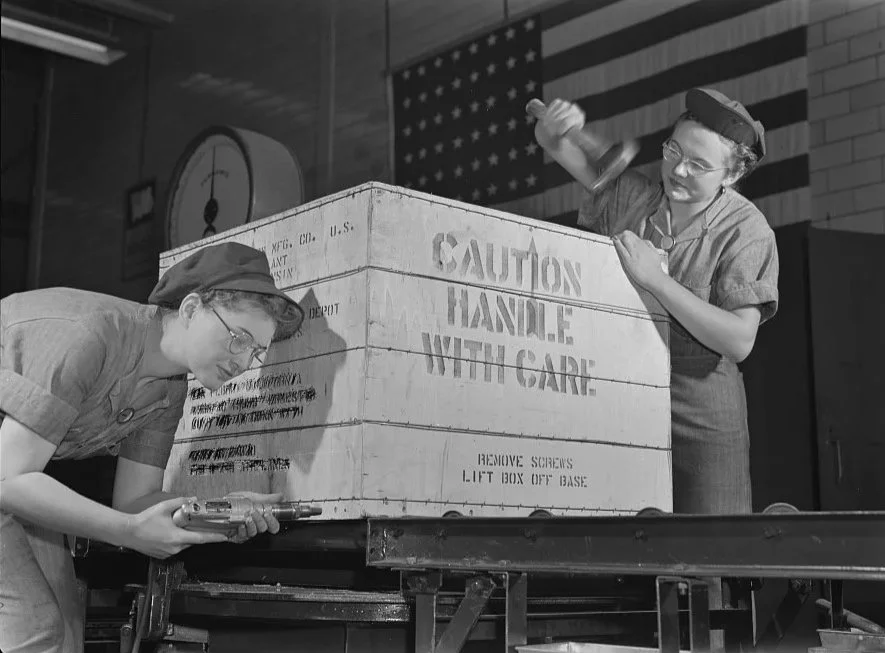
Women working in a Midwest aircraft parts plant in 1942 reflect the shift in the American workforce during World War II, as millions stepped into industrial jobs to support the war effort. With many men serving overseas, women took on skilled roles in factories, including the production and shipment of critical equipment like superchargers for military aircraft. Efforts like these helped sustain wartime production and marked a lasting change in opportunities for women in American industry.
New York, New York Students Pledging Allegiance to the Flag in Public School
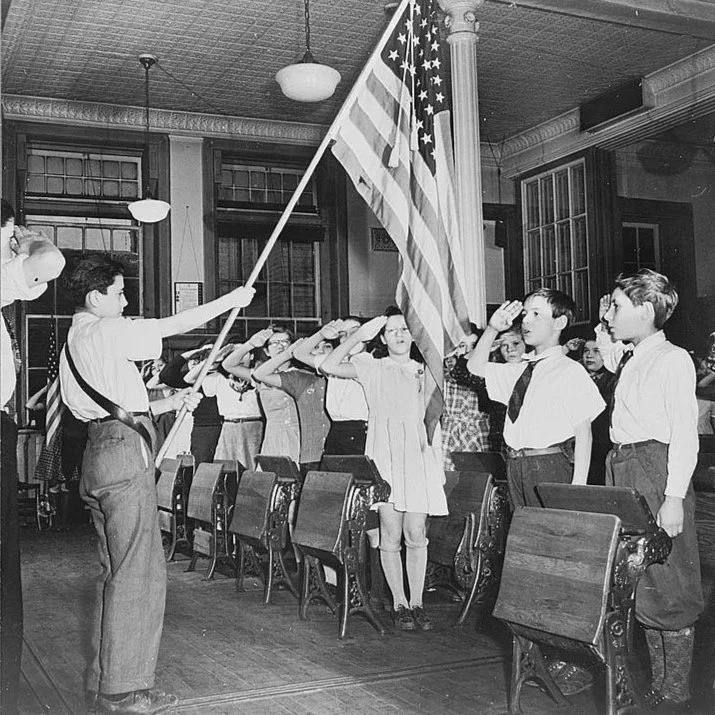
Students in a public school classroom in New York City stand beside their desks and salute the American flag during the Pledge of Allegiance in January 1943. The school served a largely Italian-American neighborhood at a time when the United States was deeply involved in World War II.
Our Allies Need Eggs. Your Farm Can Help / Herbert Bayer
A wartime poster by Herbert Bayer called on American farmers to increase egg production to help Allied nations during World War II. Issued through the Rural Electrification Administration of the U.S. Department of Agriculture, the message reminded rural communities that farm production played an important role in supporting the war effort.
Women's Victory Service Flag Dedication | Circa 1942
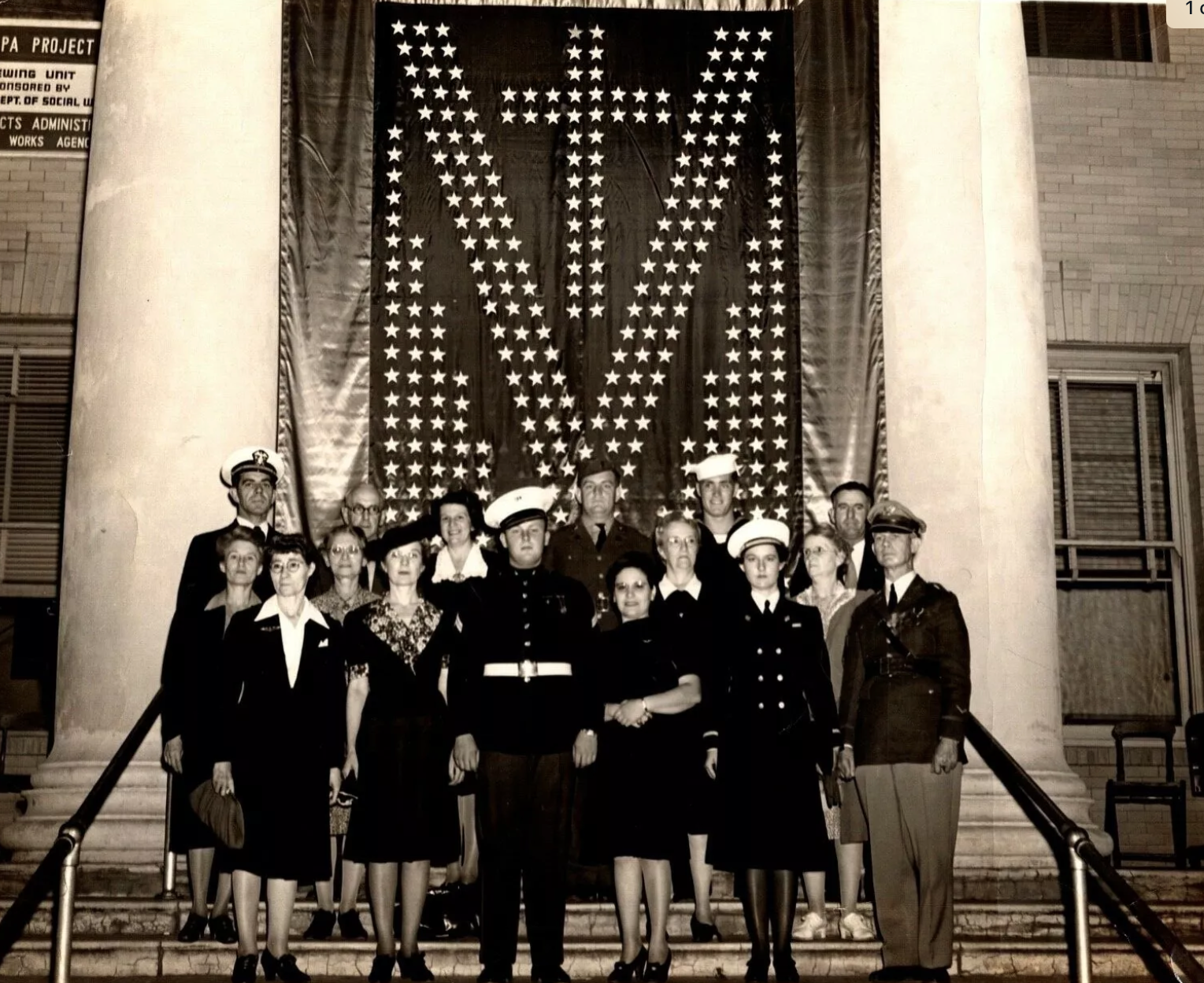
A powerful moment from 1942, capturing the Women's Victory Service Flag Dedication. This historic photo shows service members and women gathered to honor those serving in World War II, with a backdrop of the Victory Service Flag adorned with stars representing their contributions and sacrifices. A testament to the unity and determination of the American home front during a pivotal time in history.