
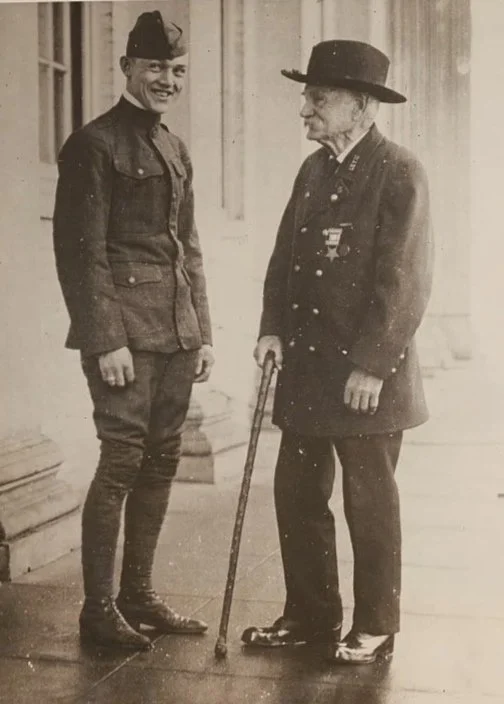
In March 1922, a Civil War veteran and a World War I soldier stand together outside the Massachusetts State House in Boston, representing two generations of American military service. Edwin Francis Wyer, who served in the Union Army, appears alongside Terry McCloskey of the 101st Infantry, 26th Division, highlighting the passage of time between the nation’s major conflicts. Public interest in such meetings reflected a continued respect for veterans and a desire to connect past and present service.
Troops of the 32nd Regiment, Indiana Volunteers
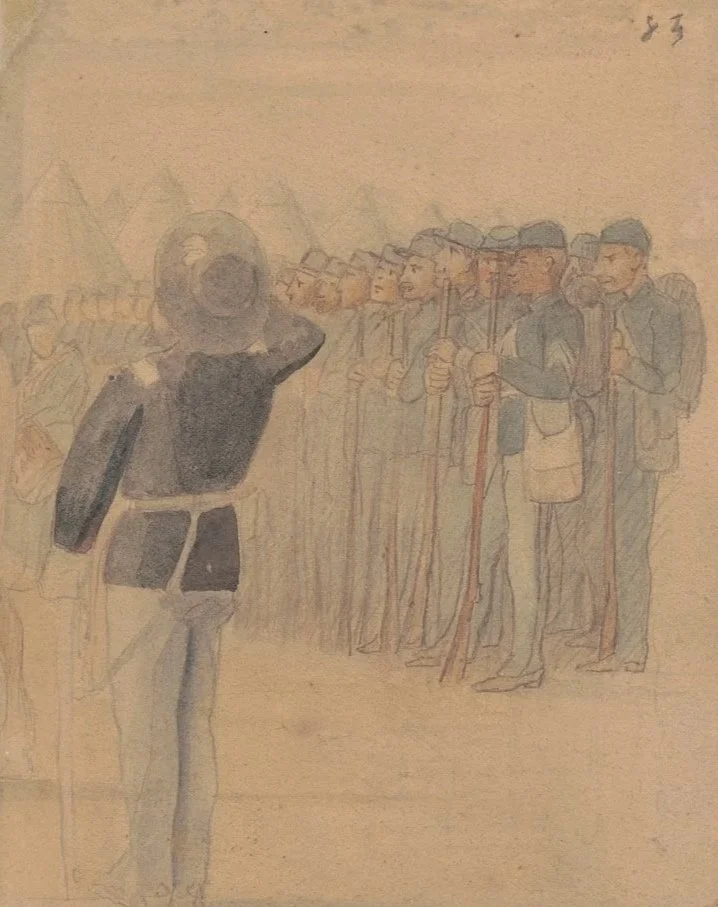
Union soldiers of the 32nd Indiana Infantry stand in formation during the Civil War, their rifles held at rest as they face an officer giving commands. Created between 1861 and 1865, the drawing reflects the discipline and structure that defined volunteer regiments drawn from communities across the North. Many of these men were recent immigrants or first-generation Americans, serving in units that often shared language and cultural ties. Their orderly ranks and simple equipment illustrate the realities of citizen-soldiers preparing for prolonged conflict, as the Union relied on such regiments to sustain its military campaigns and preserve the nation.
President Roosevelt Reviews ARMY Day Parade. WASHINGTON, D.C. APRIL 6
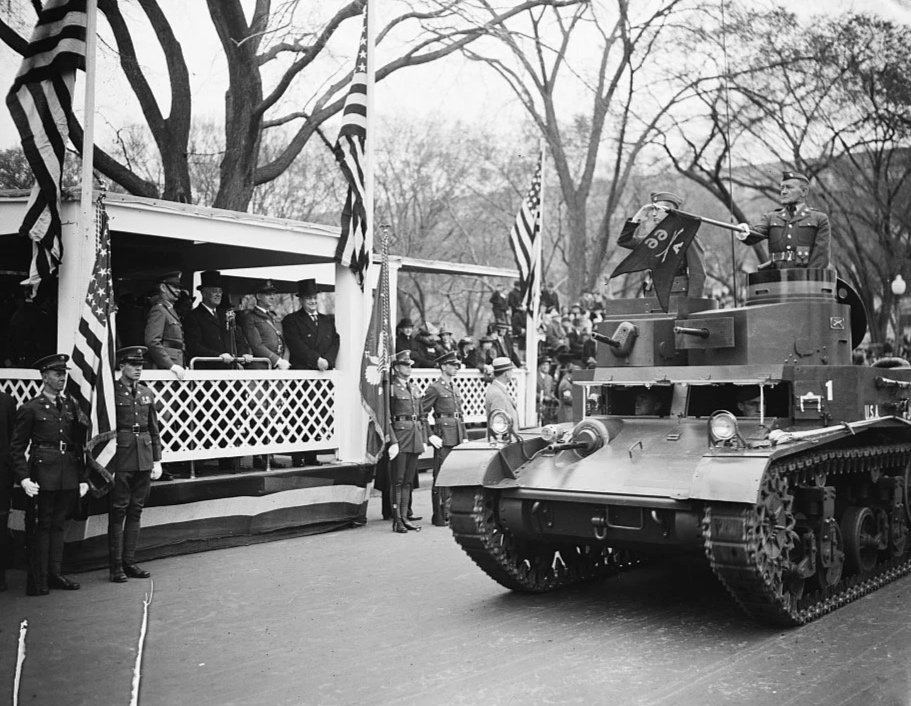
Franklin D. Roosevelt reviews an Army Day parade in Washington, D.C., on April 6, 1938, as armored vehicles pass the presidential stand and soldiers present arms. The annual observance marked the anniversary of America’s entry into World War I and served to highlight the nation’s growing military preparedness during a period of rising global tension.
Flag of 37th Pennsylvania Infantry
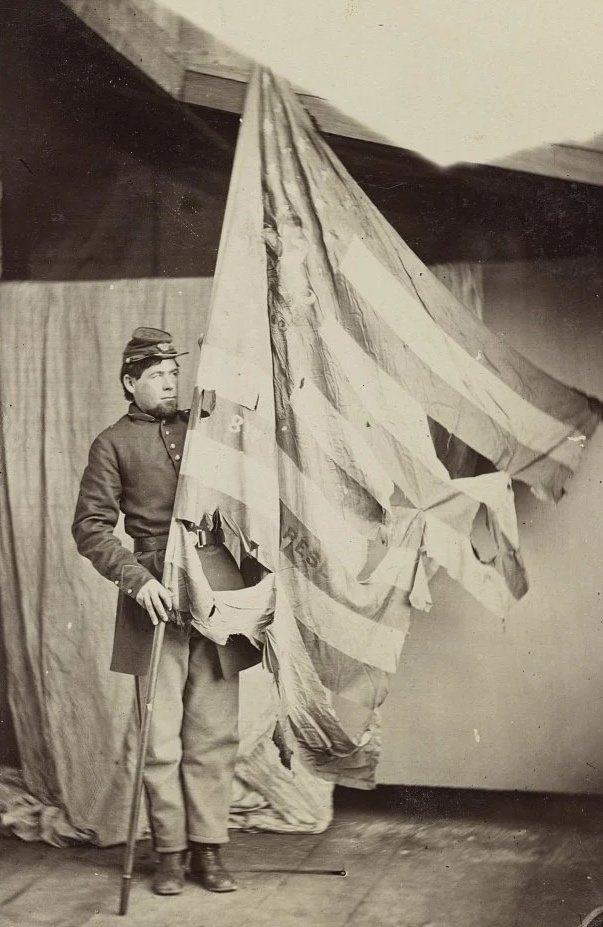
A Union soldier stands with the battle-worn flag of the 37th Pennsylvania Infantry, its torn fabric bearing the marks of heavy service during the Civil War. Regimental colors served as both a rallying point in combat and a symbol of unit identity, often carried into the most dangerous positions on the field. The damaged banner reflects the intensity of the fighting and the sacrifices made by volunteer soldiers, while preserving the legacy of a unit that endured some of the war’s hardest campaigns.
Washington, D.C. Two Soldiers Await The Arrival of a Troop Train at The Union Station
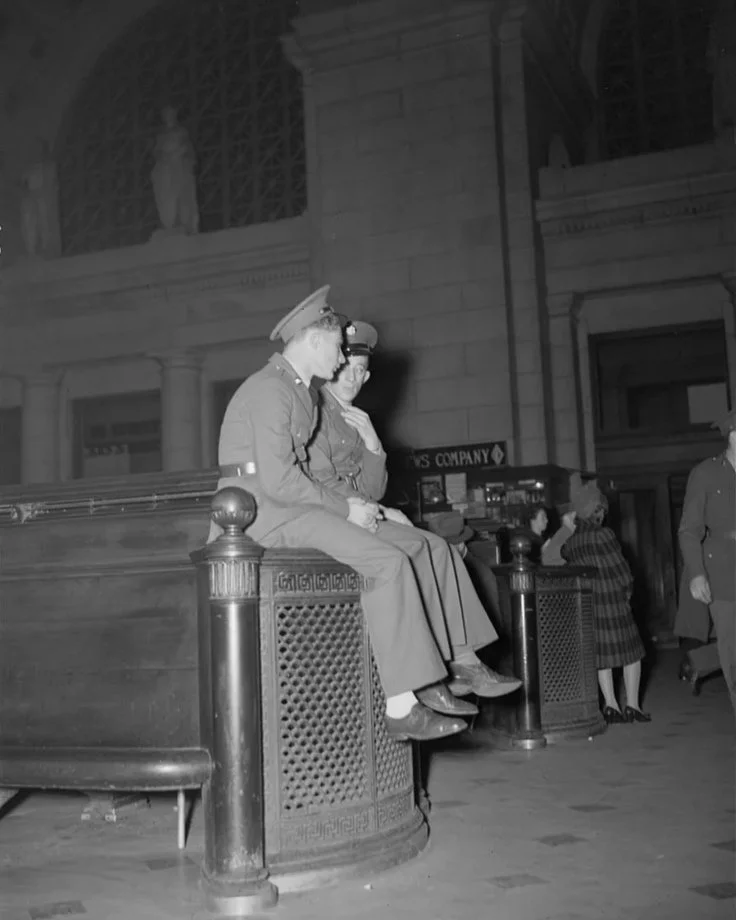
Two U.S. soldiers sit quietly inside Washington, D.C.’s Union Station in November 1942, waiting for a troop train during the height of World War II. Their pause reflects a common moment in wartime travel, when service members moved through major rail hubs on their way to training or deployment. Union Station served as a critical transit point, connecting the capital to military installations across the country, as the nation mobilized millions for service at home and overseas.
713th M. P. Band, Druid Hill Park, Baltimore, MD 1943
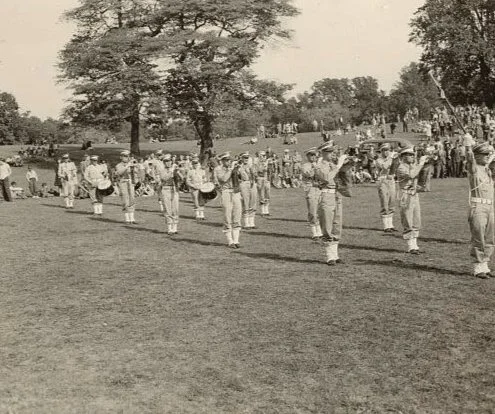
Members of the 713th Military Police Band perform in Druid Hill Park in Baltimore in 1943, marching in formation as civilians gather to watch during World War II. Military bands played a key role in boosting morale on the home front, providing public entertainment while reinforcing patriotic spirit. Performances in parks and public spaces connected local communities to the broader war effort, blending music, service, and civic life during a time of national mobilization.
Historic American Flag Carried into Battle by American Soldiers During WWI
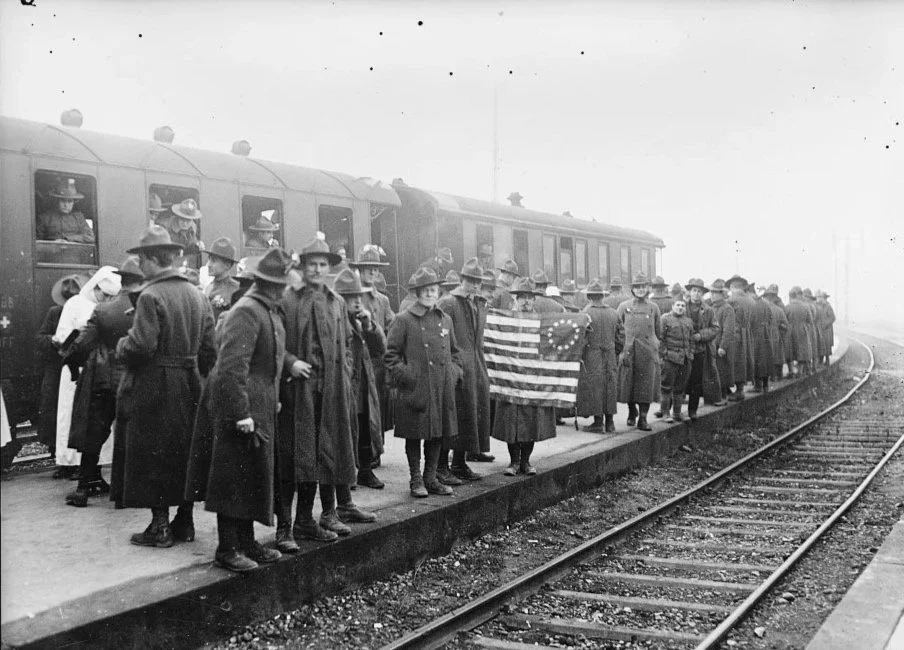
American servicemen gathered along a rail platform at the close of World War I, marking their release and return from captivity. The soldiers hold a U.S. flag that had been secretly hidden while they were held in German prison camps and later revealed in Basel, Switzerland, on December 7, during the release of the first train of American privates. The long line of men, bundled in heavy coats, reflects the scale of the war and the logistics of bringing troops home. This is a quiet but powerful moment, when a simple flag signaled survival, freedom, and the end of a long ordeal for those who served.