
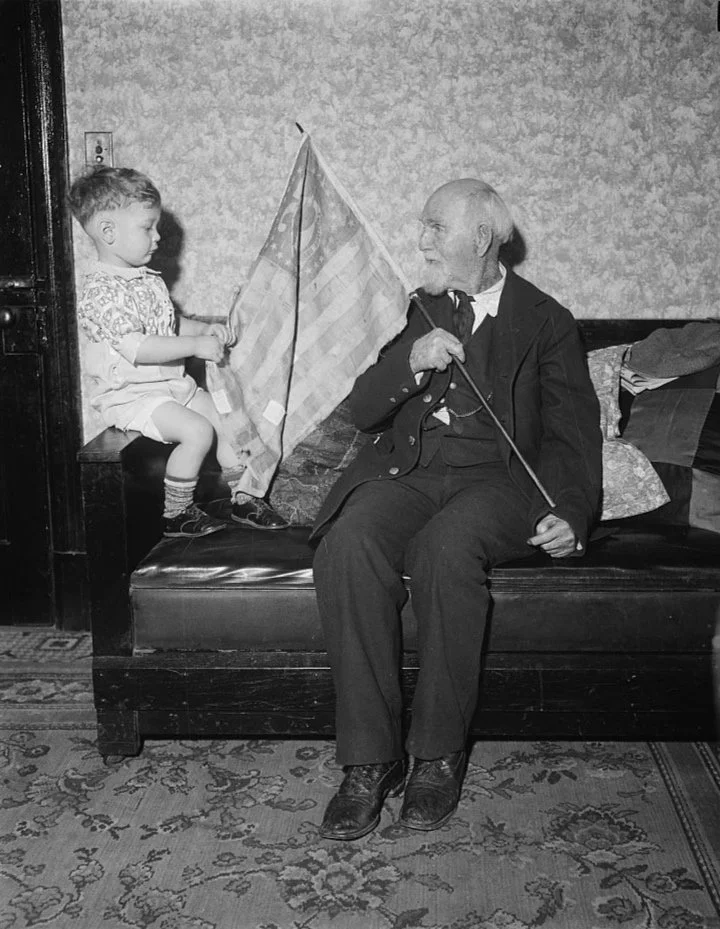
January 1931. Union Army veteran Orlando Learned sits with his great-grandson Edward Hudgins, age 2, showing the boy a 36-starred flag he carried into battle during the Civil War. Learned had obtained the flag during celebrations marking the fall of Vicksburg in 1863 and kept it for nearly seven decades. A battle wound had kept him from marching in the Union Army's triumphal entry into Washington at the war's end, and his January 1931 visit to the capital was long overdue. The 36-star flag was the official U.S. flag from 1865 to 1867, reflecting Nevada's admission to the Union in 1864.
Troops of the 20th Armored Division and Units of the 9th Army Whoop it up Between Raindrops as the SS John Ericsson Nears Pier 84, North River
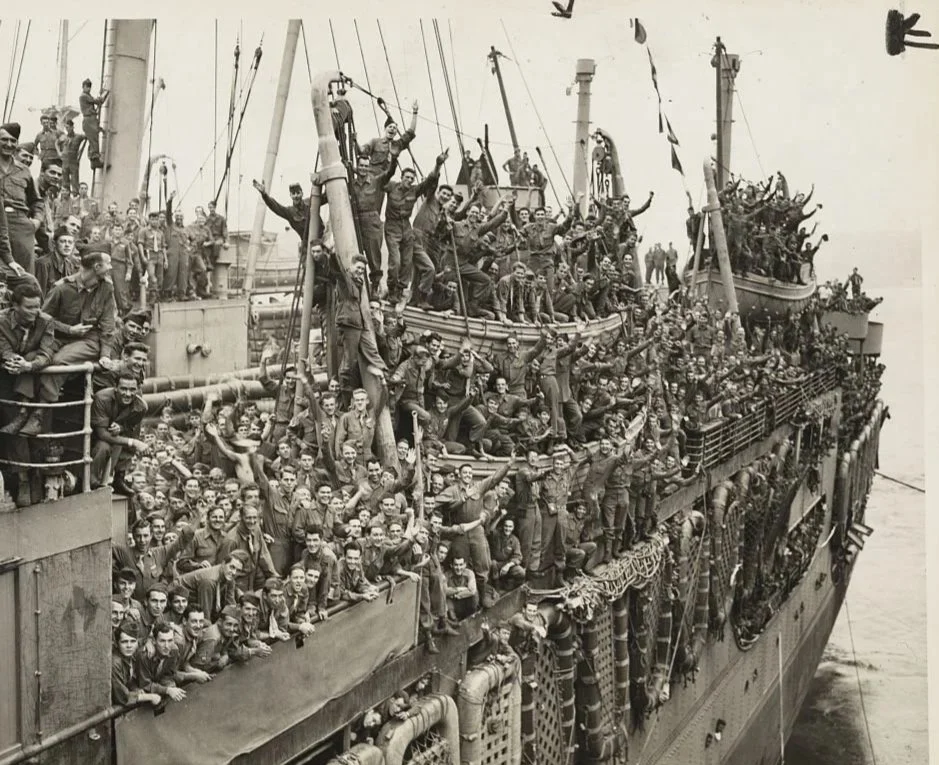
August 6, 1945. Troops of the 20th Armored Division and units of the 9th Army pack every inch of the SS John Ericsson as it pulls into Pier 84 on the North River in New York City. The men are cheering, waving, and climbing the rigging as the ship approaches the dock. The date is notable: August 6, 1945 was the same day the United States dropped the atomic bomb on Hiroshima, a moment that would bring the Pacific war to a close within days. These soldiers were part of the massive postwar repatriation effort known as Operation Magic Carpet, which ultimately returned more than eight million American servicemen and women home from Europe and the Pacific.
Civil War Veteran Adjutant Edwin Francis Wyer of Cos. I, E and G, 5th Massachusetts Infantry Regiment with World War I veteran Terry McCloskey of 101st Infantry, 26th Division in Uniform
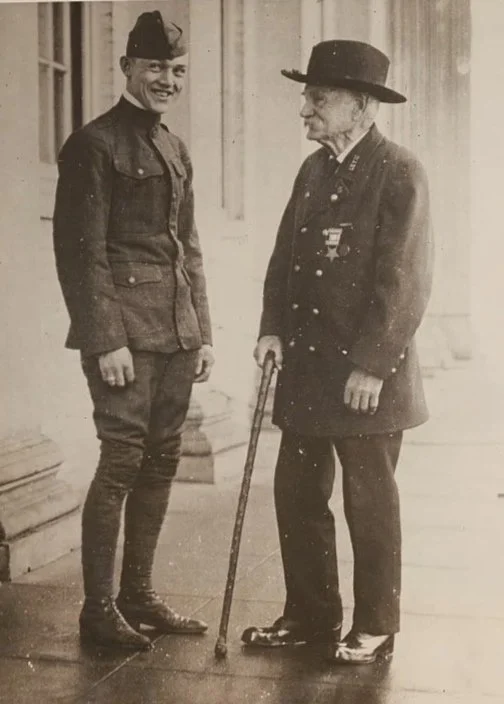
In March 1922, a Civil War veteran and a World War I soldier stand together outside the Massachusetts State House in Boston, representing two generations of American military service. Edwin Francis Wyer, who served in the Union Army, appears alongside Terry McCloskey of the 101st Infantry, 26th Division, highlighting the passage of time between the nation’s major conflicts. Public interest in such meetings reflected a continued respect for veterans and a desire to connect past and present service.
The New President Takes The Oath of Office. The Wilcox Home in Which President Roosevelt was Sworn In
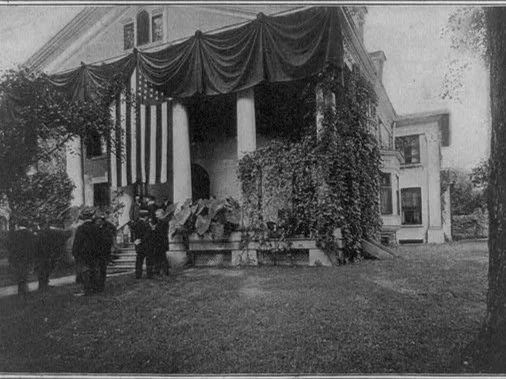
In September 1901, a small gathering assembled on the porch of the Wilcox home in Buffalo, New York, where Theodore Roosevelt took the oath of office following the assassination of William McKinley. The house, draped in American flags, became an unexpected setting for a pivotal moment in national history as Roosevelt assumed the presidency amid uncertainty and mourning.
Historic American Flag Carried into Battle by American Soldiers During WWI
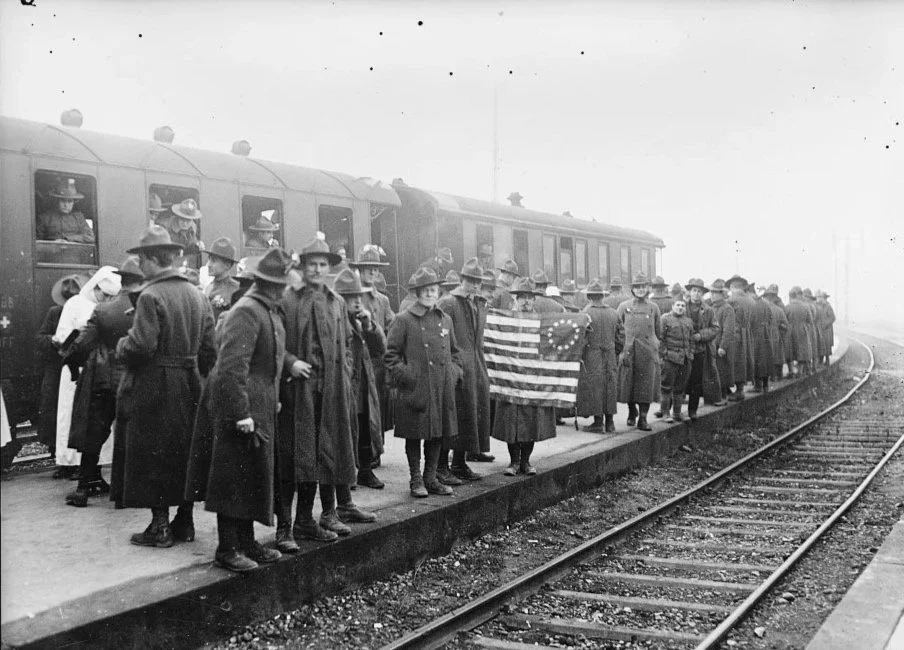
American servicemen gathered along a rail platform at the close of World War I, marking their release and return from captivity. The soldiers hold a U.S. flag that had been secretly hidden while they were held in German prison camps and later revealed in Basel, Switzerland, on December 7, during the release of the first train of American privates. The long line of men, bundled in heavy coats, reflects the scale of the war and the logistics of bringing troops home. This is a quiet but powerful moment, when a simple flag signaled survival, freedom, and the end of a long ordeal for those who served.