
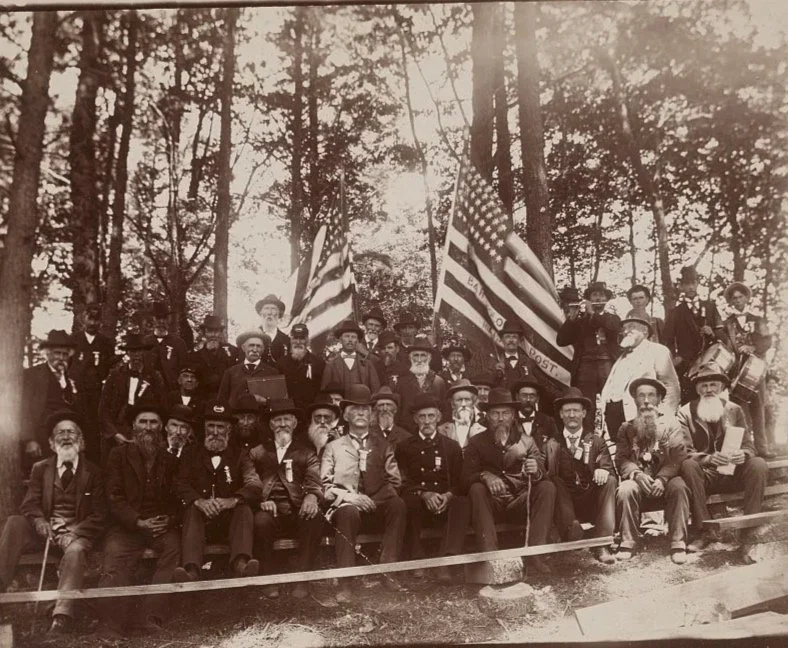
Taken sometime between 1896 and 1918, this is a group portrait of Union veterans belonging to Bartholomew GAR Post #136 out of Nunica, Michigan, a small Ottawa County farming community. The men, most with the white beards of old age, pose outdoors beneath tall trees with American flags and what appears to be a post banner behind them. Seated second from right in the front row is Henry E. Plant, who received the Medal of Honor in 1896 for his actions during the Civil War. The Grand Army of the Republic organized thousands of local posts like this one across the country, and Post #136 remained active until 1918, when its dwindling membership finally made continuation impossible.
Unidentified Civil War Veterans in Grand Army of the Republic Uniforms with Unidentified Members of Daughters of Union Veterans of Denver and Greeley, Colorado
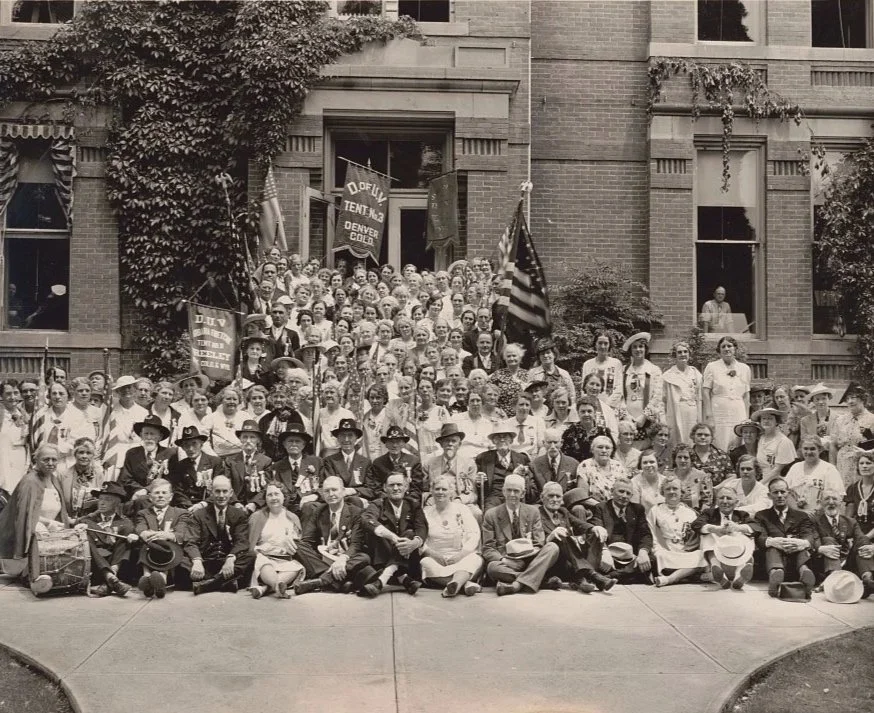
A 1938 group portrait of Civil War veterans in Grand Army of the Republic uniforms alongside members of the Daughters of Union Veterans from Denver and Greeley, Colorado, photographed by Mark D. Miller of Fort Collins. The banners visible in the crowd identify D.U.V. Tent No. 2 from Denver and a delegation from Greeley. By 1938, the surviving Union veterans were well into their nineties, and gatherings like this were becoming increasingly rare. The Grand Army of the Republic, founded in 1866, had once been one of the most powerful veterans organizations in the country, with over 400,000 members at its peak in 1890.
G.A.R. PARADE GREAT FLAG AT CAPITOL
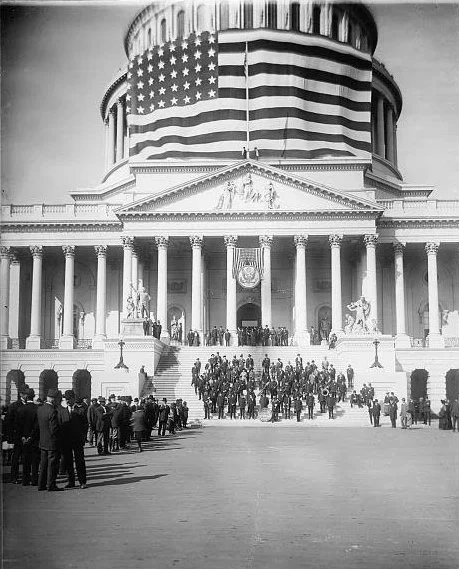
Veterans of the Grand Army of the Republic gather at the U.S. Capitol beneath a massive American flag during a commemorative parade in the early 20th century. Formed by Union veterans of the Civil War, the organization played a major role in shaping public memory of the conflict and advocating for soldiers’ benefits.
Parade of Civil War Veterans and Children Carrying American and Alaska Flags on Urban Downtown Street
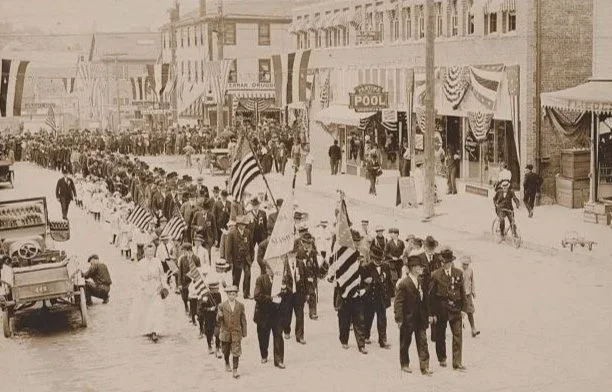
A parade of Civil War veterans marches through a busy downtown street in the early 20th century, accompanied by children carrying American and Alaska flags. Organized at a time when surviving veterans were aging, such public displays honored their service and reinforced national unity decades after the war. The presence of younger generations alongside the veterans reflects an effort to pass down memory and patriotism, while the decorated storefronts and gathered crowds show how communities marked these occasions as civic events tied to identity and remembrance.
Group of Civil War Veterans Pose Outdoors
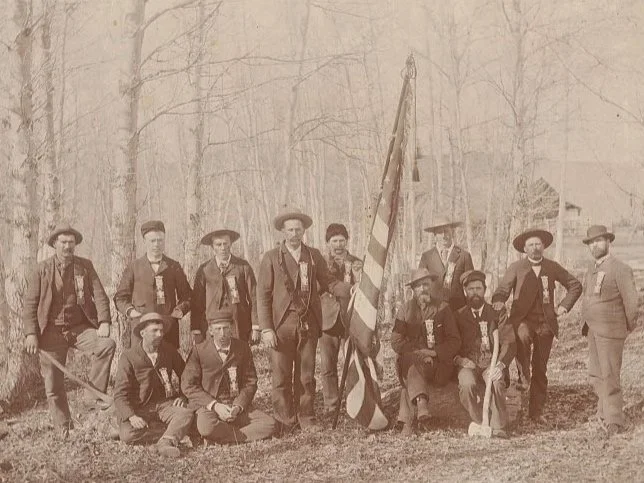
A group of Civil War veterans pose outdoors long after the war, likely at a reunion tied to the Third Battle of Winchester. Their ribbon badges mark their service, while the American flag at the center points back to the cause they once fought for. By the late 1800s and early 1900s, gatherings like this were common, giving aging veterans a chance to reconnect, remember shared experiences, and publicly claim their place in the nation’s story after the war had passed into history.