
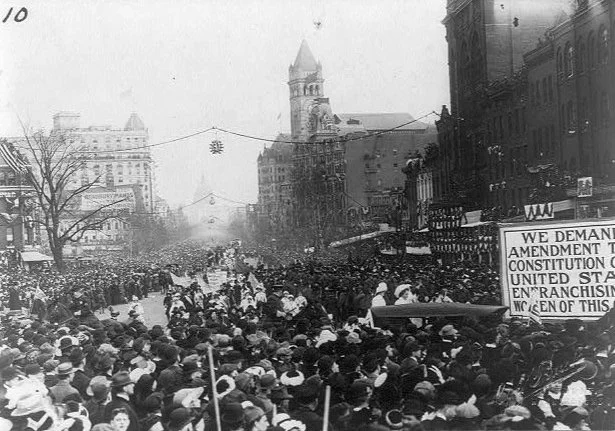
Taken in 1913, this photograph captures the woman suffrage parade filling Pennsylvania Avenue in Washington, D.C., as crowds stretch toward the Capitol and the old Post Office tower. Marchers carried clear demands for voting rights, turning the street into a public forum at a time when women were still excluded from the ballot. The parade drew national attention by placing the issue front and center just before a presidential inauguration. Moments like this helped push women’s suffrage from protest to policy, laying the groundwork for the 19th Amendment a few years later.
American Flag Amid Rubble Following September 11th
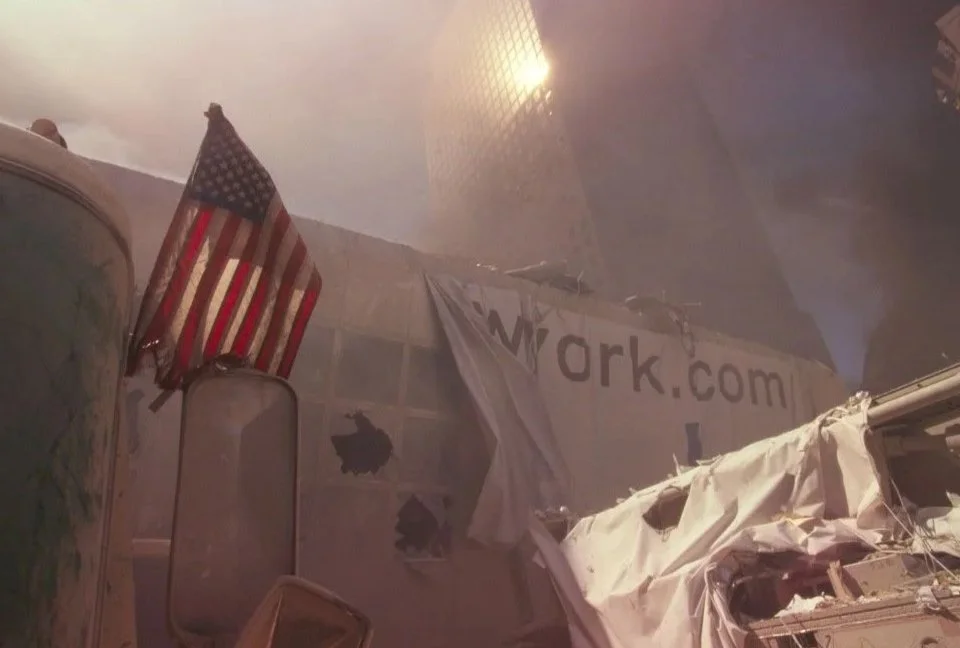
Taken on September 11, 2001, an American flag set among the wreckage at the World Trade Center in New York City in the hours after the attacks. Twisted metal, torn surfaces, and smoke frame a scene of sudden loss and confusion as the city and the country tried to understand what had just happened. The flag was not a planned display, but something placed by hand in the middle of destruction, reflecting how people reached for familiar symbols in an unfamiliar moment.
American Flag on the Roof of Brothers Bar and Grill in South Lake Tahoe, California
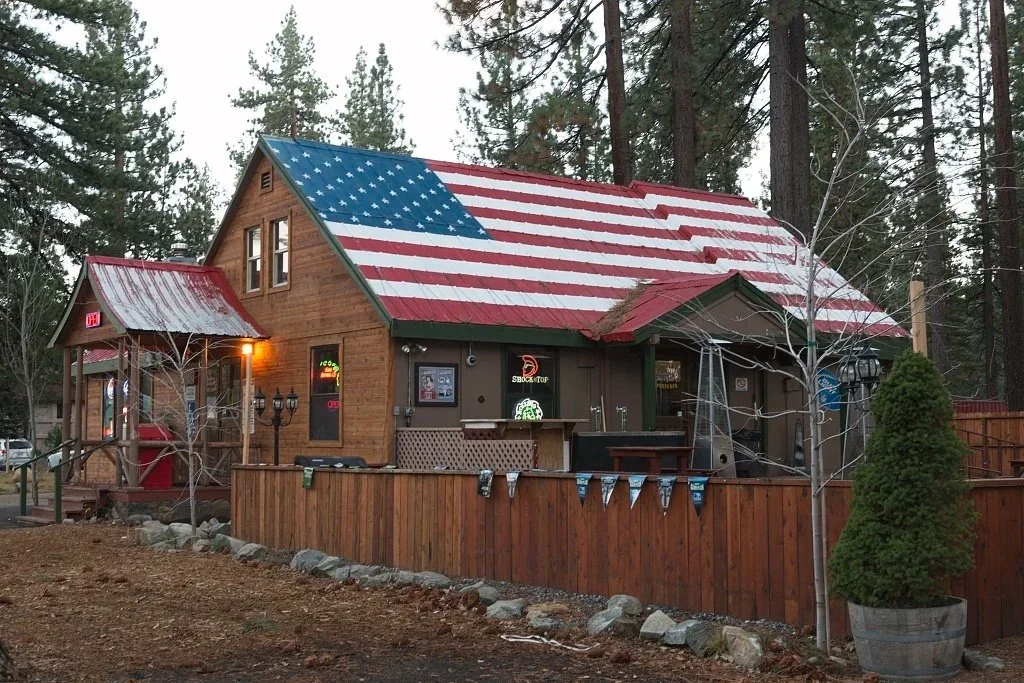
A small bar and grill in South Lake Tahoe, California, photographed in 2012, features an American flag painted directly onto its roof. Surrounded by pine trees, the building reflects a familiar kind of local patriotism found in towns across the country, where national symbols show up in everyday places rather than formal settings. It’s the kind of spot where community life, work, and leisure overlap, and the flag feels less like decoration and more like part of the landscape.
Boy on Float in Fourth of July Parade. Vale, Oregon
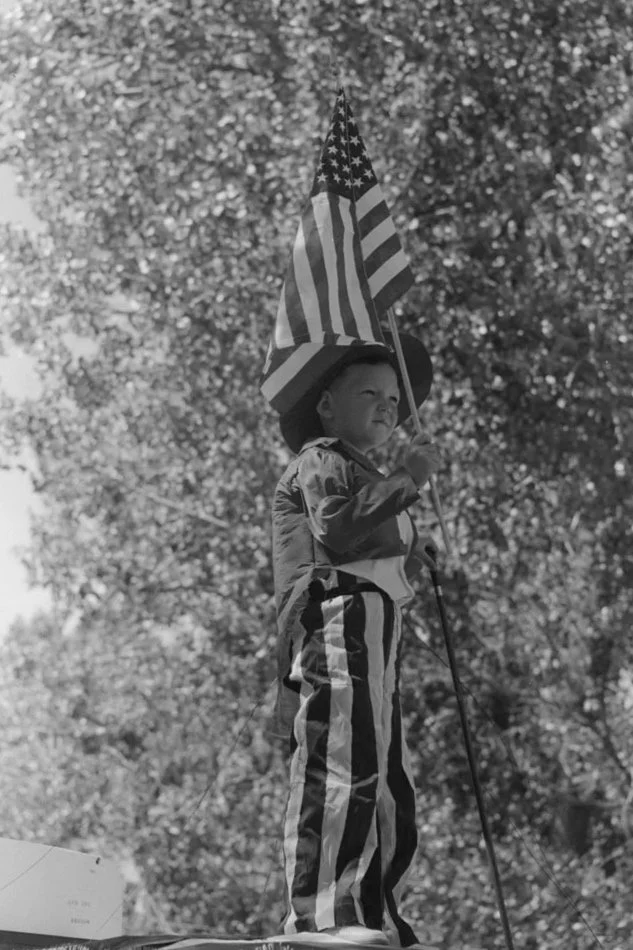
A young boy standing on a parade float during a Fourth of July celebration in Vale, Oregon, in 1941. Wearing a patriotic outfit and holding an American flag, he represents the way national holidays were marked in small towns across the country. At the time, the United States had not yet entered World War II, but public displays of patriotism were already common and meaningful. Scenes like this were less about spectacle and more about community, with local families turning out to celebrate the country and pass those traditions on to the next generation.
Large Parade; Welcoming Armed Forces Home. Buffalo, N. Y., 1919
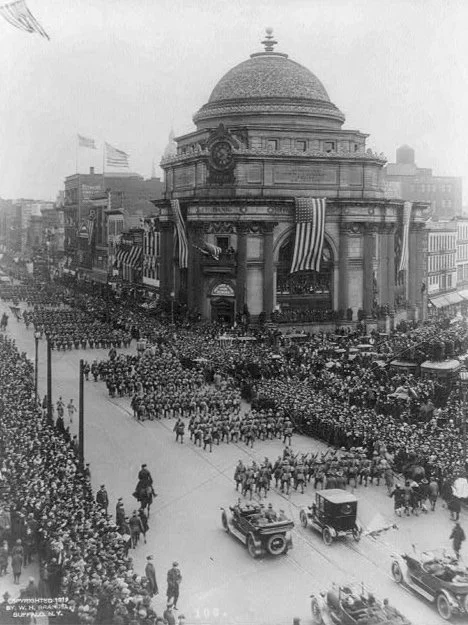
Crowds fill the streets of Buffalo, New York, in 1919 as returning World War I soldiers march through the city. Businesses and banks along the route are wrapped in American flags, and signs welcoming the troops home hang above the sidewalks. Spectators climb onto rooftops, streetcars, and automobiles, turning the parade into a citywide event. Scenes like this were common after the war, as communities paused to mark the end of the fighting and publicly recognize the men who had served overseas.
Drummer Philo H. Ravlin of Co. I, 47th Illinois Infantry Regiment in Uniform with Drum
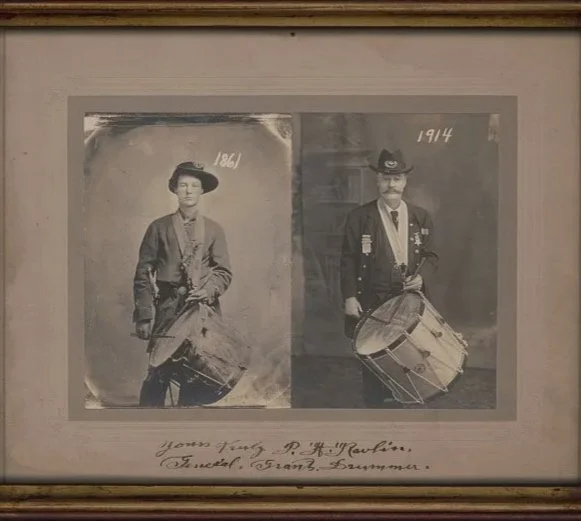
Two images of Philo H. Ravlin, a drummer with the 47th Illinois Infantry, taken more than fifty years apart. The first, from 1861, shows him as a young Civil War soldier, standing with his drum at the start of the conflict. The second, dated 1914, shows Ravlin again with the same instrument, now an older man and a veteran. Seen together, the photos trace one life across war and peace, and reflect how Civil War service remained a defining part of identity long after the guns fell silent.
Group of Civil War Veterans Pose Outdoors
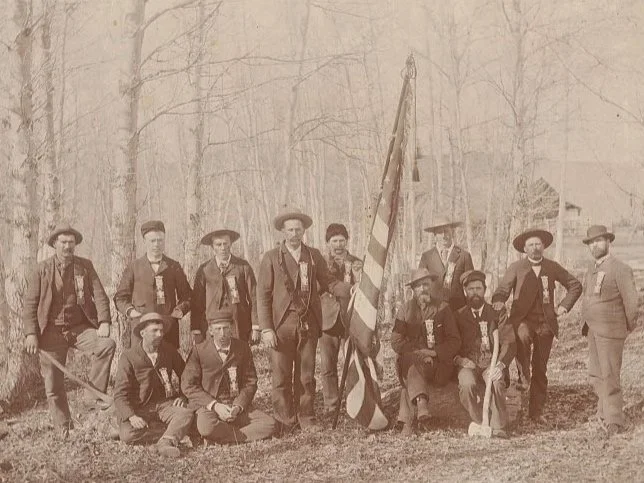
A group of Civil War veterans pose outdoors long after the war, likely at a reunion tied to the Third Battle of Winchester. Their ribbon badges mark their service, while the American flag at the center points back to the cause they once fought for. By the late 1800s and early 1900s, gatherings like this were common, giving aging veterans a chance to reconnect, remember shared experiences, and publicly claim their place in the nation’s story after the war had passed into history.
Many peoples - one nation Let us unite to Americanize America
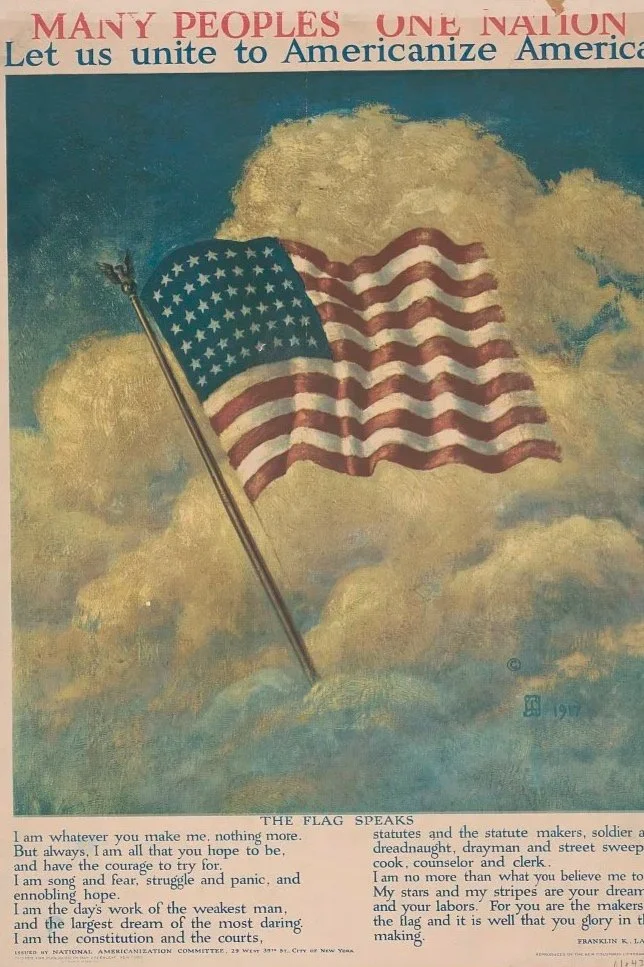
1917 poster showing how Americans were being asked to think about unity as the country entered World War I. With the flag rising above the clouds, it sends a clear message that national identity came first, especially in a time of war. Campaigns like this were aimed at bringing together a population shaped by recent immigration and rapid change, tying patriotism, loyalty, and shared responsibility to the image of the American flag.
Trinity Church, Boston
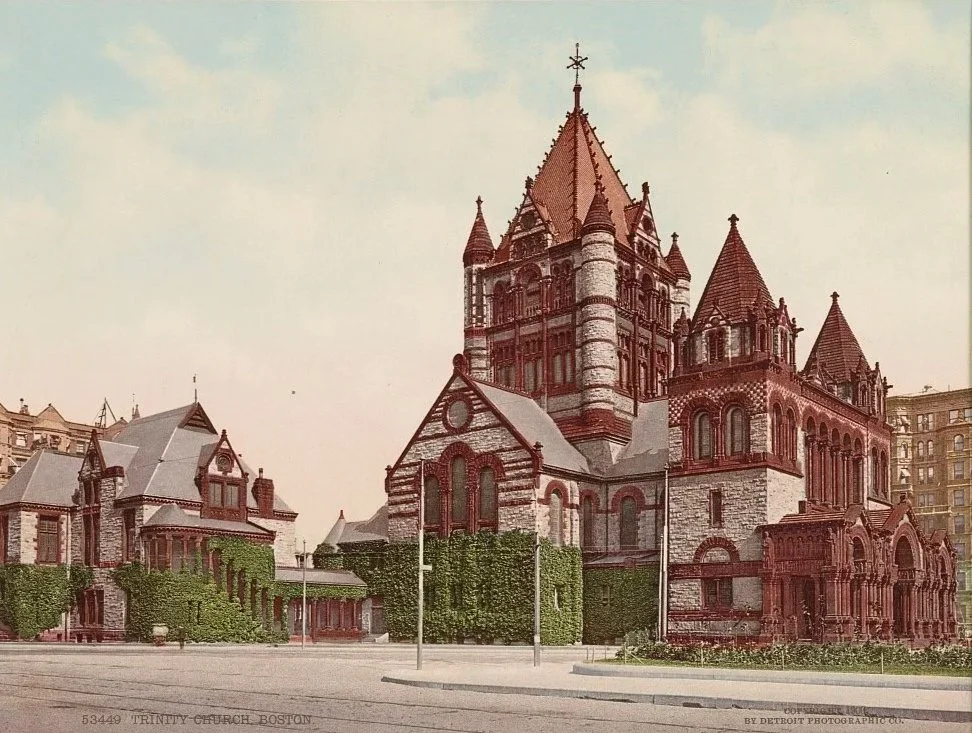
Trinity Church in Boston, seen here around 1900, was already a city landmark by the turn of the century. Completed in 1877 and designed by architect Henry Hobson Richardson, the church broke from traditional European church designs and helped shape what became known as the Romanesque Revival in America. Its massive stonework, broad arches, and prominent tower reflected the confidence of a growing Boston after the Back Bay was filled in.
General Peyton March and Family ... at the Georgetown, Washington and Lee Football Game
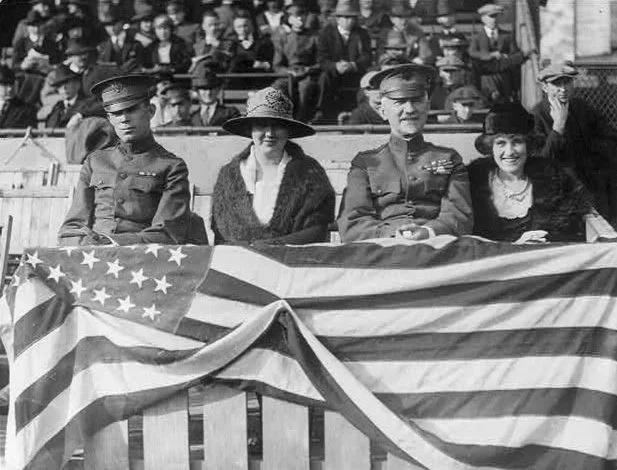
General Peyton March, who served as U.S. Army Chief of Staff during World War I, sits with family and guests at a Georgetown–Washington and Lee football game in Washington, D.C. The American flag draped across the front places the scene firmly in its time, when military leaders were well-known public figures and often appeared at major social events. College football was becoming a popular national pastime, drawing crowds that mixed military officers, civic leaders, and civilians.
Massachusetts Nautical School 1923
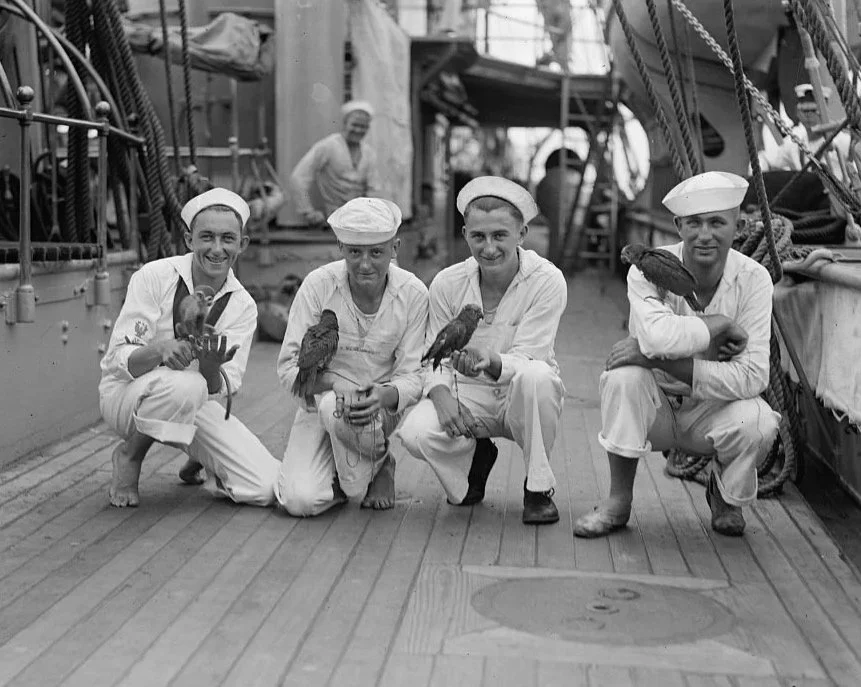
Cadets from the Massachusetts Nautical School aboard a training ship in September 1923, during a period when maritime education played a key role in preparing young men for service in the merchant marine and U.S. Navy. Dressed in standard issue uniforms, schools like this helped supply skilled officers and sailors at a time when sea power and commercial shipping were central to American industry and national defense.
The Eagle Map of the United States
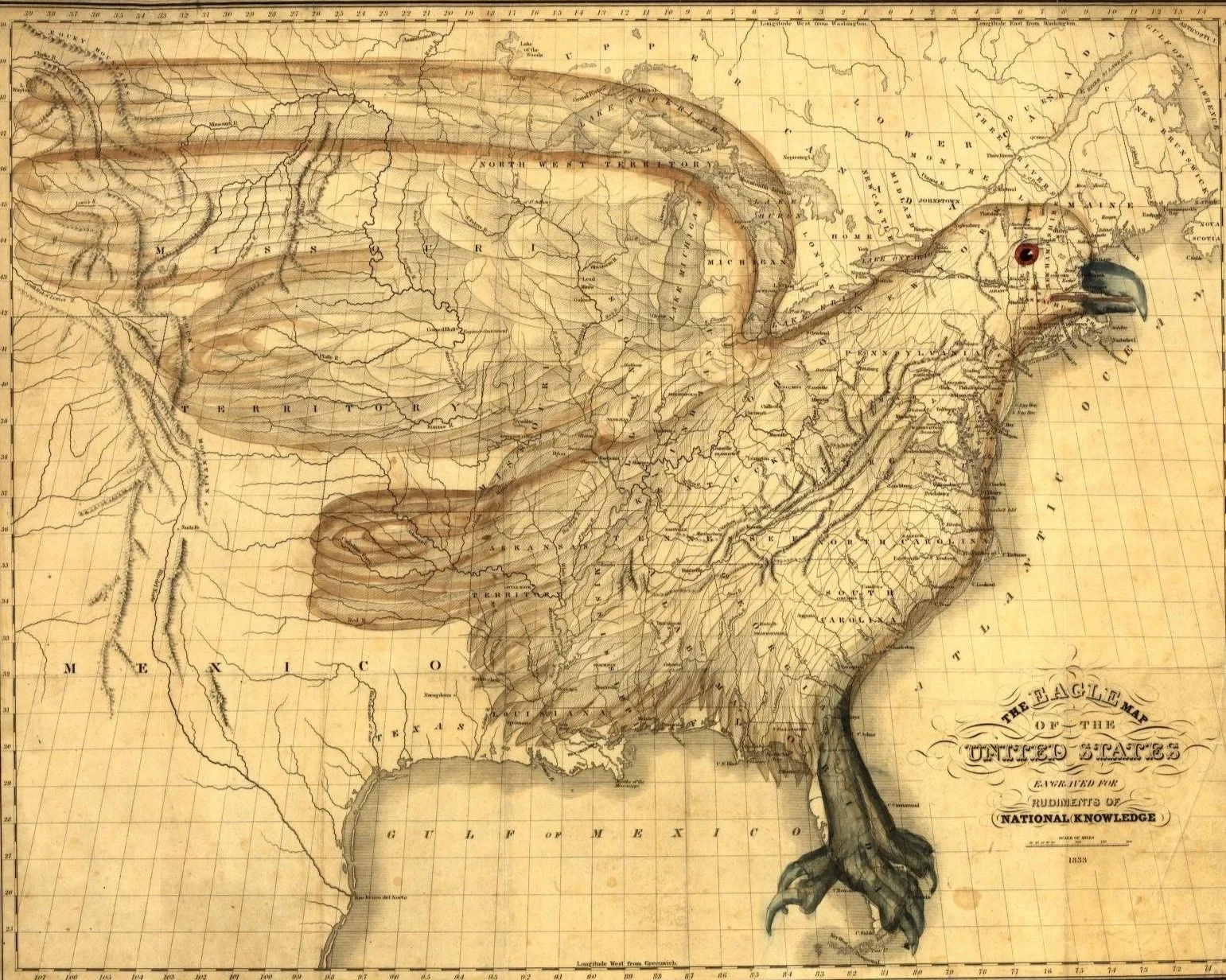
1833 map shows the United States arranged in the shape of a bald eagle. Made at a time when the country was still expanding west. States, territories, and natural features are carefully drawn inside the eagle’s form, turning a practical map into a statement about national purpose.
Lincoln's Second Inaugural
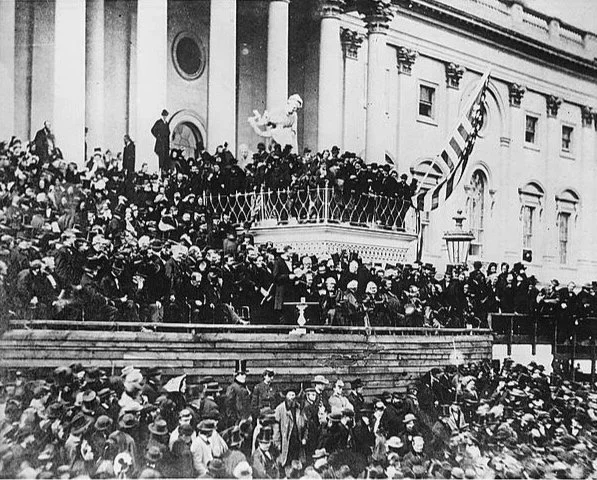
President Abraham Lincoln delivering his second inaugural address from the east portico of the U.S. Capitol on March 4, 1865. The Civil War was nearing its end, and the large crowd gathered reflects the weight of the moment for a divided nation. People filled the steps and grounds to witness the start of Lincoln’s final term. Capturing a turning point in American history, as the country stood on the edge of peace and reconstruction.
Huge flag being carried by a large group of men in a G.A.R. parade in Washington, D.C.
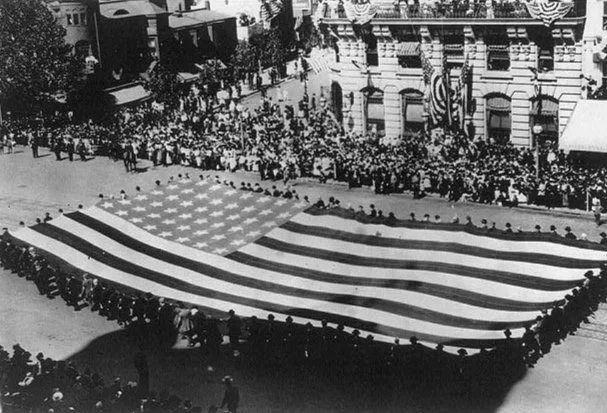
1915 photograph shows a huge American flag being carried through the streets of Washington, D.C., during a Grand Army of the Republic parade made up of Civil War veterans. Dozens of men are needed just to support the flag, underscoring how large and symbolic these public displays had become.
Deaf children of St. Rita's School, Cincinnati, OH, singing the Star Spangled Banner in sign language

1918 photograph shows deaf students from St. Rita’s School in Cincinnati signing the Star-Spangled Banner in front of a large American flag. Taken during the final year of World War I, the children’s use of sign language shows how national traditions were adapted so everyone could take part. A quiet look at inclusion and shared identity during a time when public unity mattered deeply.
Post Office Flag day
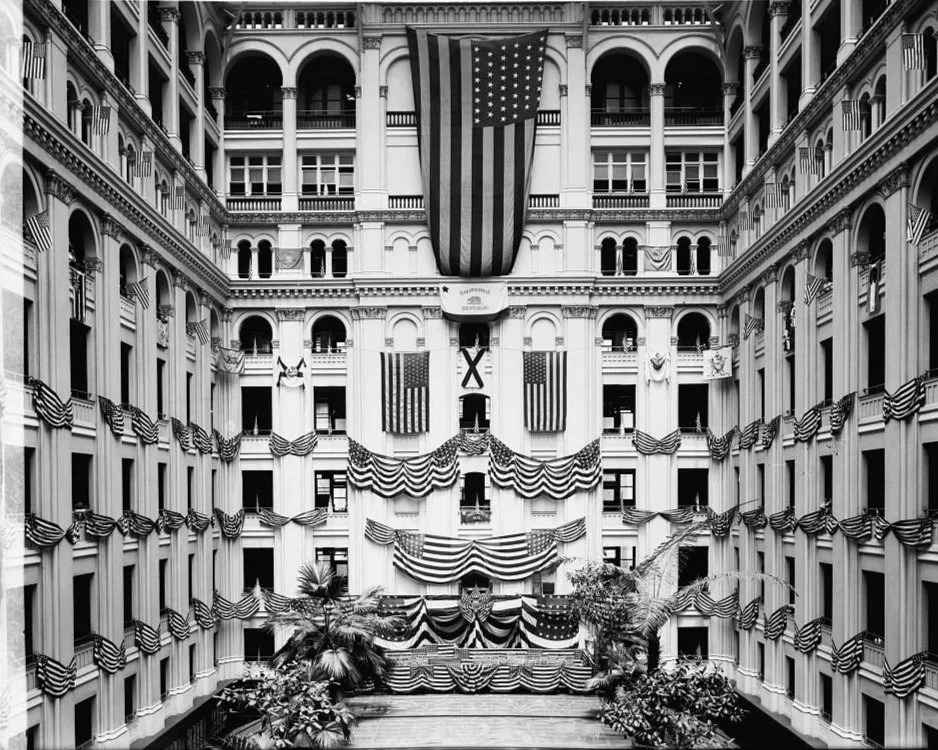
The Post Office building on Pennsylvania Avenue in Washington, D.C., decorated with flags and bunting for Flag Day in 1913. Large American flags hang through the open courtyard while smaller ones line the balconies, turning the building itself into a patriotic display. At the time, Flag Day was gaining wider recognition, especially in federal buildings tied to government and public service. Scenes like this show how national symbols were used in everyday civic spaces to reinforce a shared sense of identity.
The Great Parade, Pennsylvania Avenue, Washington, D.C., U.S.A.
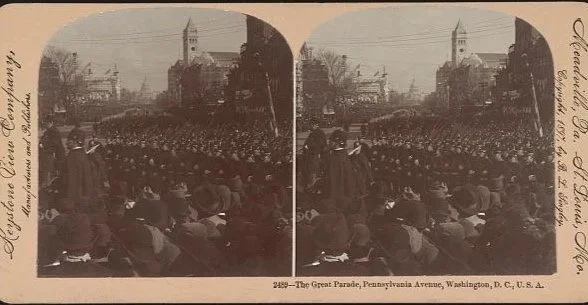
1897 stereograph shows the Great Parade along Pennsylvania Avenue in Washington, D.C., with massive crowds packed along the street and sidewalks. Events like this were central to public life in the nation’s capital, turning major avenues into gathering places for civic celebration and national display. Americans came together in person to mark important moments, long before radio or television, also reflecting the popularity of stereographs, which brought scenes from Washington to viewers across the country.
Parade of Civil War veterans and children carrying American and Alaska flags
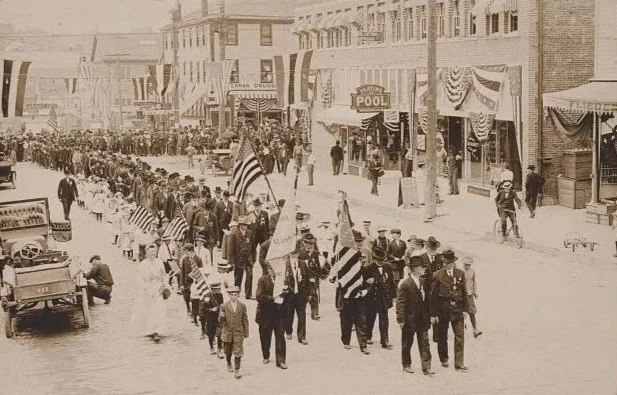
A patriotic parade moving down a busy main street, with marchers carrying American flags past stores and restaurants. Signs for a U.S. Navy Yard and a Great Northern Railway office highlight how military activity and rail transportation shaped local life and commerce. Spectators line the sidewalks while cars and bicycles share the road, capturing a moment when older traditions and modern life overlapped.
Votes for women : suffrage rallying song
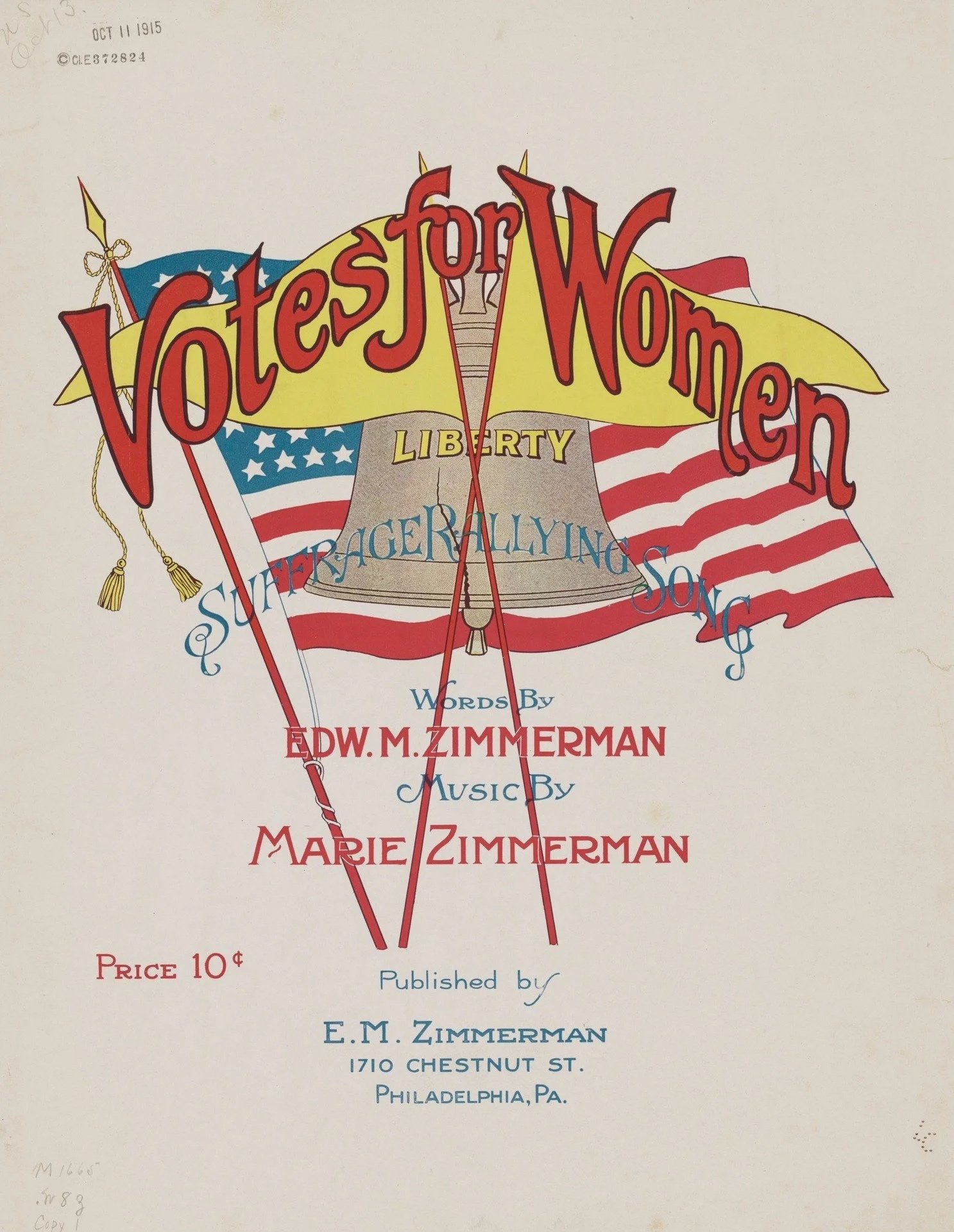
During the early women's suffrage movement, rallying songs like Votes for Women were sung at marches and meetings to build unity and keep the message simple and memorable. Printed sheet music helped spread these songs far beyond major cities, allowing supporters across the country to take part. Items like this show how the fight for voting rights was carried not just through speeches and demonstrations, but through everyday culture and shared voices.
Together we win / James Montgomery Flag
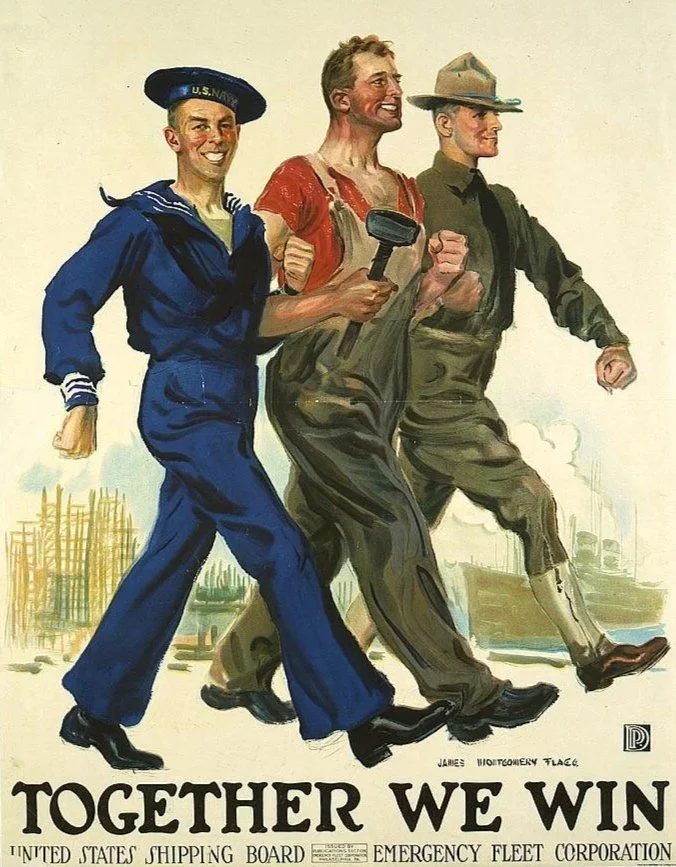
World War I–era poster shows a shipyard worker marching in step with a sailor and a soldier, driving home the message that the war effort depended on everyone. Created for the United States Shipping Board’s Emergency Fleet Corporation, also showing that industrial labor supported troops overseas by building and supplying ships. The hammer and dockside setting connect factory work directly to national defense. Helping Americans see shipyards and workshops as front-line contributions, not just support roles.