
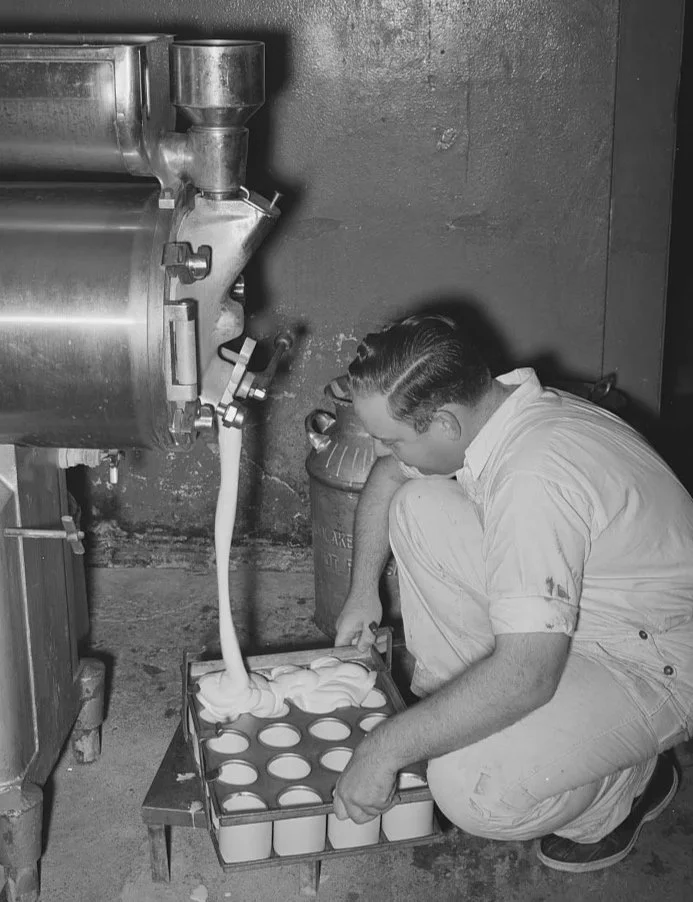
A creamery worker in San Angelo, Texas, fills cartons with fresh ice cream mix in 1939, capturing the industrial side of everyday food production in small-town America. The mechanized dispenser and uniform containers illustrate the growing efficiency of local dairies during the late Depression era, as advances in equipment helped meet rising consumer demand. Such operations connected rural agricultural output to broader markets, turning raw milk into standardized products ready for distribution.
Farmer Crossing the Main Street of Town, Eufaula, Oklahoma
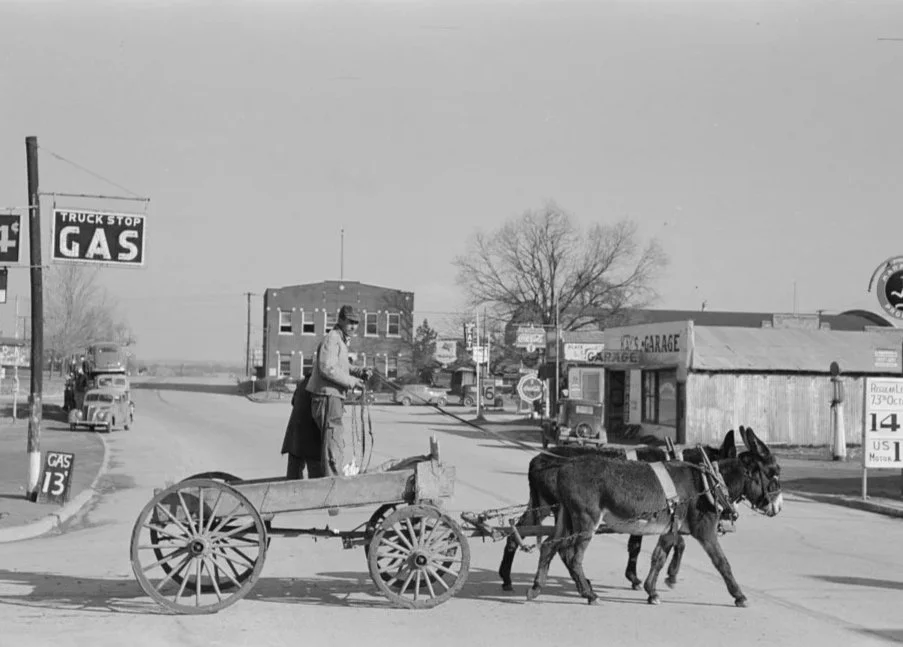
A farmer guides a mule-drawn wagon across the main street of Eufaula, Oklahoma, in 1940, passing through a town where older agricultural traditions meet the growing presence of automobiles, gas stations, and roadside businesses. Hand-painted signs advertising fuel prices and garages line the street, underscoring the expanding influence of the automobile, while the wagon and its driver represent enduring self-reliance and the rhythms of farm work. Captured during the late Depression era.
Boy on Float in Fourth of July Parade. Vale, Oregon
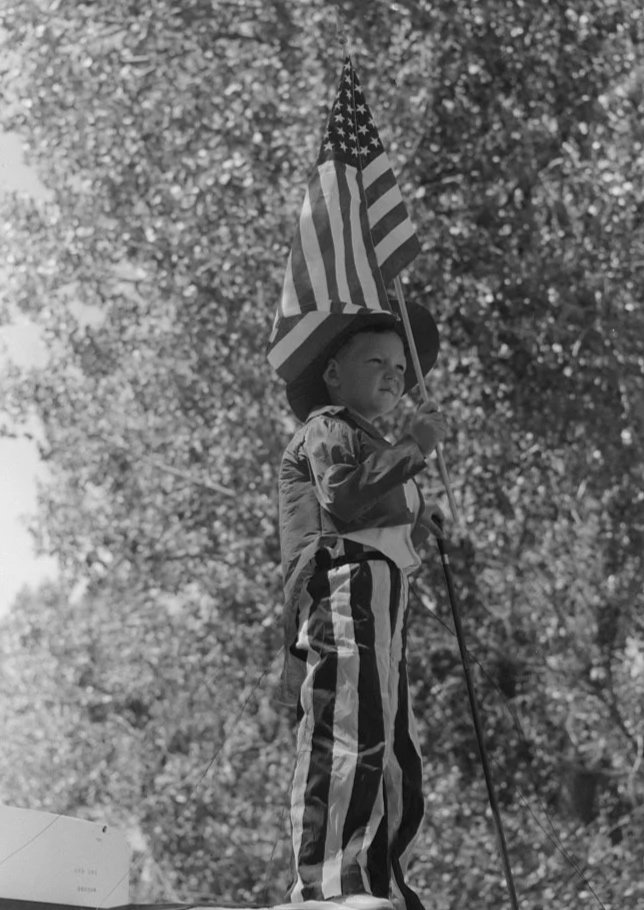
A young boy stands atop a parade float in Vale, Oregon during a Fourth of July celebration in 1941, holding an American flag while dressed in patriotic attire. Community parades like this were a central feature of small-town life, bringing residents together to mark national holidays with displays of civic pride. Occurring just months before the United States entered World War II, such moments reflected a generation on the edge of global conflict while still rooted in local traditions.
Participants, Some Carrying American flags, Marching in the Civil Rights March from Selma to Montgomery, Alabama in 1965
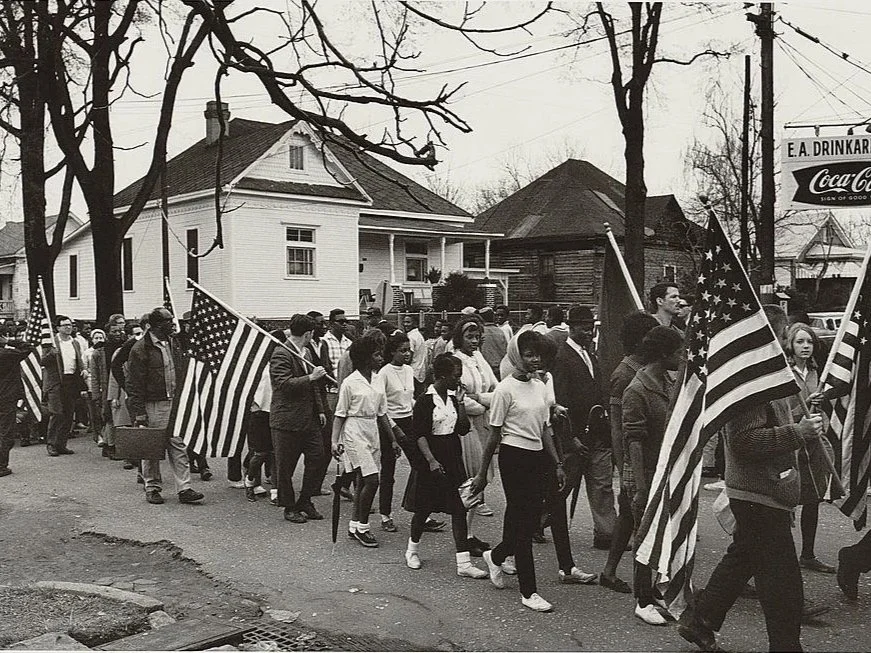
Marchers move along a residential street during the 1965 Selma to Montgomery campaign, many carrying American flags as they press forward in support of voting rights for African Americans. Organized after years of disenfranchisement and intimidation, the demonstrations drew national attention to the barriers faced in the South. The presence of ordinary men, women, and young people underscored the broad base of the movement and its commitment to nonviolent protest.
Fourth of July Parade, Watertown, Wisconsin
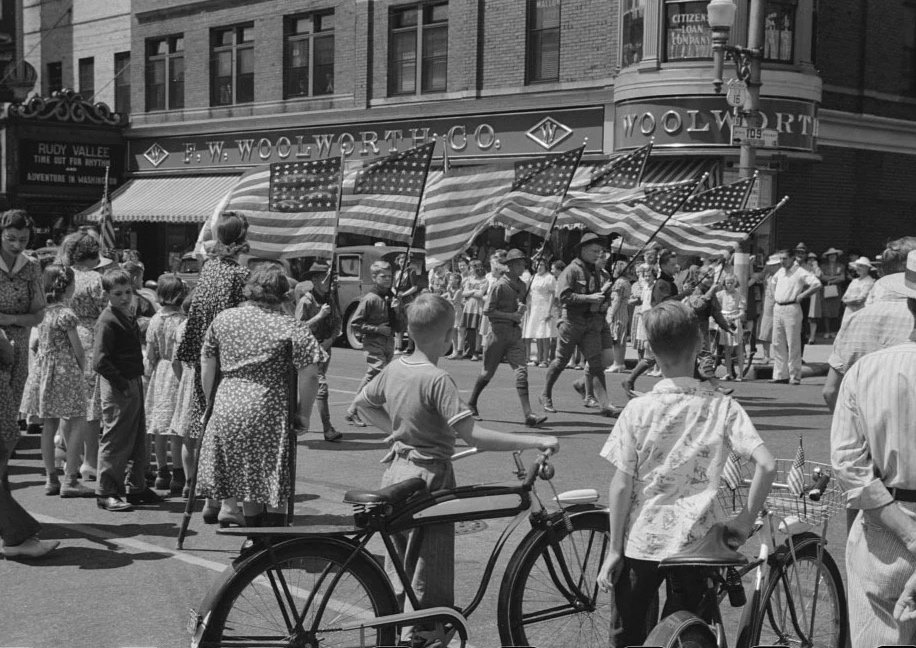
A Fourth of July parade moves through downtown Watertown, Wisconsin in 1941, with marchers carrying American flags past storefronts and gathered spectators. Children stand at the curb with bicycles, watching as the procession passes, reflecting the strong community participation typical of small-town celebrations. Taking place just months before the United States entered World War II, such events carried added meaning as public expressions of unity and patriotism.
Entrance to Champaign County Fair, Ohio
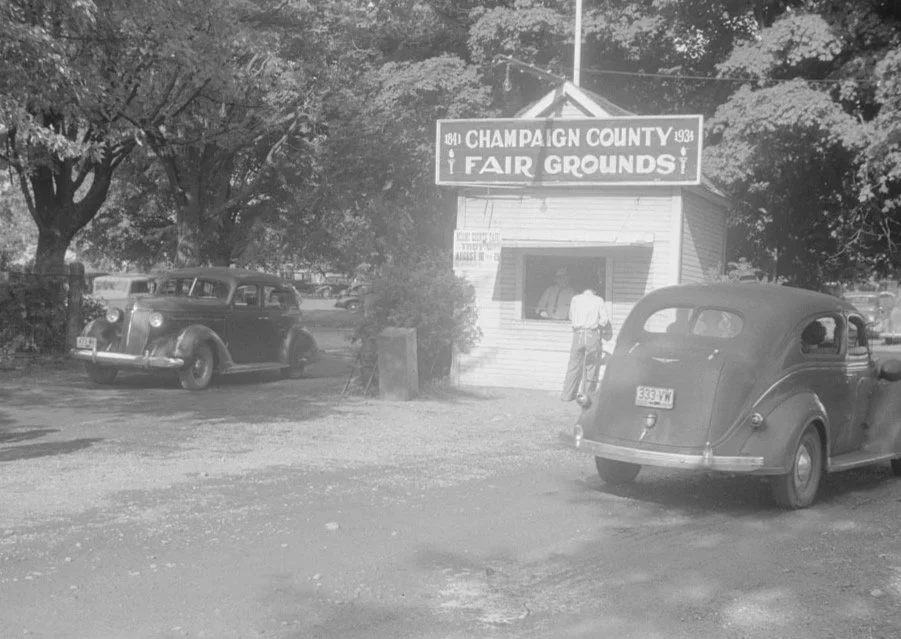
An entrance booth at the Champaign County Fair in Ohio in 1938 reflects the enduring role of county fairs as centers of community life in rural America. Automobiles line the grounds as visitors arrive, signaling the growing mobility of the era even during the final years of the Great Depression. County fairs brought together agriculture, entertainment, and local commerce, offering a place for families to gather, farmers to showcase their work, and small towns to maintain social ties.
Cafe and Filling Station of U.S. Highway 66, East of Albuquerque, New Mexico
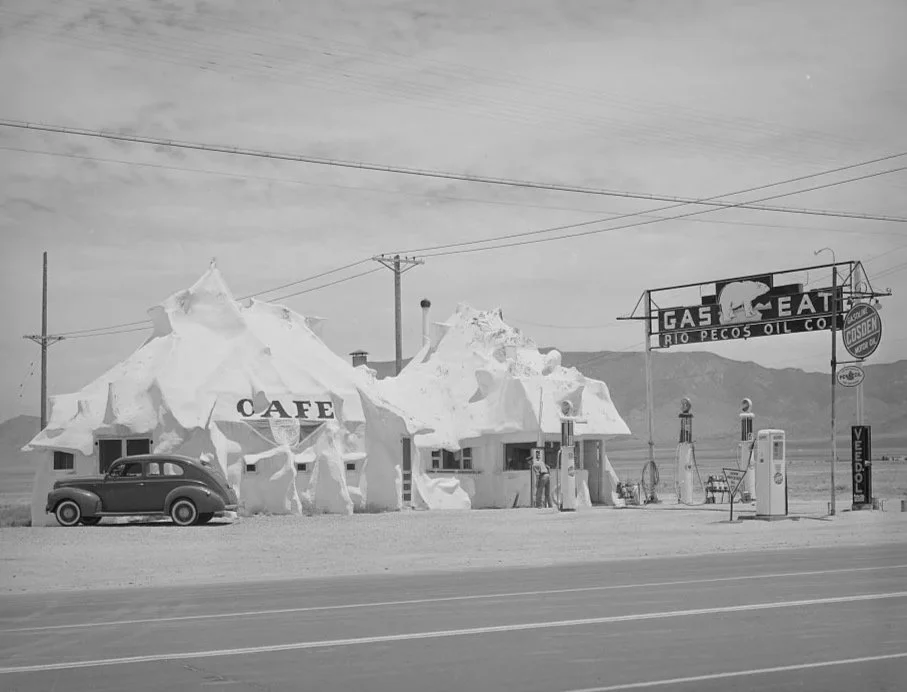
A café and filling station along U.S. Highway 66 east of Albuquerque, New Mexico in 1940 captures the rise of automobile travel and roadside enterprise in the American Southwest. The building’s distinctive, rock-like design reflects the period’s fascination with novelty architecture, intended to attract motorists moving along one of the nation’s most important cross-country routes. Gas pumps, signage, and a parked car signal the growing dependence on highways that connected rural regions to expanding markets and migration patterns.
Roadside Stand Near Birmingham, Alabama
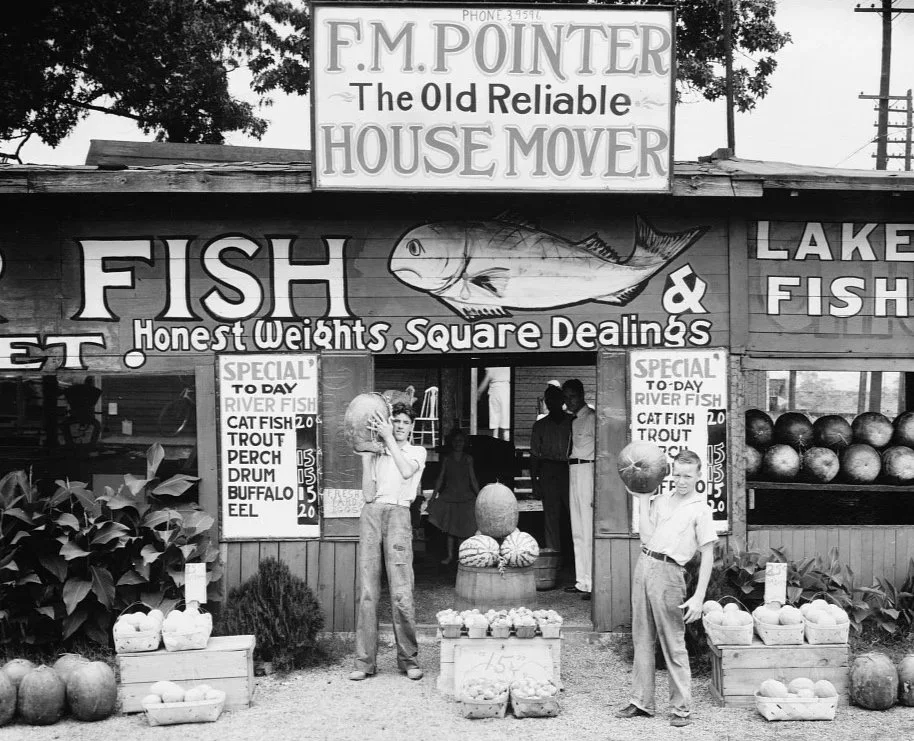
A roadside stand near Birmingham, Alabama in 1936 reflects the everyday commerce of the Great Depression era, where small businesses combined multiple trades to serve local communities. Signs advertise fresh fish alongside produce, while watermelons are stacked in crates and on the ground for passing customers. The prominent “honest weights, square dealings” slogan speaks to the importance of trust in an economy strained by hardship.
G.A.R. PARADE GREAT FLAG AT CAPITOL
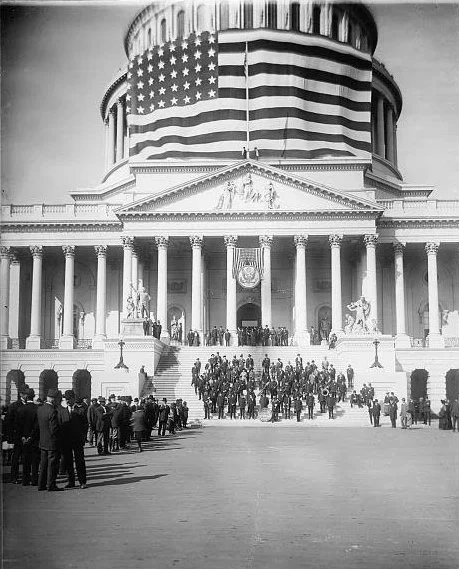
Veterans of the Grand Army of the Republic gather at the U.S. Capitol beneath a massive American flag during a commemorative parade in the early 20th century. Formed by Union veterans of the Civil War, the organization played a major role in shaping public memory of the conflict and advocating for soldiers’ benefits.
World Series, Crowd in Stands, 10/24
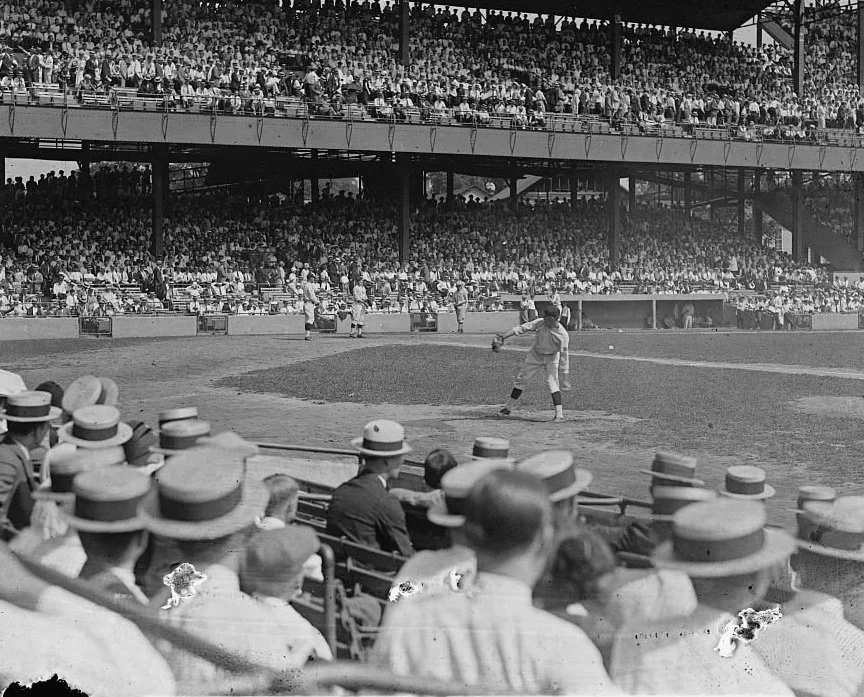
A packed grandstand watches a World Series game in October 1924, as a pitcher delivers from the mound before thousands of spectators in straw hats and suits. Baseball had become the nation’s defining pastime by the early 20th century, drawing large crowds and uniting cities around their teams.
President Roosevelt Reviews ARMY Day Parade. WASHINGTON, D.C. APRIL 6
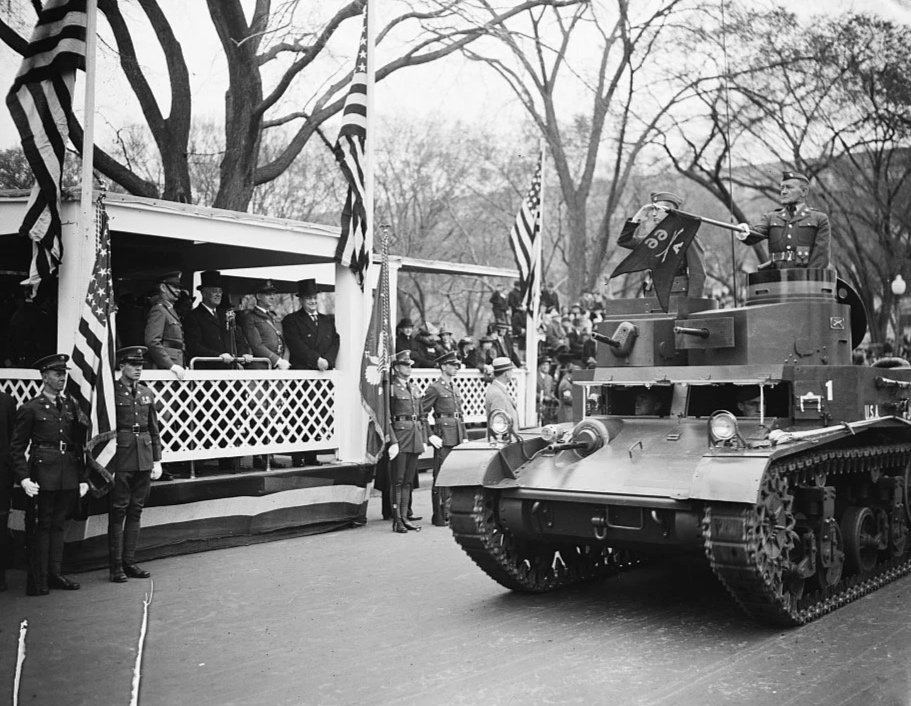
Franklin D. Roosevelt reviews an Army Day parade in Washington, D.C., on April 6, 1938, as armored vehicles pass the presidential stand and soldiers present arms. The annual observance marked the anniversary of America’s entry into World War I and served to highlight the nation’s growing military preparedness during a period of rising global tension.
Eugene V. Debs Making a Speech
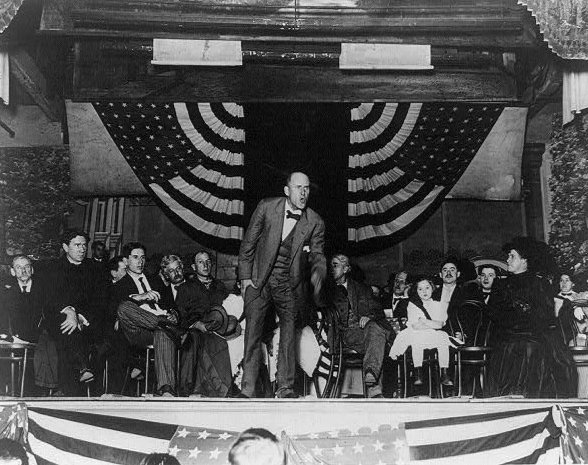
Eugene V. Debs addresses a crowd during the 1910s, standing before a stage draped in American flags as fellow supporters sit behind him. A prominent figure in the labor movement and a leader of the Socialist Party, Debs spoke widely on workers’ rights, economic inequality, and political reform during a period of rapid industrial growth and social change.
Washington, D.C. Two Soldiers Await The Arrival of a Troop Train at The Union Station
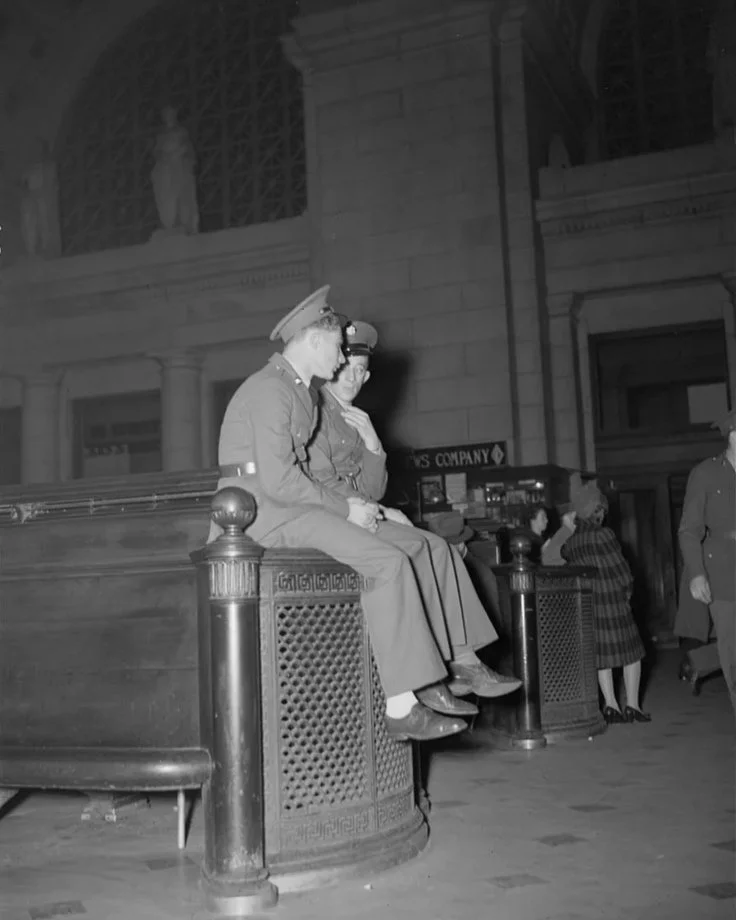
Two U.S. soldiers sit quietly inside Washington, D.C.’s Union Station in November 1942, waiting for a troop train during the height of World War II. Their pause reflects a common moment in wartime travel, when service members moved through major rail hubs on their way to training or deployment. Union Station served as a critical transit point, connecting the capital to military installations across the country, as the nation mobilized millions for service at home and overseas.
5th Ave. Decorated for Preparedness Parade
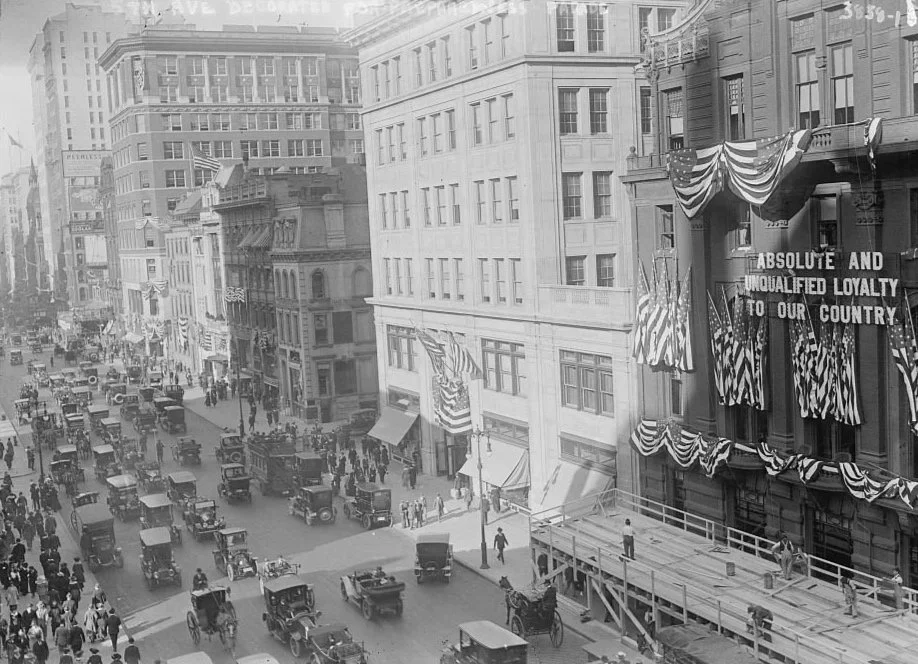
New York City’s Fifth Avenue is shown during the 1916 Preparedness Parade, as the nation weighed its role in the growing conflict overseas. Buildings are draped in flags and patriotic bunting, with a prominent sign declaring “Absolute and unqualified loyalty to our country,” reflecting rising public support for military readiness. Streets filled with early automobiles, carriages, and dense crowds capture a city in motion, where civic display and national sentiment converged in the years just before American entry into World War I.
713th M. P. Band, Druid Hill Park, Baltimore, MD 1943
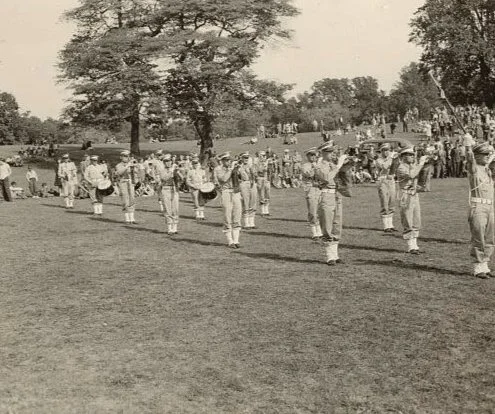
Members of the 713th Military Police Band perform in Druid Hill Park in Baltimore in 1943, marching in formation as civilians gather to watch during World War II. Military bands played a key role in boosting morale on the home front, providing public entertainment while reinforcing patriotic spirit. Performances in parks and public spaces connected local communities to the broader war effort, blending music, service, and civic life during a time of national mobilization.
When Tennessee, The 36th State, Ratified on Aug 18, 1920, Alice Paul
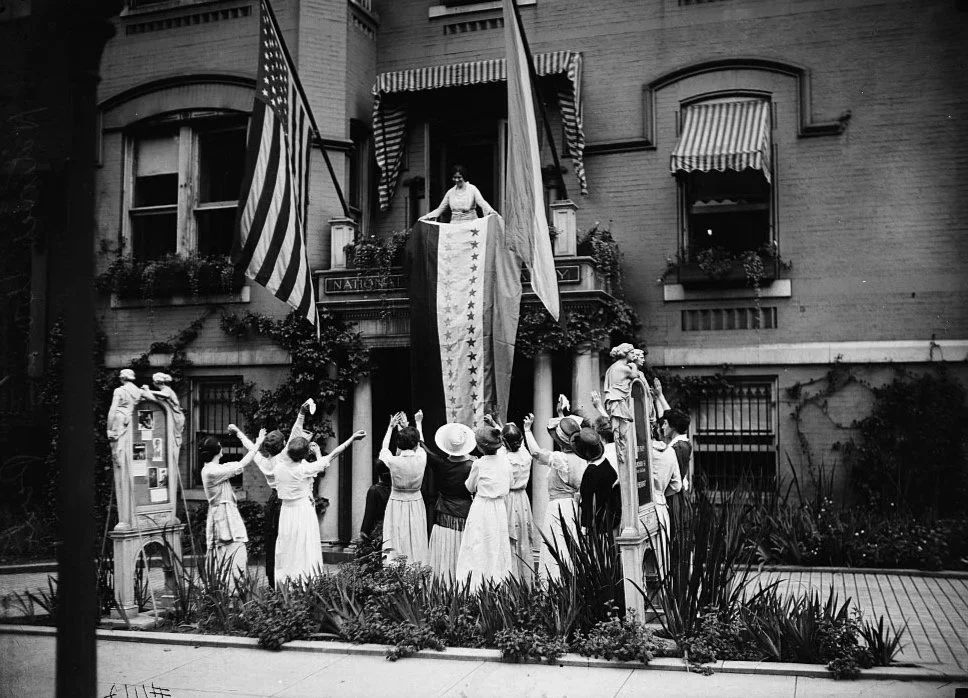
Women gather outside the National Woman’s Party headquarters in Washington, D.C., in 1920 as a banner is unfurled to mark the ratification of the 19th Amendment following Tennessee’s decisive vote. The display, featuring thirty-six stars, represents the final state needed to secure women’s right to vote nationwide.
W.G. McAdoo at Opening of N.Y. - N.J. Tunnel
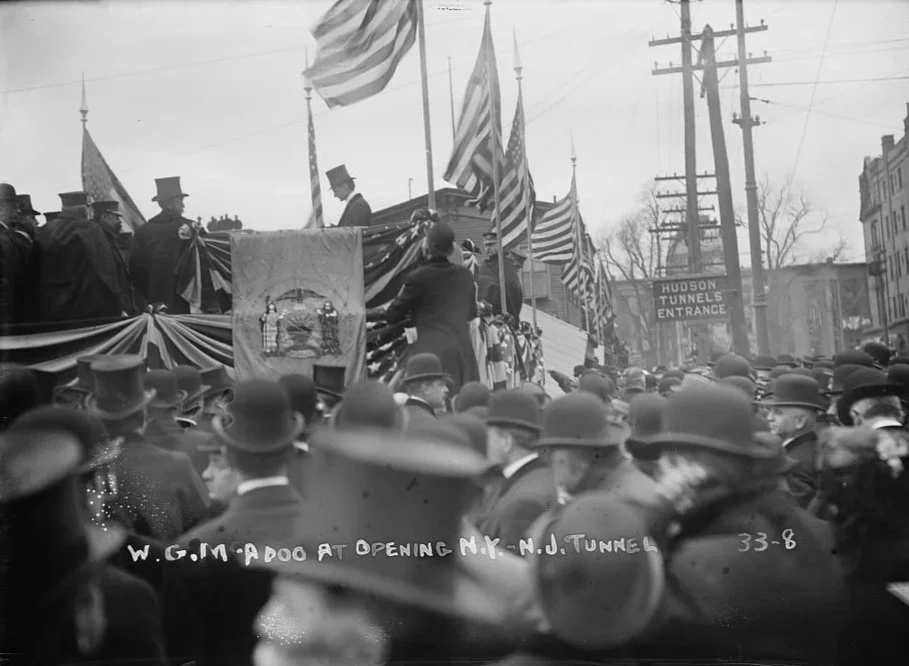
Crowds gather in Hoboken, New Jersey, in 1908 as William Gibbs McAdoo presides over the opening of the New York–New Jersey tunnel, a major milestone in regional transportation. The project, developed by the Hudson and Manhattan Railroad, improved access between the two states and helped accommodate the growing flow of commuters and commerce. Public ceremonies like this marked the expansion of modern infrastructure, reflecting the era’s emphasis on engineering progress and the increasing connectivity of American cities.
Bethlehem-Fairfield Shipyards, Baltimore, Maryland. Bow of a Liberty Ship Just Before a Launching Ceremony
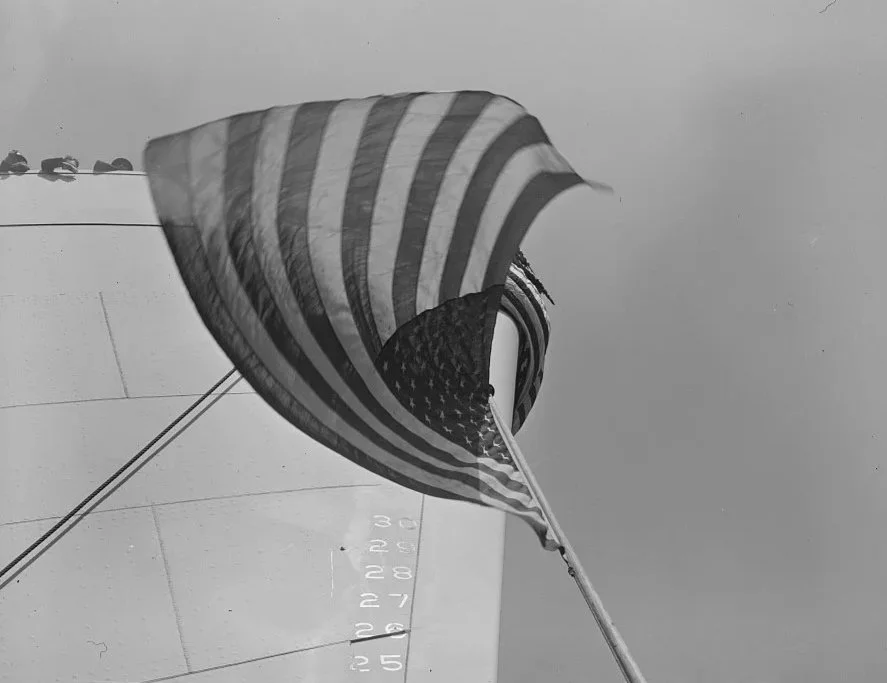
An American flag hangs over the bow of a newly built Liberty ship at the Bethlehem-Fairfield shipyards in Baltimore in 1943, just before its launch. These vessels were produced in large numbers during World War II to carry troops, supplies, and equipment across the Atlantic, forming a critical link in the Allied war effort. Shipyard workers and assembly-line methods allowed for rapid construction, symbolizing the industrial scale and urgency of wartime production on the home front.
City Hall at Night, Detroit Bi-Centenary Celebration
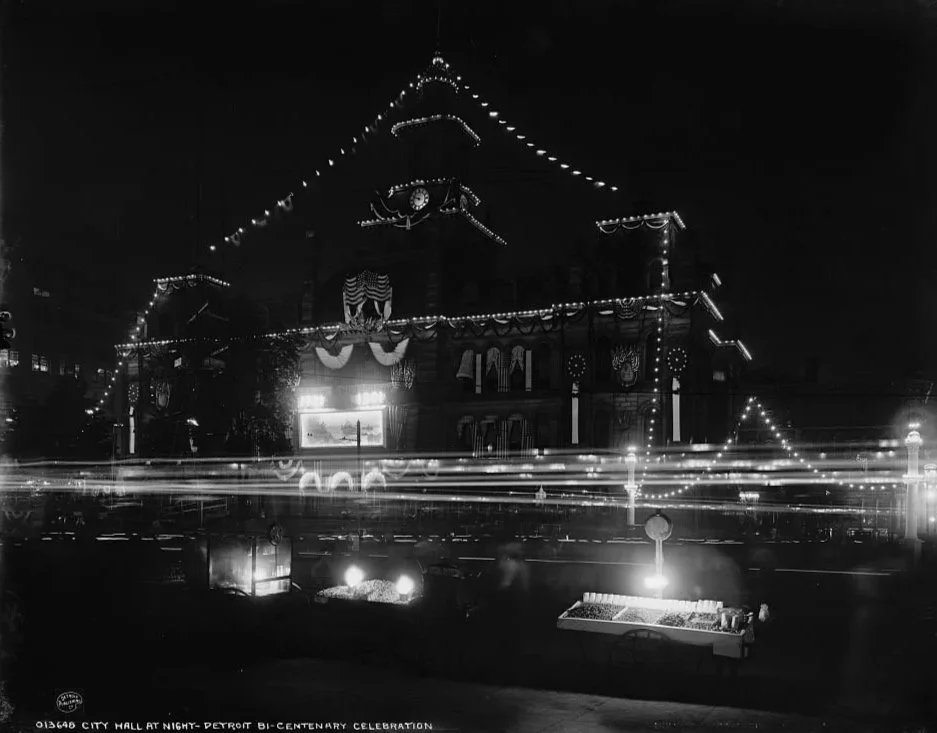
Detroit’s City Hall is illuminated for the 1901 bicentennial celebration, outlined in electric lights and decorated with flags and patriotic bunting. Public buildings were often central to civic celebrations, and the use of electric lighting reflected both technological progress and municipal pride at the turn of the 20th century.
Women on Stage at Daughters of the American Revolution Convention, Washington, D.C.
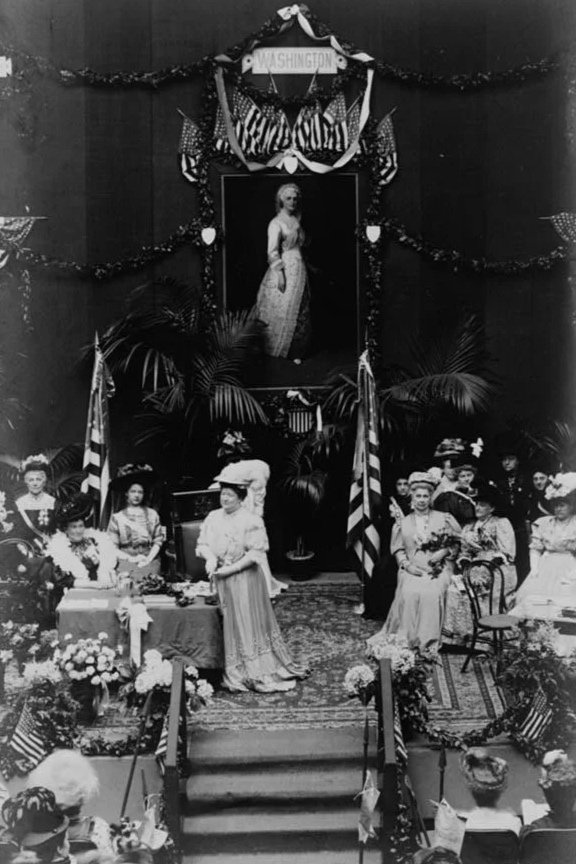
Members of the Daughters of the American Revolution gather on stage during a 1908 convention in Washington, D.C., surrounded by flags, floral arrangements, and patriotic decorations centered on a portrait of George Washington. Founded in the late 19th century, the organization promoted historic preservation, education, and national identity through civic events like this one. Such gatherings reflected the growing public role of women in shaping cultural memory and patriotic tradition during the early 20th century.