
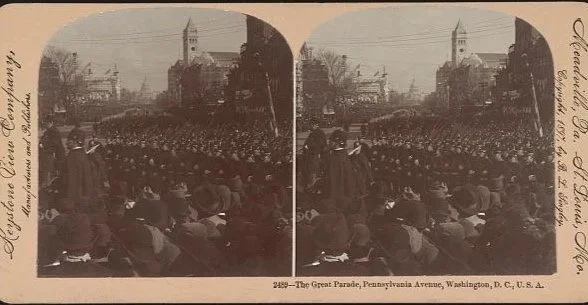
1897 stereograph shows the Great Parade along Pennsylvania Avenue in Washington, D.C., with massive crowds packed along the street and sidewalks. Events like this were central to public life in the nation’s capital, turning major avenues into gathering places for civic celebration and national display. Americans came together in person to mark important moments, long before radio or television, also reflecting the popularity of stereographs, which brought scenes from Washington to viewers across the country.
Parade of Civil War veterans and children carrying American and Alaska flags
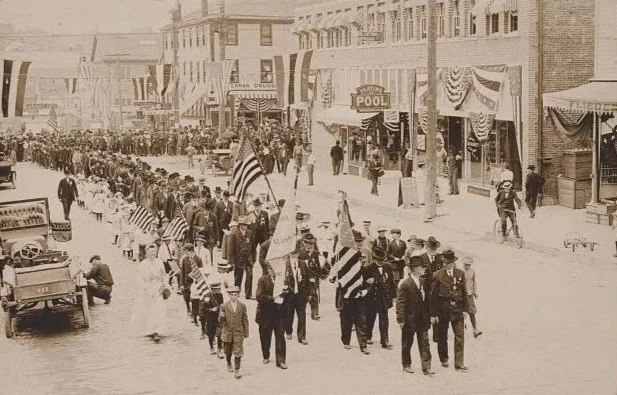
A patriotic parade moving down a busy main street, with marchers carrying American flags past stores and restaurants. Signs for a U.S. Navy Yard and a Great Northern Railway office highlight how military activity and rail transportation shaped local life and commerce. Spectators line the sidewalks while cars and bicycles share the road, capturing a moment when older traditions and modern life overlapped.
Votes for women : suffrage rallying song
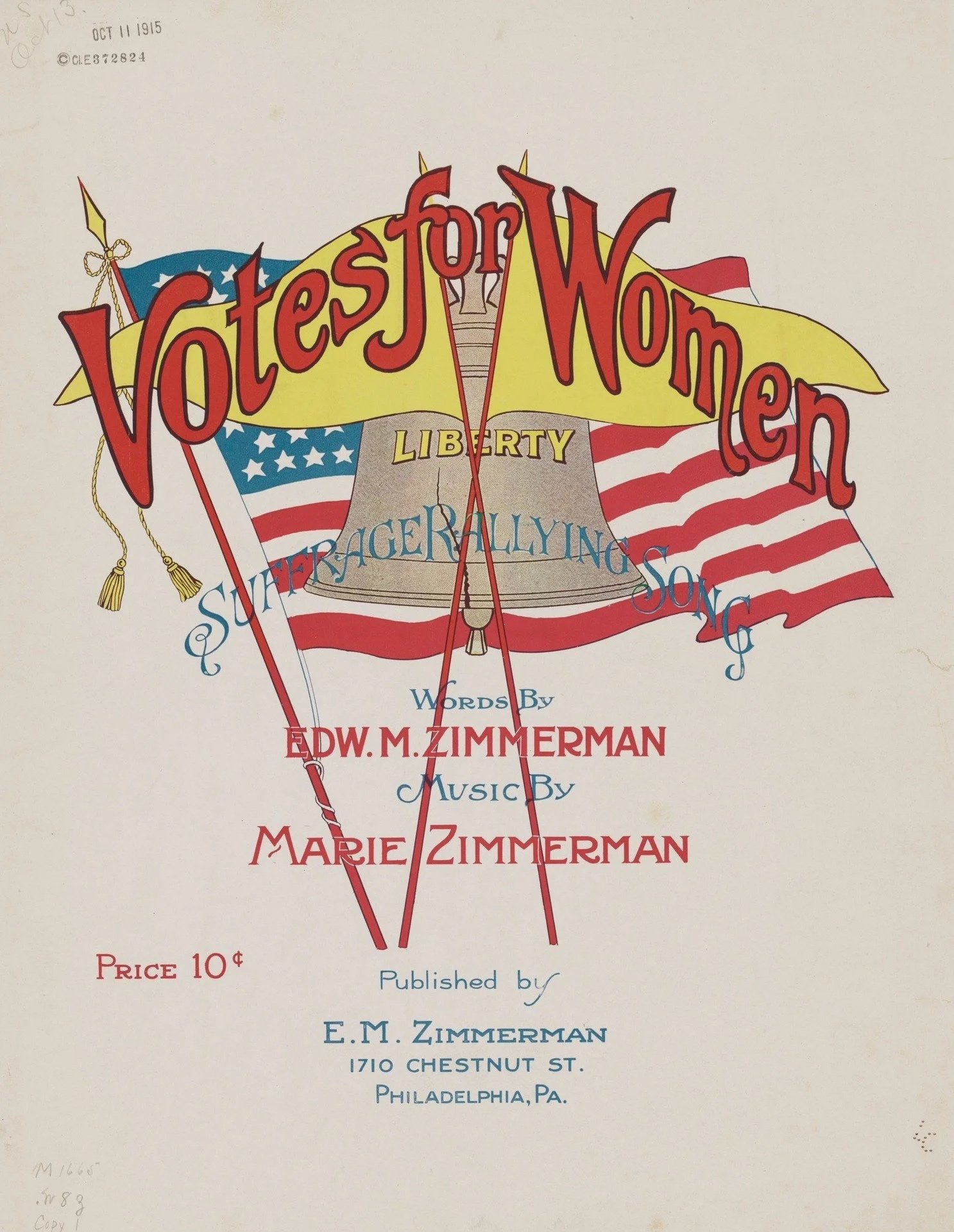
During the early women's suffrage movement, rallying songs like Votes for Women were sung at marches and meetings to build unity and keep the message simple and memorable. Printed sheet music helped spread these songs far beyond major cities, allowing supporters across the country to take part. Items like this show how the fight for voting rights was carried not just through speeches and demonstrations, but through everyday culture and shared voices.
Together we win / James Montgomery Flag
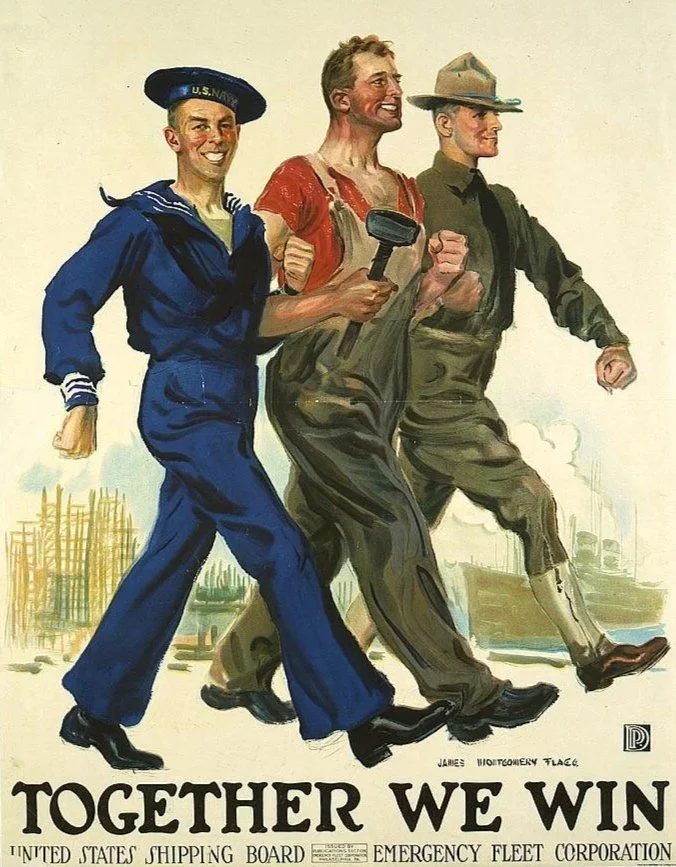
World War I–era poster shows a shipyard worker marching in step with a sailor and a soldier, driving home the message that the war effort depended on everyone. Created for the United States Shipping Board’s Emergency Fleet Corporation, also showing that industrial labor supported troops overseas by building and supplying ships. The hammer and dockside setting connect factory work directly to national defense. Helping Americans see shipyards and workshops as front-line contributions, not just support roles.
High bridge near Buena Vista
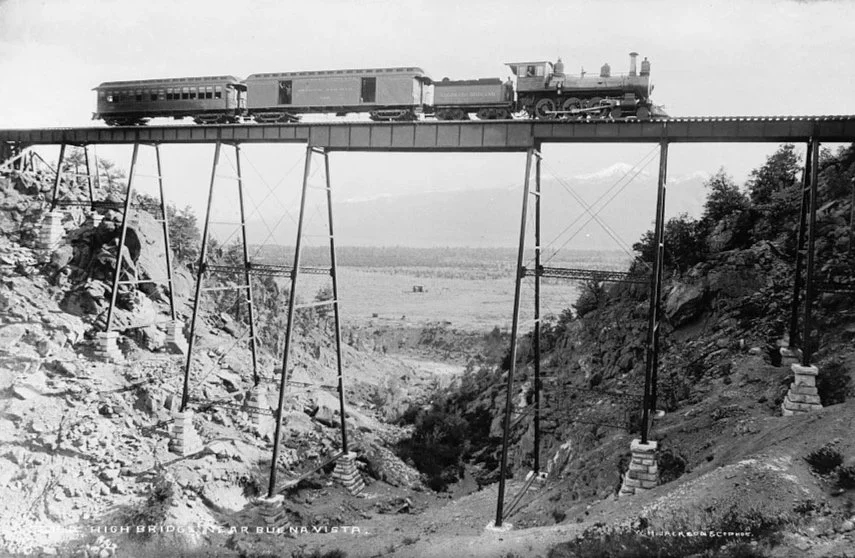
Steam locomotive crossing a tall trestle bridge near Buena Vista, a reminder of how railroads pushed through difficult terrain as the country expanded. The narrow bridge and steep drop below show the kind of engineering required to carry rail lines across canyons and ravines. Structures like this made it possible to move people, supplies, and resources into remote areas, supporting settlement and local industry. Scenes like this capture how railroads physically reshaped the landscape and helped link growing communities across the West.
Map of Lewis and Clark's Track Across the Western Portion of North America
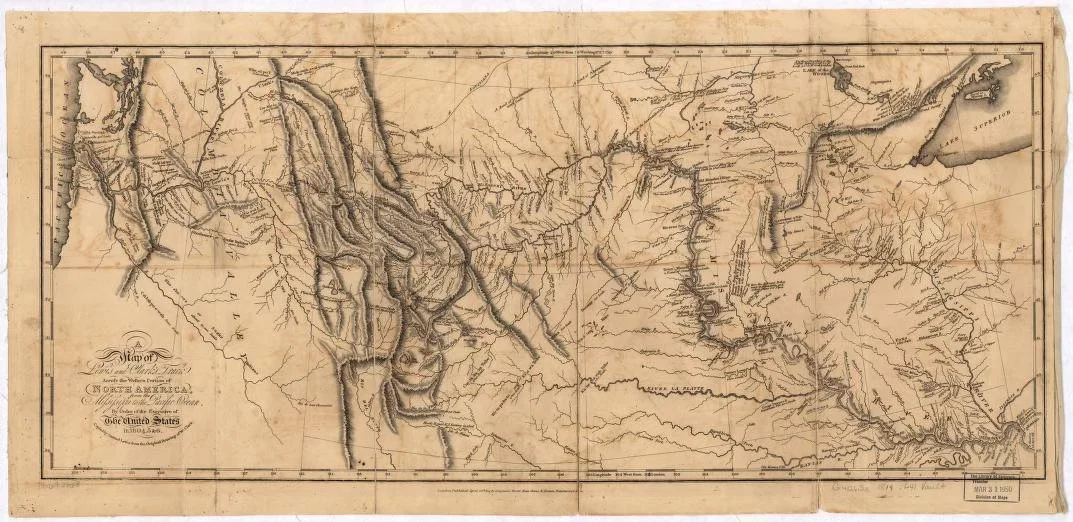
19th-century map traces the full route of the Lewis and Clark Expedition as it pushed west from the Mississippi River to the Pacific Ocean between 1804 and 1806. Drawn from the explorers’ own observations, it shows the Missouri River’s winding path, the rugged Rocky Mountains, and the network of tribal lands and waterways they encountered along the way.
Liberty Parade on Fifth Avenue WWI Era
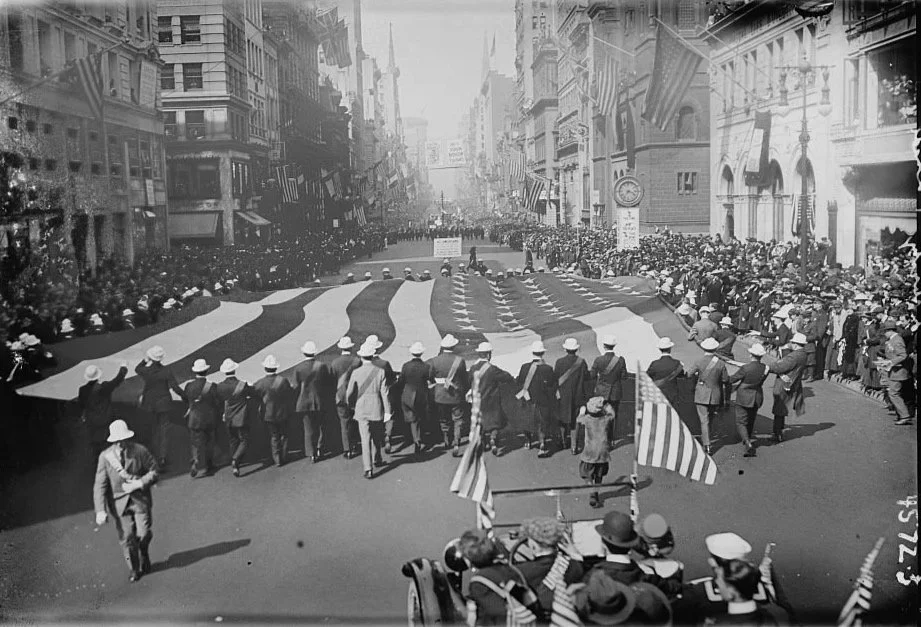
Crowds pack Fifth Avenue as a massive American flag is carried up the street during a World War I–era Liberty Bond parade in New York City. Marchers in uniform hats support the enormous banner while spectators line the sidewalks and hang from windows above, reflecting the national push to fund the war effort through public bond sales.
Historic American Flag Carried into Battle by American Soldiers During WWI
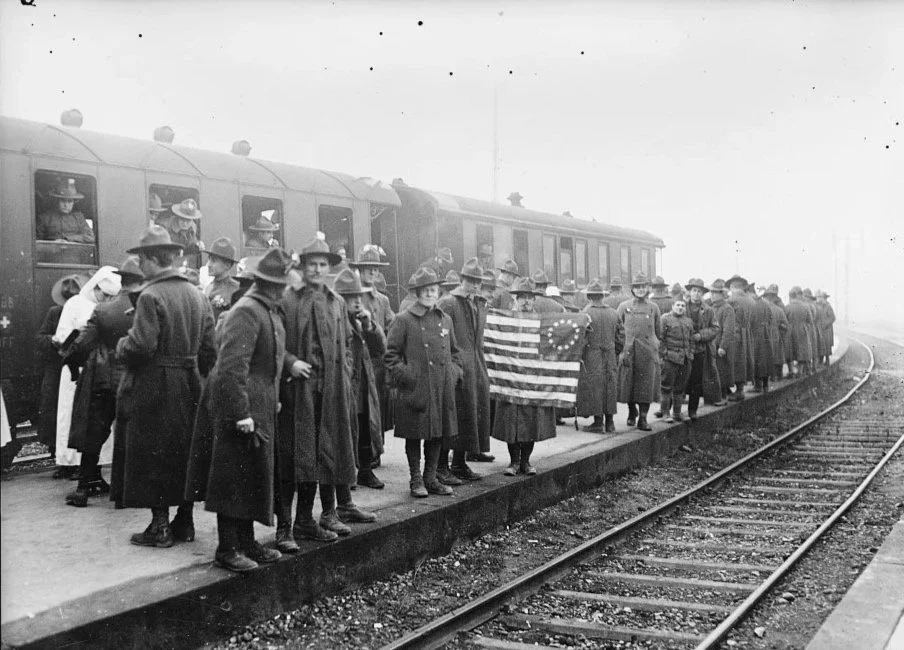
American servicemen gathered along a rail platform at the close of World War I, marking their release and return from captivity. The soldiers hold a U.S. flag that had been secretly hidden while they were held in German prison camps and later revealed in Basel, Switzerland, on December 7, during the release of the first train of American privates. The long line of men, bundled in heavy coats, reflects the scale of the war and the logistics of bringing troops home. This is a quiet but powerful moment, when a simple flag signaled survival, freedom, and the end of a long ordeal for those who served.
Coming Soon: Outstanding and Extremely Rare 36 Star Antique Flag with a Haloed Medallion | A Striking Flag from America’s Past | Nevada Statehood | Circa 1864-1867

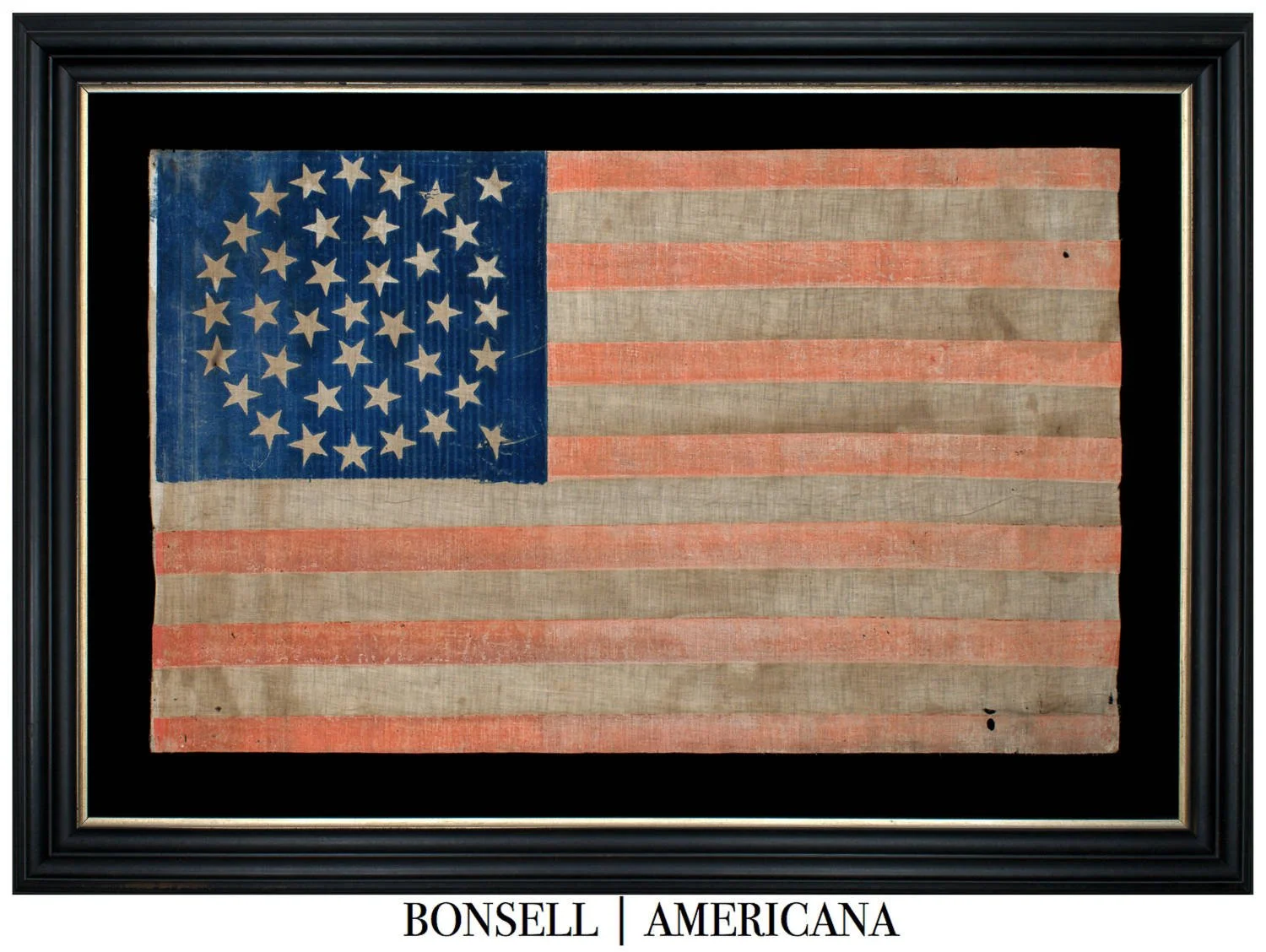
Coming Soon: Striking, Large Scale 38 Star Antique Flag with Offset Medallion Pattern | Colorado Statehood | Circa 1876-1889
Biltmore House | Asheville, North Carolina | Circa 1902

This photograph of the Biltmore House in Asheville, North Carolina, was taken around 1902 by William Henry Jackson for the Detroit Publishing Company. The Biltmore House, built by George Washington Vanderbilt II, is the largest privately-owned home in the United States, renowned for its architecture and historical significance.
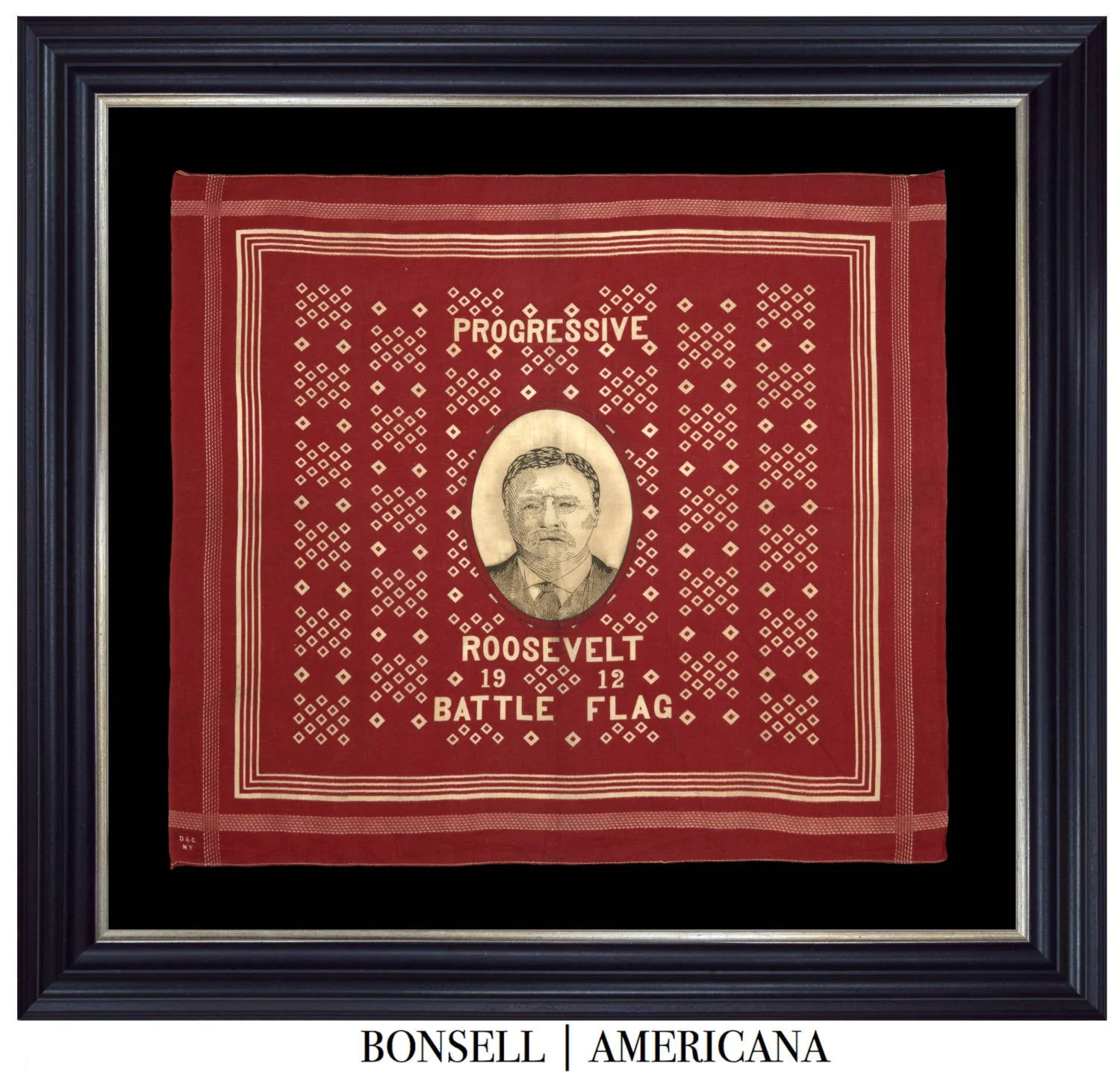
Coming Soon: Classic Teddy Roosevelt Battle Flag Campaign Bandanna | Circa 1912
Coming Soon: 38 Star Antique Flag with a Soil Enricher Related Overprint | Circa 1876-1889

Military Map of the Middle and Southern States
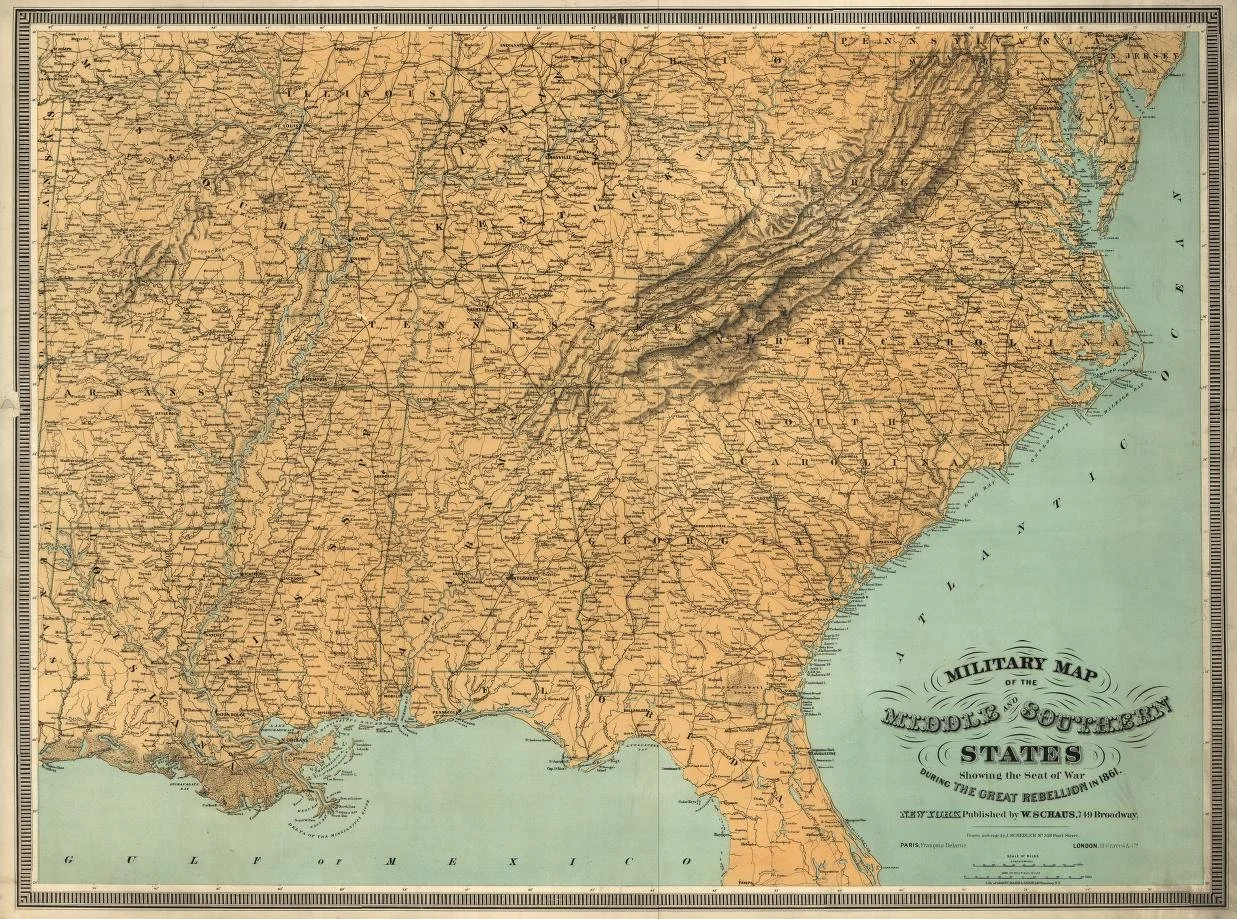
This 1861 military map shows the Middle and Southern States during the Civil War, highlighting the strategic locations and geography crucial to the conflict. Created by J.H. Colton and published by W. Schaus, the map provides detailed insights into the regions involved in the war, including transportation routes and significant cities.
Coming Soon: Vintage John F. Kennedy Memorial Pennant | Circa 1963

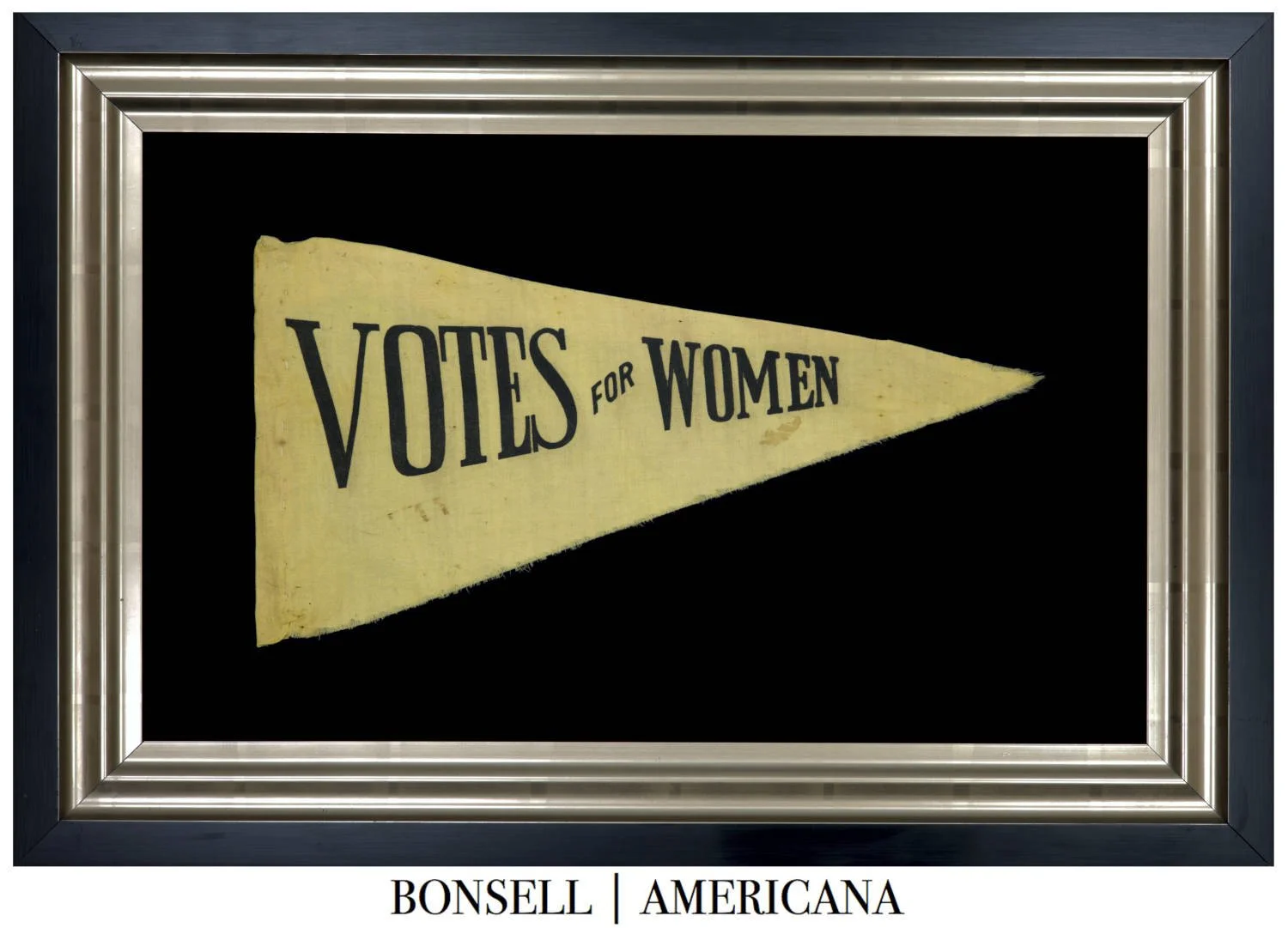
Attractive Antique Votes for Women Pennant | Circa 1910-1920
Coming Soon: 34 Star Antique Flag Cover with an Outstanding Medallion Configuration | Kansas Statehood | Circa 1861-1863
New York City Garbage Strike | Circa 1911
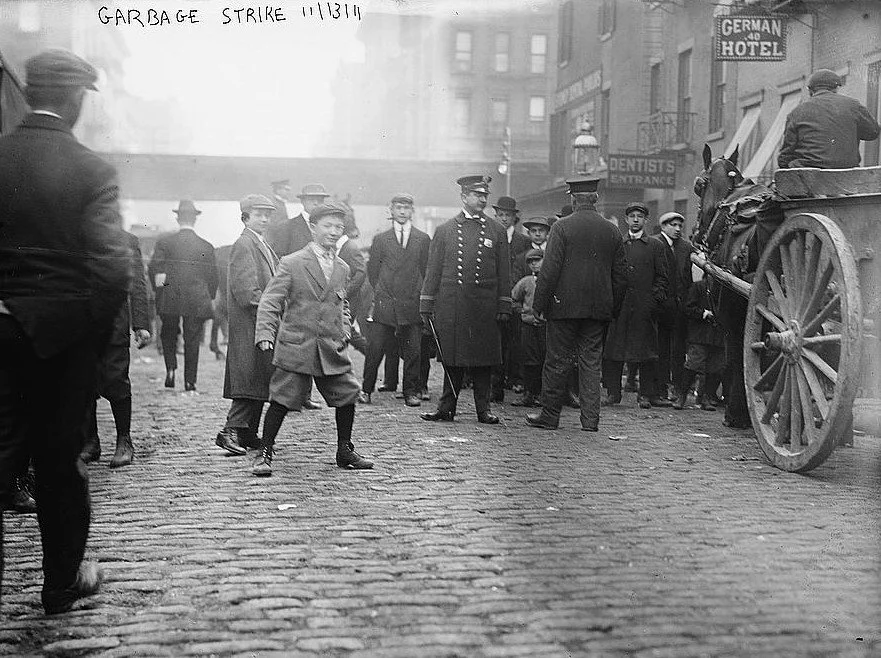
A photograph from the New York City garbage strike, which took place in November of 1911. This image captures the scene during the strike when sanitation workers halted garbage collection, leading to significant public health concerns. The strike highlighted the critical role of sanitation workers and brought attention to labor rights issues of the time.
Section of the Original Big Tree | Mammoth Grove in California | Circa 1866

A historical photograph from 1866 of a section of the original Big Tree at Mammoth Grove, Calaveras County. This image shows visitors examining the massive sequoia trunk, highlighting its immense size. The tree, discovered by contract hunter Augustus P. Dowd in 1852, was the first giant sequoia to come to the attention of white Americans. Although Zenas Leonard described what are thought to be Big Trees in his 1839 Narrative, the discovery of this tree is considered the official discovery of the giant sequoia.
The tree was cut down in 1853 by five men under the command of Captain Hanford, using only mining augers, taking about 21 days. A portion of the tree was transported to New York for exhibit, much to the envy of P.T. Barnum, who sought his own Big Tree but had to settle for a coast redwood. After serving briefly as a dance floor, the stump had a domed building built over it, called the Pavilion, with a small section of the trunk remaining next to it.
This photograph provides a glimpse into the early fascination with and exploitation of these natural giants, which are a significant part of California's natural heritage.
