
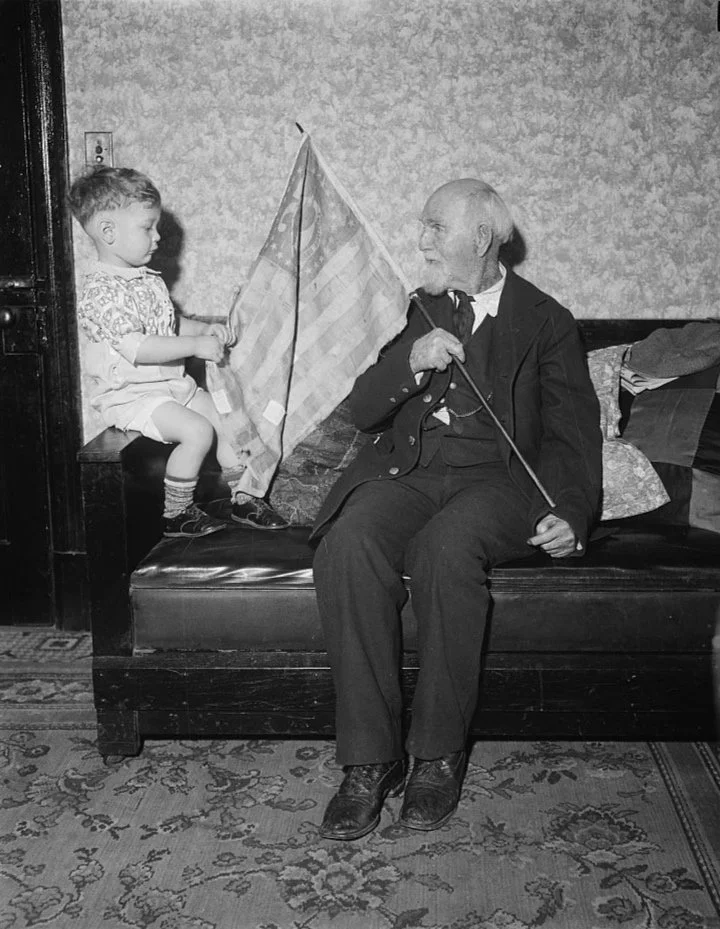
January 1931. Union Army veteran Orlando Learned sits with his great-grandson Edward Hudgins, age 2, showing the boy a 36-starred flag he carried into battle during the Civil War. Learned had obtained the flag during celebrations marking the fall of Vicksburg in 1863 and kept it for nearly seven decades. A battle wound had kept him from marching in the Union Army's triumphal entry into Washington at the war's end, and his January 1931 visit to the capital was long overdue. The 36-star flag was the official U.S. flag from 1865 to 1867, reflecting Nevada's admission to the Union in 1864.
Troops of the 20th Armored Division and Units of the 9th Army Whoop it up Between Raindrops as the SS John Ericsson Nears Pier 84, North River
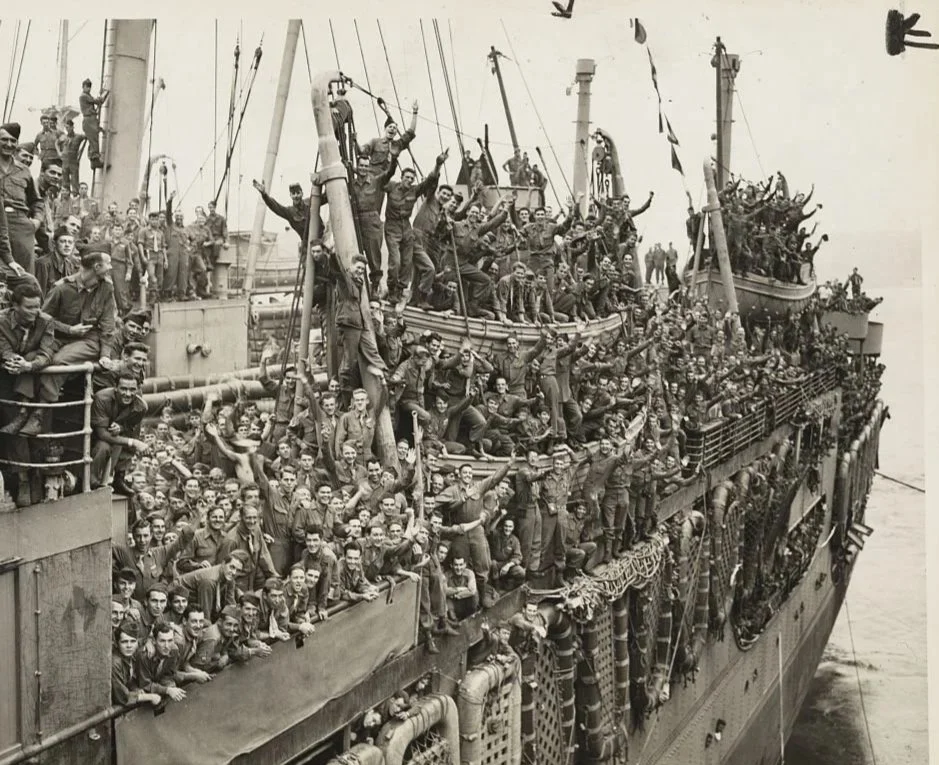
August 6, 1945. Troops of the 20th Armored Division and units of the 9th Army pack every inch of the SS John Ericsson as it pulls into Pier 84 on the North River in New York City. The men are cheering, waving, and climbing the rigging as the ship approaches the dock. The date is notable: August 6, 1945 was the same day the United States dropped the atomic bomb on Hiroshima, a moment that would bring the Pacific war to a close within days. These soldiers were part of the massive postwar repatriation effort known as Operation Magic Carpet, which ultimately returned more than eight million American servicemen and women home from Europe and the Pacific.
Ceremonies at Laying Corner Stone D.A.R. Hall
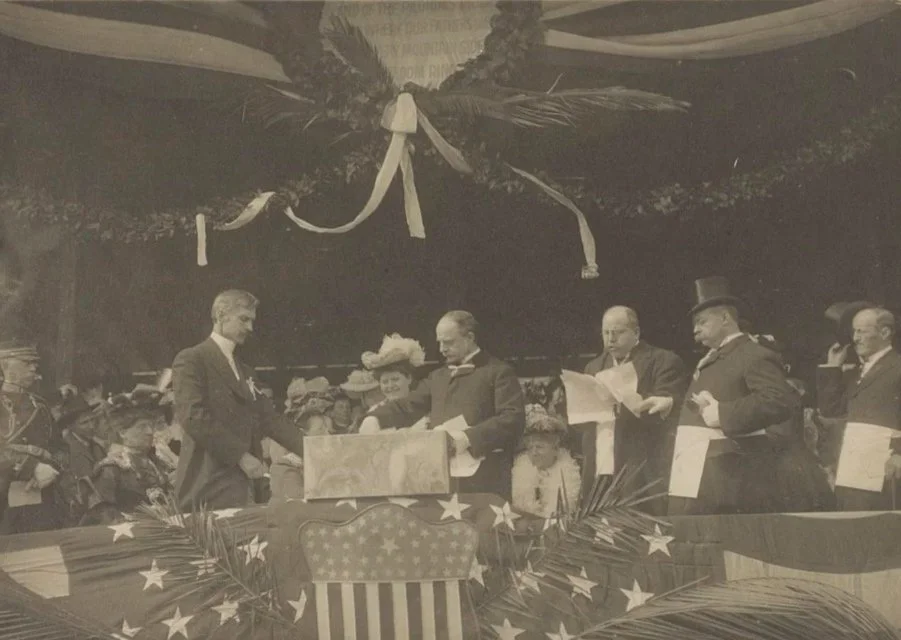
On April 21, 1904, President Theodore Roosevelt attended the cornerstone laying ceremony for Memorial Continental Hall in Washington, D.C., the headquarters building of the Daughters of the American Revolution. Roosevelt stands on a flag-draped platform reviewing documents alongside a group of dignitaries, with women in the elaborate hats typical of the Edwardian period seated nearby. The DAR, founded in 1890, was at the height of its influence during the Progressive Era, and Roosevelt's participation reflected the period's strong interest in patriotic heritage organizations.
Oswego, New York. United Nations Heroes Marching in the Flag Day Parade During United Nations Week
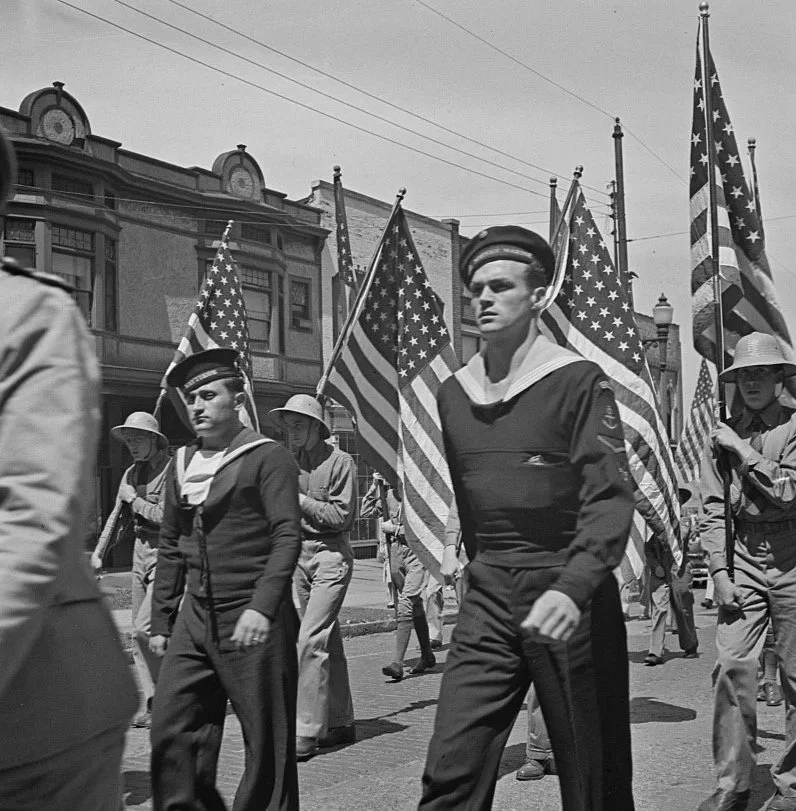
Flag Day, June 1943. U.S. Navy sailors and Army soldiers march through the streets of Oswego, New York, as American flags line the parade route during United Nations Week. With World War II in full swing, events like this served a dual purpose: honoring the flag and reinforcing public support for the Allied war effort. The "United Nations" reference was the wartime term for the Allied coalition, formalized in January 1942 when 26 nations signed the Declaration by United Nations pledging to fight the Axis powers together.
Dedication Exercises
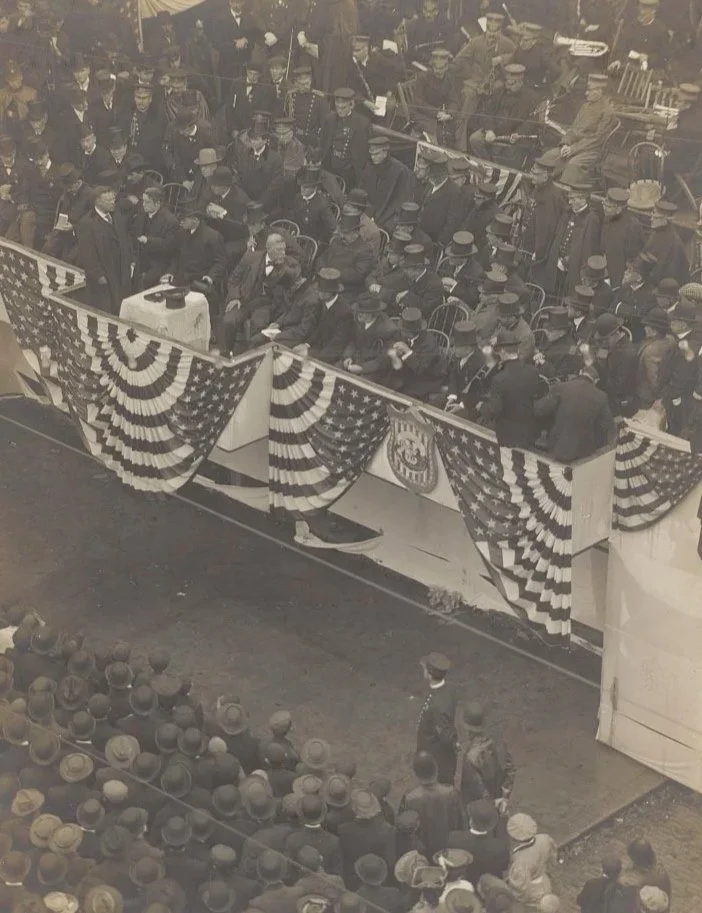
On October 23, 1906, President Theodore Roosevelt stood at a flag-draped platform to deliver remarks at a public dedication ceremony. The elevated stage was packed with dignitaries and officials while a brass band occupied the rear. Below, crowds of citizens filled the streets, nearly all wearing the dark suits and hats typical of the Edwardian era.
Southington, Connecticut. School Children Pledging Their Allegiance to the Flag
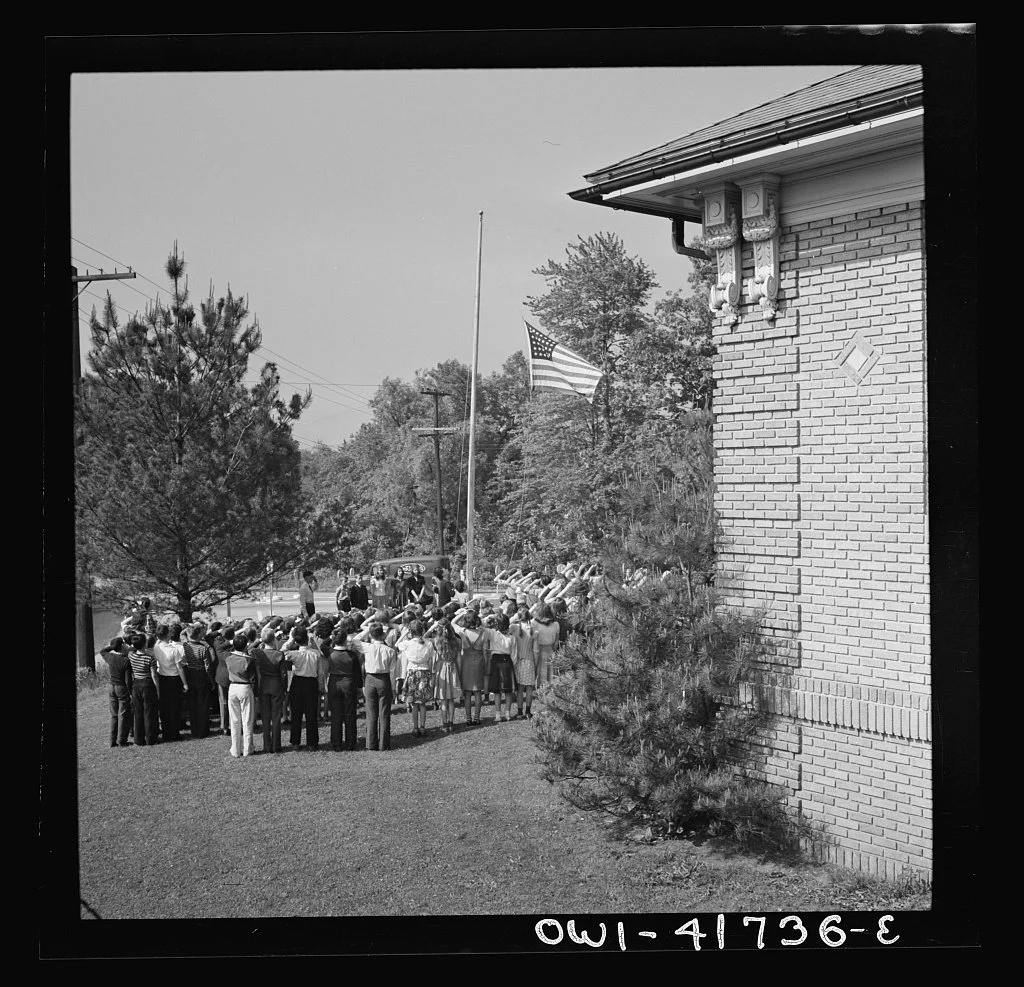
Schoolchildren gather outside a school in Southington, Connecticut, in May 1942 to recite the Pledge of Allegiance during the early months of America’s involvement in World War II. Across the country, patriotic ceremonies became a regular part of daily life as communities emphasized unity, civic duty, and support for the war effort.
Lititz, Pennsylvania. Part of the Lititz Fire Department Called out During an Air Raid Drill
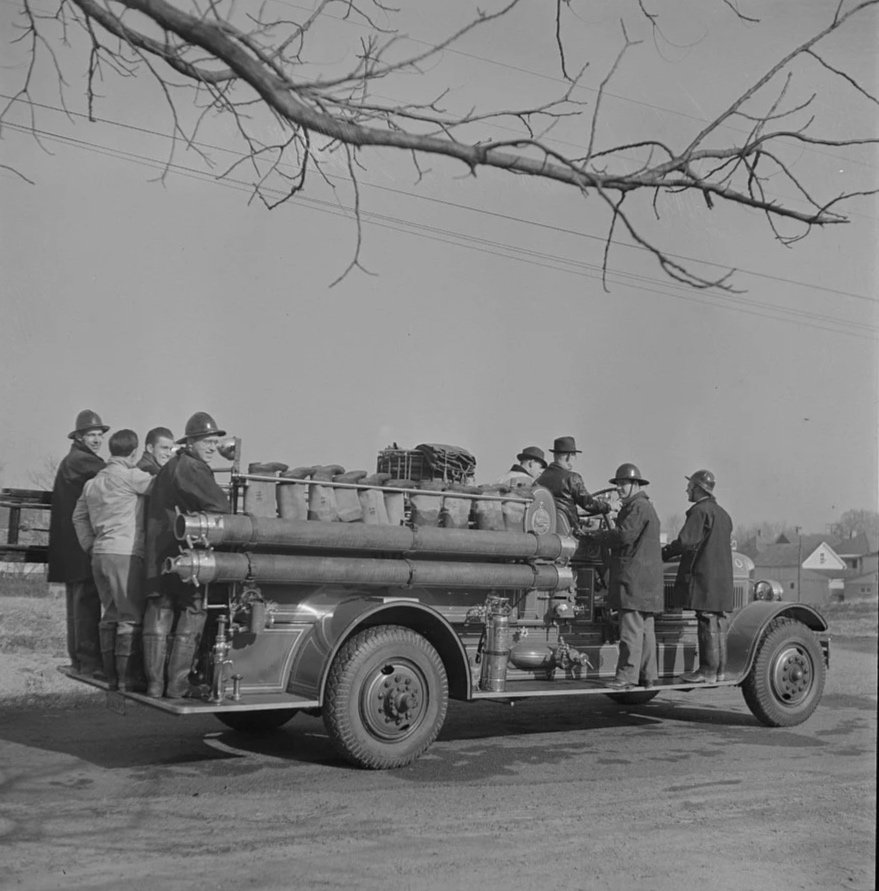
In November 1942, members of the Lititz, Pennsylvania fire department ride atop a fire engine during a World War II air raid drill, preparing for potential attacks on the home front. Civil defense exercises like this were organized across the country to train local responders and civilians in emergency procedures, including blackouts and fire response. Volunteer fire companies played a key role in these efforts, adapting their equipment and routines to meet wartime needs.
Civil War Veteran Adjutant Edwin Francis Wyer of Cos. I, E and G, 5th Massachusetts Infantry Regiment with World War I veteran Terry McCloskey of 101st Infantry, 26th Division in Uniform
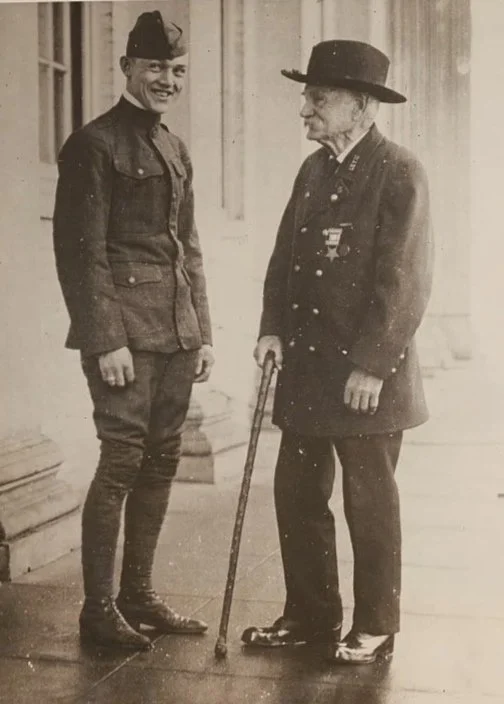
In March 1922, a Civil War veteran and a World War I soldier stand together outside the Massachusetts State House in Boston, representing two generations of American military service. Edwin Francis Wyer, who served in the Union Army, appears alongside Terry McCloskey of the 101st Infantry, 26th Division, highlighting the passage of time between the nation’s major conflicts. Public interest in such meetings reflected a continued respect for veterans and a desire to connect past and present service.
First Quarter of 1943 Kentucky Derby from Infield
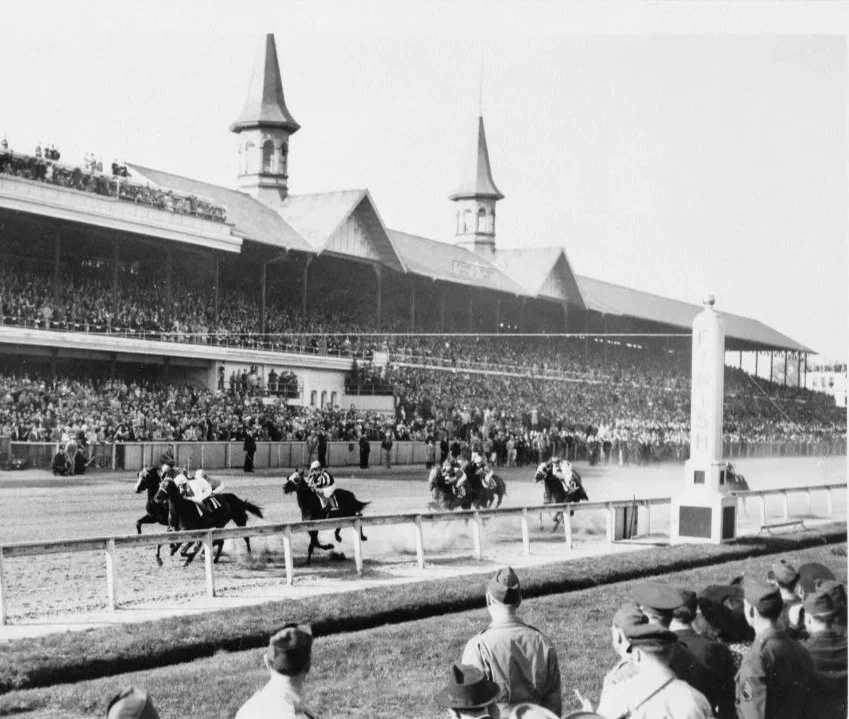
During the 1943 Kentucky Derby in Louisville, horses race past the grandstand as a packed crowd watches from multiple tiers. The event took place during World War II, when major sporting traditions continued despite wartime restrictions on travel and resources. Known as one of the country’s leading horse races since the late nineteenth century, the Derby remained a major public gathering, drawing attention from across the nation.
Apple Picking in Berkely County, West Virginia
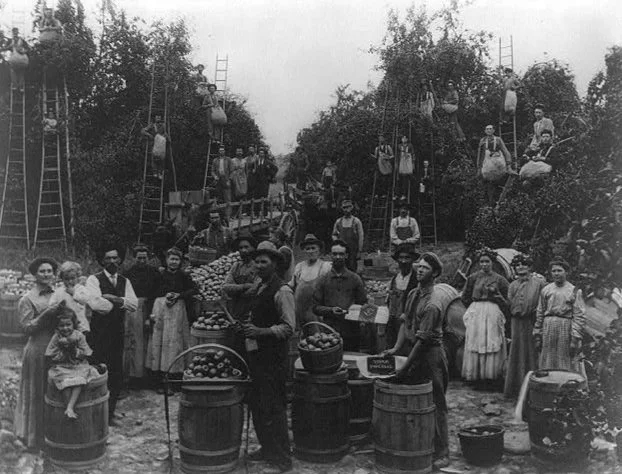
Around 1910 in Berkeley County, West Virginia, apple harvesting brought together entire families and crews to gather and sort fruit in busy orchard rows. Workers stand on ladders reaching into the trees while others fill barrels and baskets on the ground, showing the labor-intensive process behind a major regional crop. Orchards like these were central to the local economy, supplying fresh fruit and cider to nearby markets and beyond.
"Lemonade Stand" Mr. Hersey, Prop. and Mr. O'Reilly
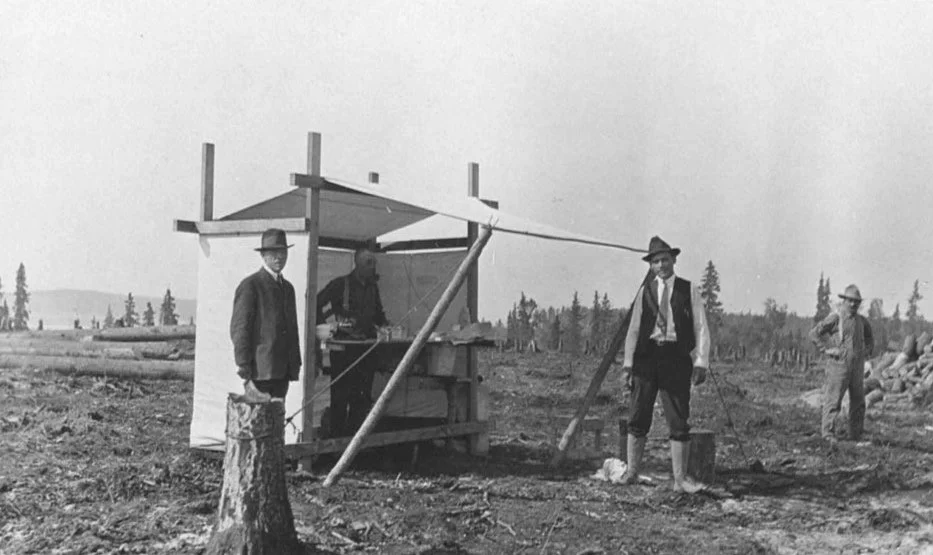
In 1916, two men operate a makeshift “lemonade stand” in a cleared field, likely serving workers in a logging or land-clearing area. A simple wooden structure with a canvas cover provides shade for basic supplies, while cut stumps and felled timber stretch across the background, marking an active work site. Such small, informal setups were common in remote areas, offering food and drink to laborers far from towns and established businesses.
Camp of 110th Pennsylvania Inf'y Near Falmouth, Va., Dec. 1862
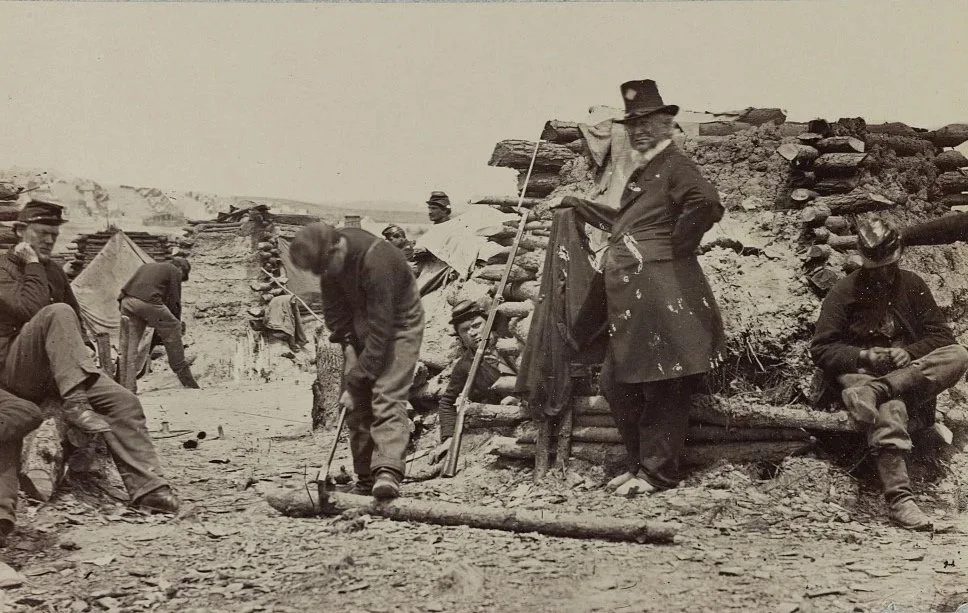
In December 1862, soldiers of the 110th Pennsylvania Infantry camped near Falmouth, Virginia, just across the Rappahannock River from Fredericksburg during a critical phase of the Civil War. Men gather around rough log shelters and tents, tending to everyday tasks and equipment while waiting for orders. Conditions in camps like this were often harsh, with cold weather, limited supplies, and constant uncertainty.
Horse Shows. Horse And Wagon
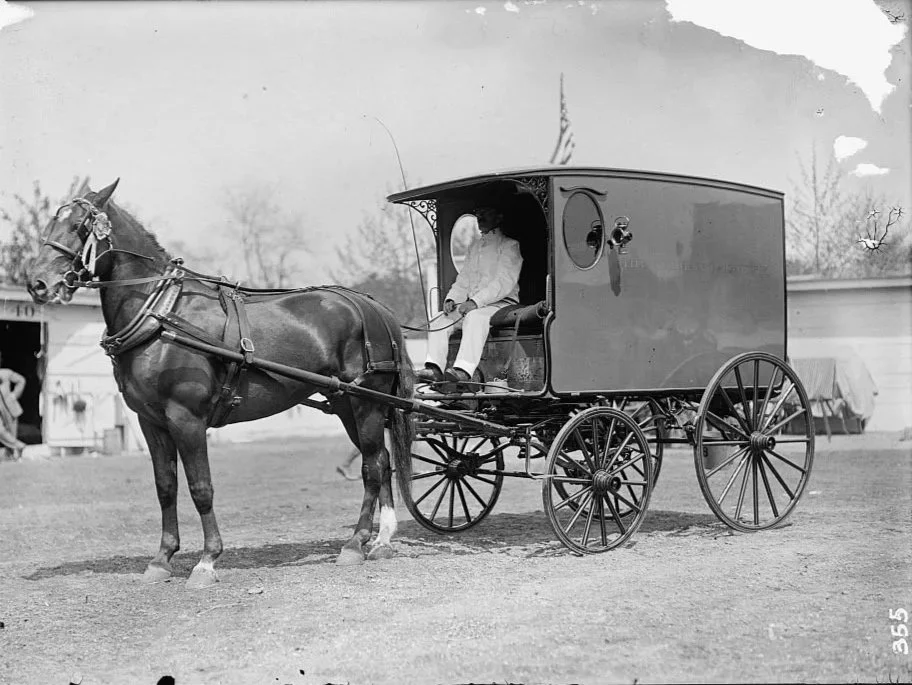
At the 1911 National Capital Horse Show in Washington, D.C., a driver sits in an enclosed wagon pulled by a harnessed horse on display for judges and spectators. Horse shows at the time focused on breeding, training, and the quality of equipment, reflecting how important horses still were for transportation and work.
The New President Takes The Oath of Office. The Wilcox Home in Which President Roosevelt was Sworn In
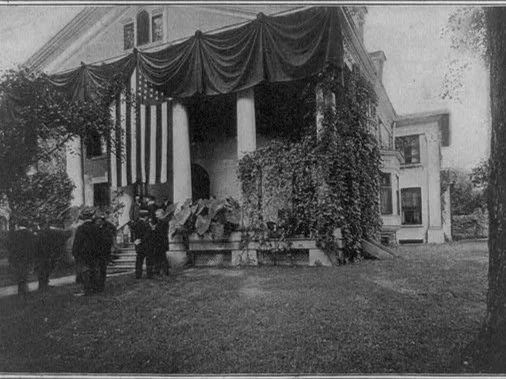
In September 1901, a small gathering assembled on the porch of the Wilcox home in Buffalo, New York, where Theodore Roosevelt took the oath of office following the assassination of William McKinley. The house, draped in American flags, became an unexpected setting for a pivotal moment in national history as Roosevelt assumed the presidency amid uncertainty and mourning.
Farmers on Main Street, Saturday Night. Iowa Falls, Iowa
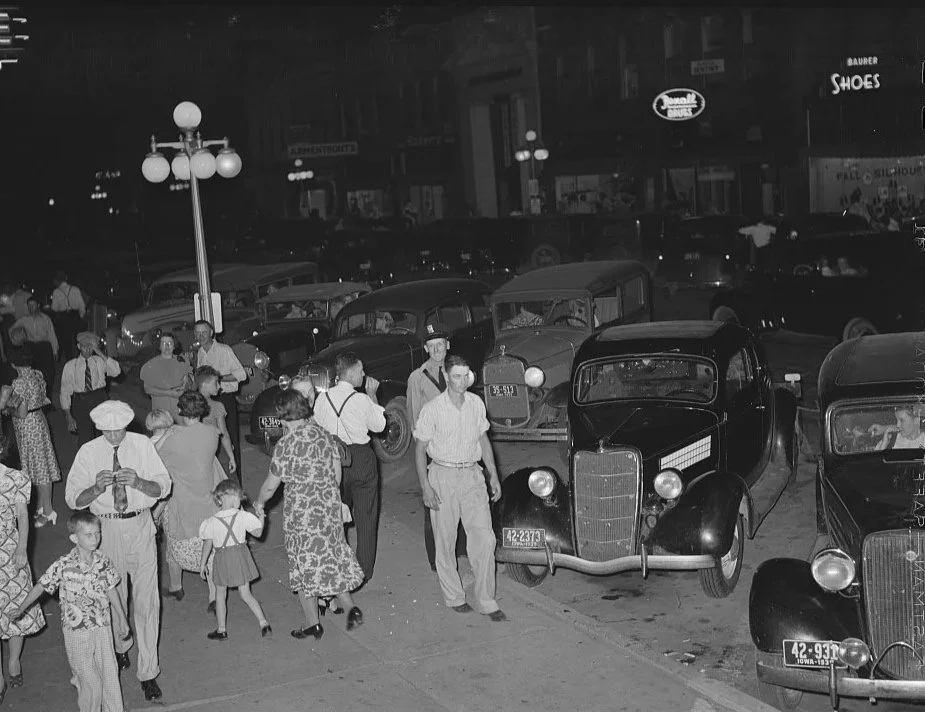
Farm families and townspeople fill the sidewalks and streets of Iowa Falls, Iowa, on a Saturday night in 1939, as automobiles line the curb under the glow of streetlights. The gathering reflects a weekly ritual in rural communities, when residents came to town to shop, socialize, and take part in public life after a week of work. Men, women, and children move easily between parked cars and storefronts, illustrating the central role of Main Street as both marketplace and meeting place.
Three Unidentified Soldiers in Union Uniforms
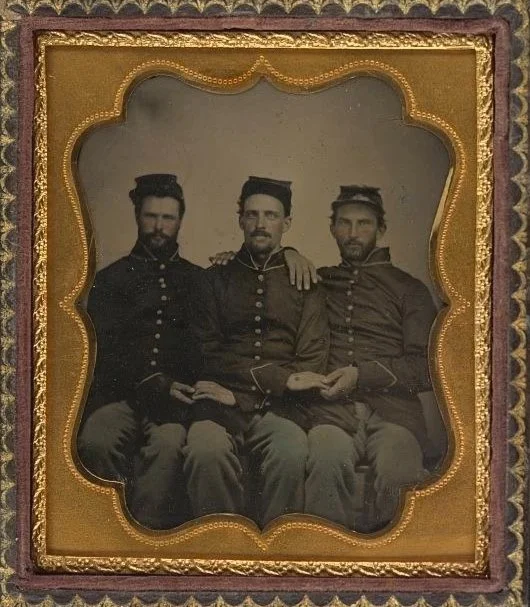
Three Union soldiers sit closely together in their uniforms during the Civil War, their caps and buttoned coats marking them as members of the Federal army between 1861 and 1865. Their steady expressions and informal pose suggest a moment taken away from the demands of camp or campaign, when soldiers often visited photographers to create keepsakes for family and friends. Images like this served as personal records in a time of uncertainty, when many who enlisted did not return home.
Troops of the 32nd Regiment, Indiana Volunteers
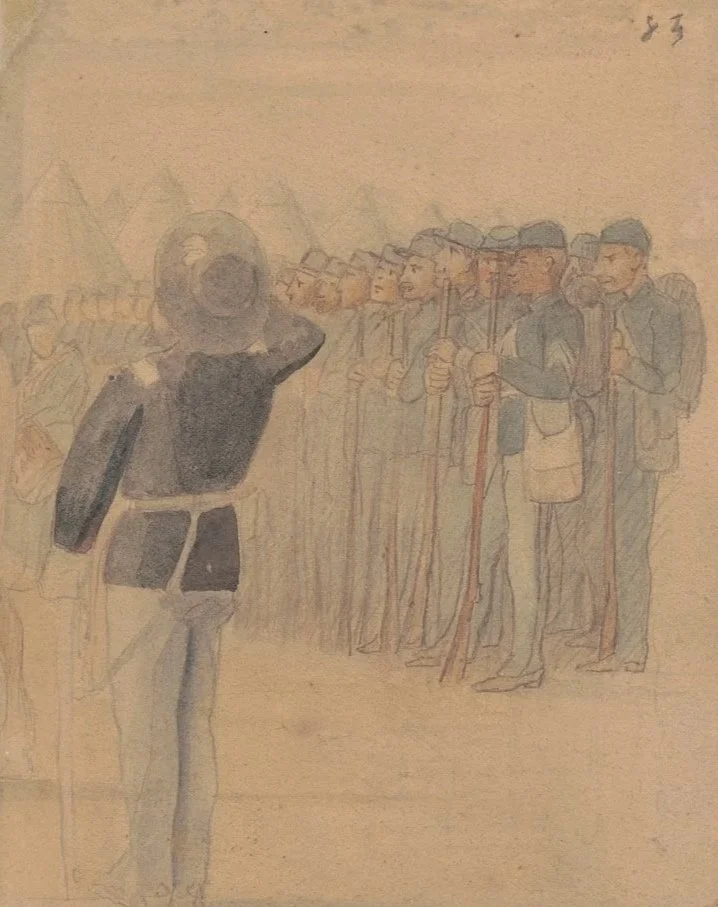
Union soldiers of the 32nd Indiana Infantry stand in formation during the Civil War, their rifles held at rest as they face an officer giving commands. Created between 1861 and 1865, the drawing reflects the discipline and structure that defined volunteer regiments drawn from communities across the North. Many of these men were recent immigrants or first-generation Americans, serving in units that often shared language and cultural ties. Their orderly ranks and simple equipment illustrate the realities of citizen-soldiers preparing for prolonged conflict, as the Union relied on such regiments to sustain its military campaigns and preserve the nation.
Times Boy on Bicycle
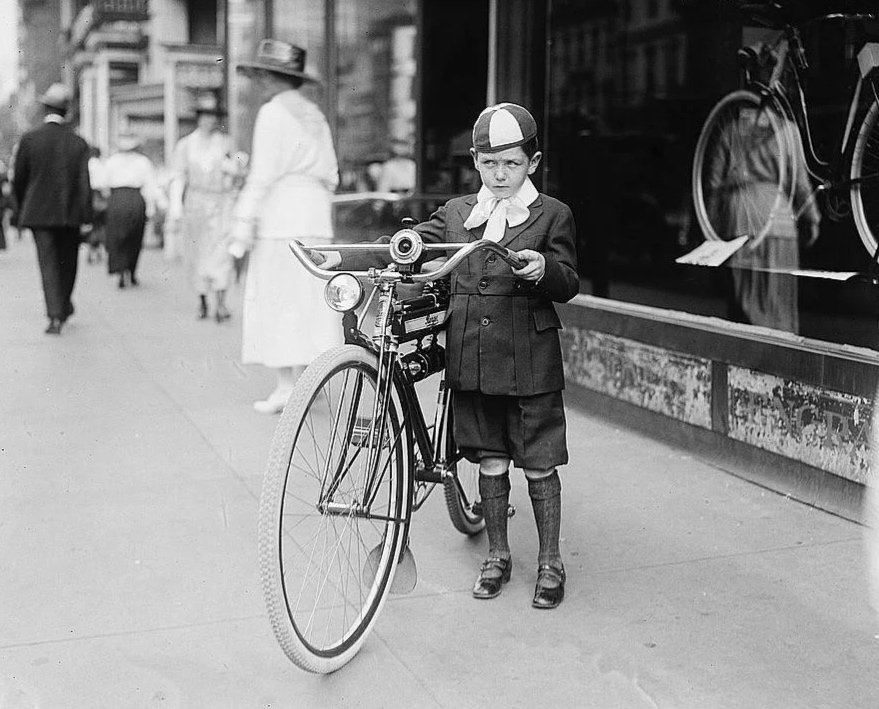
A young newspaper carrier stands with his bicycle in 1921, representing the vital role of youth labor in the distribution of daily news during the early twentieth century. Identified as an employee of the Washington Times, he was part of a nationwide network of “newsboys” who ensured that papers reached city streets and doorsteps each day. Dressed in period attire and equipped with a sturdy bicycle. At a time when newspapers were a primary source of information, boys like him formed the backbone of a fast-moving industry that connected communities to national and world events.
Join the Air Service--Learn-Earn / W.Z. ; Forbes, Boston
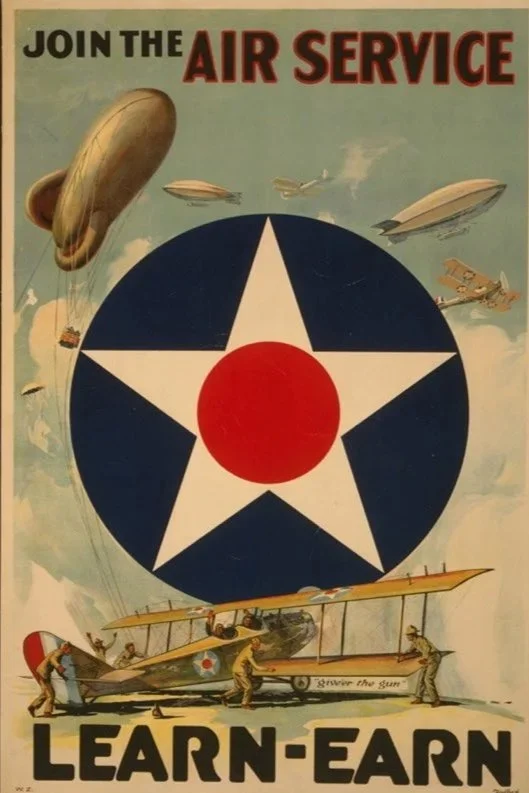
A 1917 recruitment poster urges young Americans to “Join the Air Service—Learn-Earn,” reflecting the rapid expansion of military aviation during World War I. Centered on the bold star insignia of the U.S. Army Air Service, the design features airplanes and dirigibles that represent the emerging importance of air power in modern warfare. In the foreground, ground crew members prepare an aircraft, emphasizing the technical skills and labor required behind the scenes.
Filling Cartons with Ice Cream Mix. Creamery, San Angelo, Texas
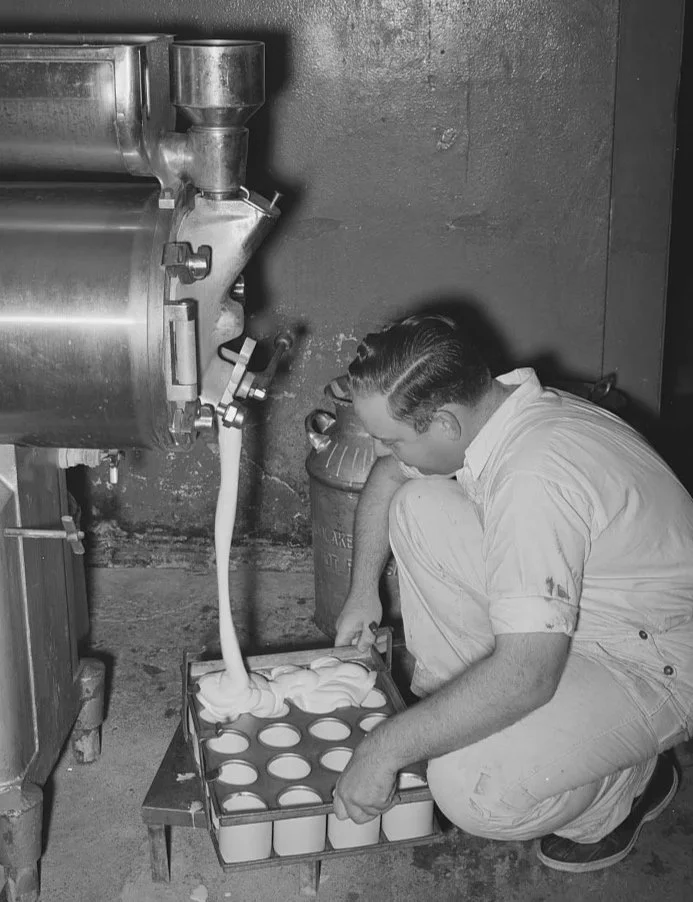
A creamery worker in San Angelo, Texas, fills cartons with fresh ice cream mix in 1939, capturing the industrial side of everyday food production in small-town America. The mechanized dispenser and uniform containers illustrate the growing efficiency of local dairies during the late Depression era, as advances in equipment helped meet rising consumer demand. Such operations connected rural agricultural output to broader markets, turning raw milk into standardized products ready for distribution.